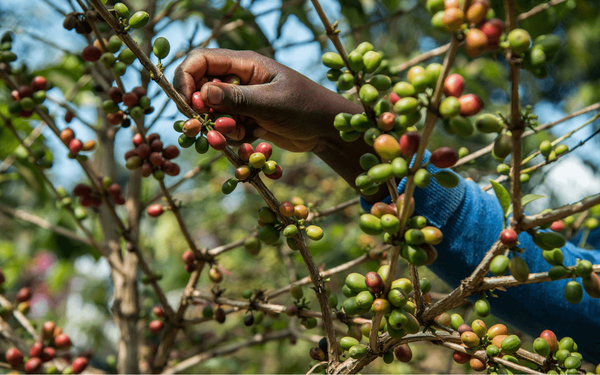
How can agricultural and food systems be transformed in a sustainable way?
A big question, an ambitious goal. And yet, transformation can succeed. This website brings different actors together who are working towards this goal.
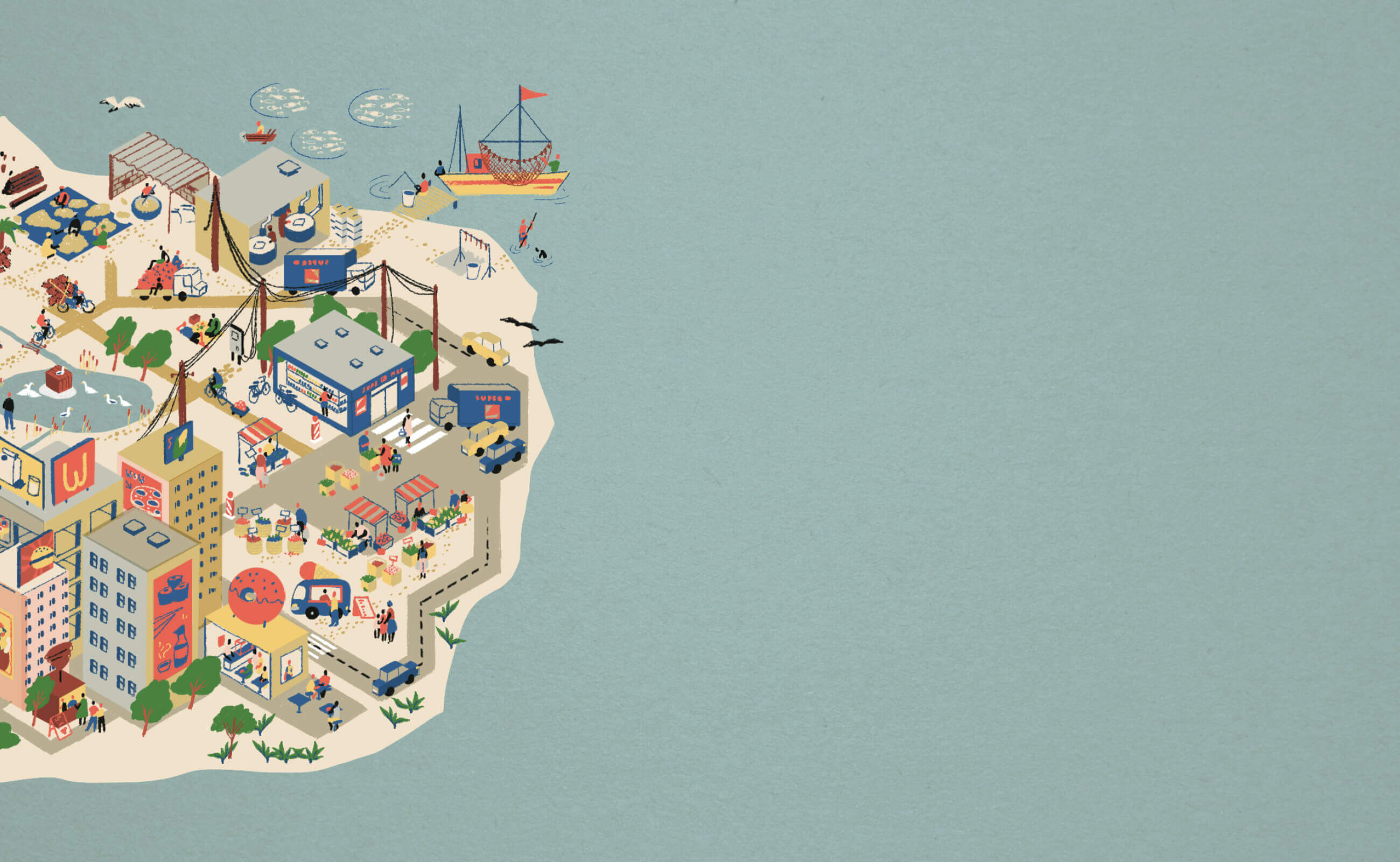
How can the transformation of agricultural and food systems succeed? And what are the building blocks of a sustainable redesign of the sector? Texts, graphics and videos provide answers to these questions in the interactive Agri-Food Map - for fair incomes, healthy nutrition and an intact environment.
In this podcast series we shine light on the urgent need to transform our agricultural and food systems. Together, we seek to unearth innovative solutions that make agricultural and food systems more sustainable, create meaningful employment opportunities, and foster prosperity for all.
AnInterview with Rashid Sumaila and Andreas Schaumayer
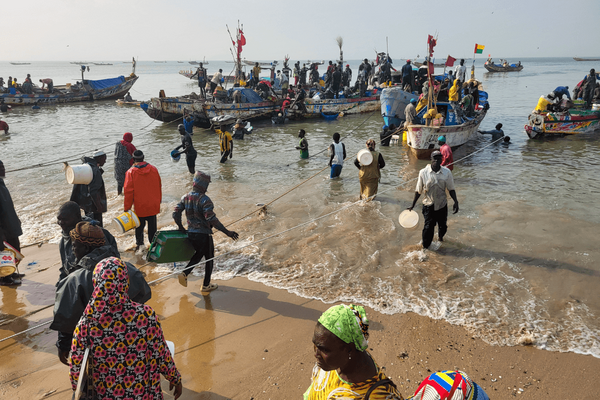
Against the backdrop of the eleventh Our Ocean Conference in Mombasa, Kenia, leading fisheries economist Rashid Sumaila and Andreas Schaumayer, German Federal Ministry for Economic Cooperation and Development (BMZ), reflect on the state of global fisheries in 2026: from the hidden economic power of small-scale fishing communities to the data gaps that leave millions of fishers uncounted.
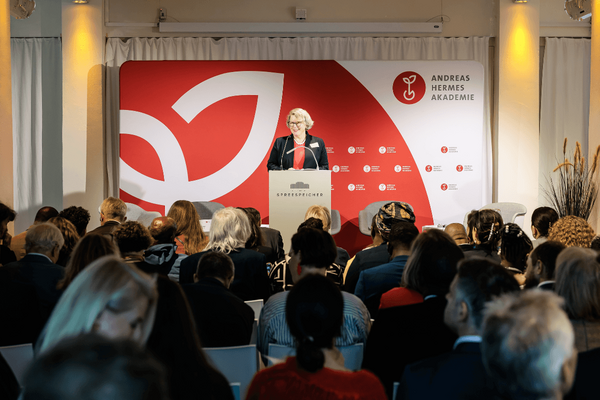
20 years of international engagement, 10 years of successful collaboration with Deutsche Gesellschaft für Internationale Zusammenarbeit (GIZ) GmbH. Andreas Hermes Akademie (AHA) has achieved a very special milestone and invited partners to discuss what has worked in the past and what is needed in the future to create resilient agricultural and food systems.
A Conversation with Dr. Huyam Salih, Monica Yator and Jacob Lekaitogo
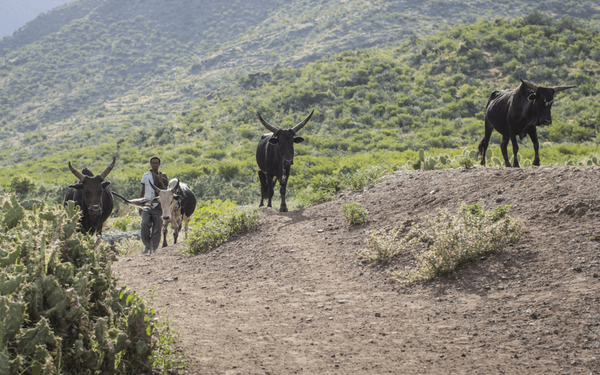
Rangelands cover up to 54% of the global land surface – and pastoralism is one of the eldest forms of land use – yet it is rarely discussed . Now the UN has declared 2026 the International Year of Rangelands and Pastoralists. What prompted the organization to do that and what do pastoralists really need? Three experts share their insights.
Women produce a significant share of the world’s food and play a decisive role in transforming agrifood systems. The International Year of the Woman Farmer 2026 highlights their contributions as innovators, entrepreneurs, and drivers of climate-resilient and sustainable development.
A Contribution by GIZ, FAO WFF Youth Initiative and UN Women
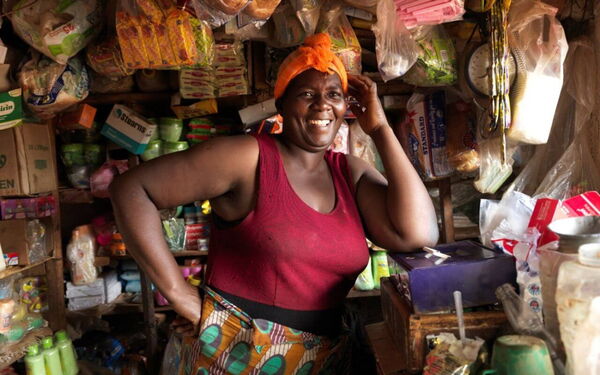
This portrait series tells the stories of 11 women working across food systems – as farmers, leaders, cooperative members, aquaculture workers, and environmental stewards – highlighting their contributions to sustaining land, water, biodiversity, and communities.
As a young leader in northern Uganda, Sarah Awor had to overcome stereotypes, limited resources, and family resistance. Today, she represents a new generation of women farmers who see agriculture as a space for entrepreneurial and collective transformation.
In this podcast series we shine light on the urgent need to transform our agricultural and food systems. Talking to diverse guests and experts, our host Katie Gallus seeks to unearth innovative solutions that can make agricultural and food systems more sustainable, create meaningful employment opportunities, and foster prosperity for all.
Climate adaptation, youth empowerment, and food systems intersect with challenging social and political conditions. Lucky Andrianirina illustrates how young people in Madagascar navigate structural barriers, translate global agendas into local action, and understand agriculture as a space of agency and hope.
The Nyayo Tea Zones Development Corporation is committed to the preservation of forests in Kenya: The establishment of so-called buffer zones counteracts deforestation by planting trees and tea. In addition to the production of environmentally friendly tea, the project benefits the resources of the forests and the livelihoods of the communities living near the forests, says project manager Wallace Gichunge.
Stunting as a sign of chronic undernutrition, alongside overweight and obesity: Astrid Prange de Oliveira explains why poorer countries in particular are facing the double burden of malnutrition and why this is a development policy challenge.
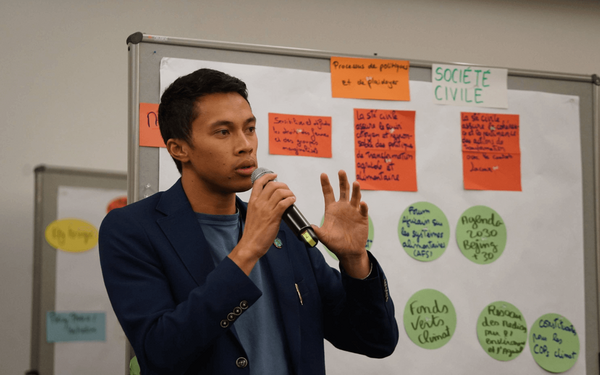
Disruption or transformation? With the new Strategic Foresight Report for Agriculture and Food Systems, the Deutsche Gesellschaft für Internationale Zusammenarbeit (GIZ) looks into future scenarios of the post 2030 era.
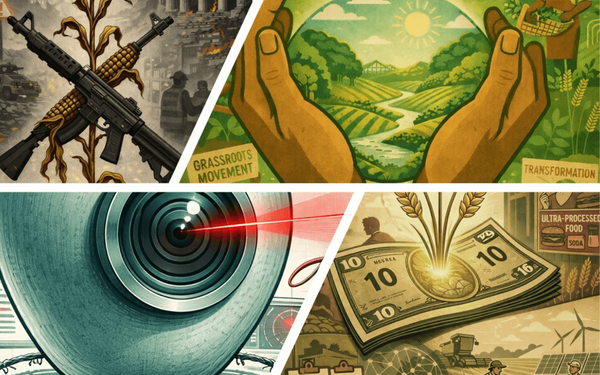
A focus on fragile contexts highlights development policy’s unique contribution to security policy and shows how the special initiative “Transformation of Agricultural and Food Systems“ itself needs to develop further. An article by Jes Weigelt, Head of Programmes at the TMG Think Tank for Sustainability.
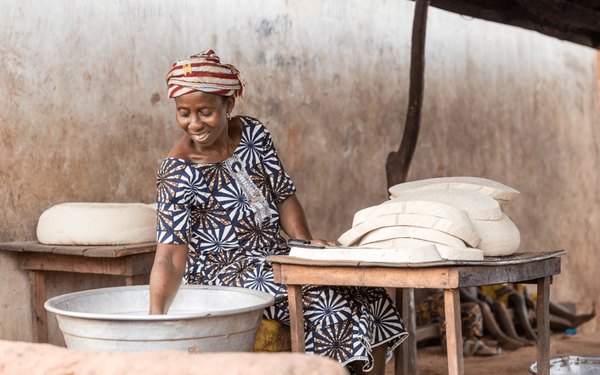
In southern Benin, Julienne processes soybeans into tofu. Rather than relying on subsidies, she has built her own business step by step. Her path shows how local financing, shared risk assessment, and entrepreneurial skills contribute to transforming agrifood systems.
Development cooperation doesn't resonate in Germany? The Bavarian rural women have a different story to tell. A visit to a training session with female smallholder farmers from Kenya, Zambia and Uganda in Bavarian Herrsching am Ammersee.
In a new study, the international humanitarian agency CARE analyses how the economic and social barriers faced by women significantly reduces the global gross domestic product (GDP). At the current rate, it will take 152 years to close the economic gap between women and men – although closing this gap would be extremely profitable from an economic perspective.
The future of agriculture lies in the hands of young people. Genna Tesdall from the International Netwrok Young Professionals for Agricultural Development (YPARD) discusses what they need.
Climate adaptation, youth empowerment, and food systems intersect with challenging social and political conditions. Lucky Andrianirina illustrates how young people in Madagascar navigate structural barriers, translate global agendas into local action, and understand agriculture as a space of agency and hope.
The future of agriculture lies in the hands of young people. Genna Tesdall from the International Netwrok Young Professionals for Agricultural Development (YPARD) discusses what they need.
The results of twelve years of cooperation: a compendium by the Deutsche Gesellschaft für Internationale Zusammenarbeit (GIZ) takes stock of the work of green innovation centres in 16 countries. It brings together experiences, documents successes and challenges, and collects key findings for practical application and policy-making.
A Contribution by the German Institute for International and Security Affairs (SWP)
Against the backdrop of the current conflict in Iran and the associated closure of the Strait of Hormuz, the strategic significance of maritime infrastructure has acquired renewed urgency. A 2024 study by the Stiftung Wissenschaft und Politik (SWP) examines this relevance and discusses appropriate protective measures for different forms of critical infrastructure within the maritime space.
Food systems are often reduced to production and trade. Mary Karanu of Welthungerhilfe in Kenya shows that they also reflect social and political orders, shaping power relations, the recognition of labor, and structural vulnerability across smallholder contexts in Africa and global supply chains.
The battle against hunger can only be won if civil society, science, business, and politics are willing to augment their expertise and learn mutually from experience. There are different approaches and ideas on how to achieve the aim of 2030 Agenda to end hunger – we report on these.
We use cookies on our website. Some of them are essential, while others help to improve your user experience. Your consent is voluntary and can be revoked at any time on the "Privacy" page.
Protects against cross-site request forgery attacks
Retention period: This cookie remains only for the current browser session.
Saves the current PHP session.
Retention period: This cookie remains only for the current browser session.
Content from third-party providers, such as YouTube, which collect data about usage. Third-party content embedded on this website will only be displayed to you if you expressly agree to this here.
Provider: Google Ireland Ltd., Gordon House, Barrow Street, Dublin 4, Ireland
Retention period: Here you can learn more about the storage period of the cookie: https://policies.google.com/privacy.
Provider: Vimeo, Inc. / 555 West 18th Street New York, New York 10011, USA
Retention period: Here you can learn more about the storage period of the cookie: https://vimeo.com/privacy.
We use Matomo analytics software, which collects anonymous data about website usage and functionality to improve our website and user experience.