Newsletter
Don't miss a thing!
We regularly provide you with the most important news, articles, topics, projects and ideas for One World – No Hunger.
Newsletter
Don't miss a thing!
We regularly provide you with the most important news, articles, topics, projects and ideas for One World – No Hunger.
Please also refer to our data protection declaration.
Stunting as a sign of chronic undernutrition, alongside overweight and obesity: Astrid Prange de Oliveira explains why poorer countries in particular are facing the double burden of malnutrition and why this is a development policy challenge.

In principle, the downward trend in hunger figures is a success story. It is a story that offers encouragement and demonstrates that progress can be achieved and that development cooperation can be effective. However, it is also a story that shows how quickly hard-won successes can falter or even vanish. Or how these achievements can be overshadowed and displaced by other challenges. According to the World Health Organization, the number of people suffering from hunger has declined since 1990. Consequently, the number of illnesses and deaths associated with hunger and malnutrition has also decreased. Yet, this development has not been continuous; there have been repeated setbacks.
Beyond hunger and chronic undernutrition, which manifests as stunting in children, the issues of overweight and obesity are also of increasing concern. In the past 30 years, the proportion of people worldwide living with obesity has doubled – among children and adolescents, it has even quadrupled. For the first time in human history, more than three billion people are affected by overweight or obesity.
The simultaneous prevalence of undernutrition and overweight, particularly in poorer countries, points to a crucial common cause: a lack of access to healthy food. Furthermore, these states suffer especially from the so-called double burden. The consequences –including weakened immune systems, muscle wasting, hypertension, and diabetes – place a heavy strain on already fragile healthcare systems.
To date, investments in nutrition measures fall significantly short of the actual needs, even though such interventions are a sound investment for governments:
"Every dollar invested in the fight against undernutrition yields a return of 23 dollars through improved health outcomes and higher productivity."1
Yet, the 21st century began so promisingly. Even countries with extremely high poverty rates, such as Mozambique, Malawi, Madagascar, Zambia, Ethiopia, Liberia, Kenya, Nepal, or Cambodia, managed to nearly halve the proportion of children with stunted growth between 2000 and 2024.
This success was based on a suite of measures implemented with different priorities depending on the country: interventions that led to higher family incomes, the expansion of maternal and child healthcare, social transfer programs, school feeding programs, the promotion of agricultural production, and nutrition counseling.
The fight against hunger is an integral part of the 17 Sustainable Development Goals (SDGs) agreed upon by the global community in 2015 as part of the 2030 Agenda. In implementing these measures, countries' own efforts have been supported by international donors. For some time now, however, it has been observable that support from many international donors for food security programs is waning. This hits many poorer countries particularly hard. Yet, it is not only international donors who have reduced their support; the framework conditions for meeting national goals have also become more difficult within the affected countries themselves.
"A lack of funding, missing political will, and economic instability have caused the fight against hunger and malnutrition to stagnate," explains nutrition expert Cecilia Maina, a researcher at the Bonn-based Center for Development Research (ZEF).
Added to this are external shocks such as droughts and floods, rising food and energy prices since the war in Ukraine, and the after-effects of the COVID-19 pandemic. Given the noticeably advancing effects of climate change, greater investments are also required for agricultural adaptation, including more resilient seeds and social transfer programs.
Development cooperation, financed through the Federal Ministry for Economic Cooperation and Development (BMZ), remains active in Malawi. Among other things, it supports the government in building institutional capacities to better protect domestic agri-food systems against the consequences of climate change. The project is scheduled to run until 2027.2
Team leader Vitowe Batch, who is implementing the project on the ground with the Deutsche Gesellschaft für Internationale Zusammenarbeit (GIZ), reports: “The situation is worsening.” “People in urban slums are having a very hard time right now.” She notes that the monthly costs for a balanced diet per household increased by over 200 percent between 2021 and 2024. The consequence: In Malawi, chronic undernutrition among children is now also increasing in cities and larger communities. According to the National Demographic Health Survey, the rate has been rising steadily since 2015 and is now almost on par with the 37 percent rate recorded for children under five in the rural population.
At the same time, however, overweight among children is also increasing in Malawi. According to a ZEF study, the proportion grew from 1.6 percent in 2017 to 6.1 percent in 2024. In urban areas, the share (8.1%) was higher than in rural regions (5.8%).3 For comparison: In Germany, the proportion of five- to 19-year-olds with obesity was 8.5 percent in 2022. For the population aged 18 and over, it was as high as 20 percent.
Malawi is thus following a global trend. Overweight and obesity are increasing not only in industrialized and oil-exporting countries but also in the world's poorest nations.4 This is also evidenced by a study by public health researcher Majid Ezzati from Imperial College London, whose results were published in the British journal The Lancet in 2024.5 For the study, data from 197 countries worldwide between 1990 and 2022 were evaluated. The study classifies obesity as a worldwide problem. Researchers point to an extremely rapid transformation of the nutritional situation in poorer countries.
In Kenya, too, overweight and obesity have increased sharply. According to official figures, the proportion of affected women aged between 20 and 49 rose from 17 percent to 45 percent between 1998 and 2022. “45 percent is a staggering figure,” explains expert Cecilia Maina. She attributes the trend to aggressive marketing of unhealthy foods in urban areas and the lack of time among the urban population. This is where the work of the European Commission (Directorate-General for International Partnerships) comes in – for example, through the Capacity for Nutrition project – to promote healthy diets in partner countries. Cultural factors also play a role.
“Junk food is often seen as something modern, something that people in Western countries eat, so people want to try it,” says Maina.
Malawi project leader Vitowe Batch also refers to the harsh everyday life in cities: “The workload is so great that parents often have no time to prepare healthy meals for themselves and their children.” Furthermore, she criticizes that development interventions, in particular, caught onto the trend too late. “Until now, we have mainly focused on rural regions; we have neglected the population in urban areas.” Cecilia Maina confirms this. “Governments are not addressing the issue of obesity; they are focusing on the fight against hunger, wasting, and stunting,” she says. “That needs to change.”
1 The World Bank report: "Investment Framework for Nutrition"
2 GIZ project: "Promoting and improving agri-food systems in Malawi"
4 WHO data collection: "Share of adults who are overweight or obese, 2022"
5 "The Lancet" report: "Worldwide trends in underweight and obesity from 1990 to 2022"

Read more Is the international community still on track in the fight against hunger?

Read more Global responsibility: Tackling hunger is the only way forward

Read more Biodiversity and agriculture – rivalry or a new friendship?
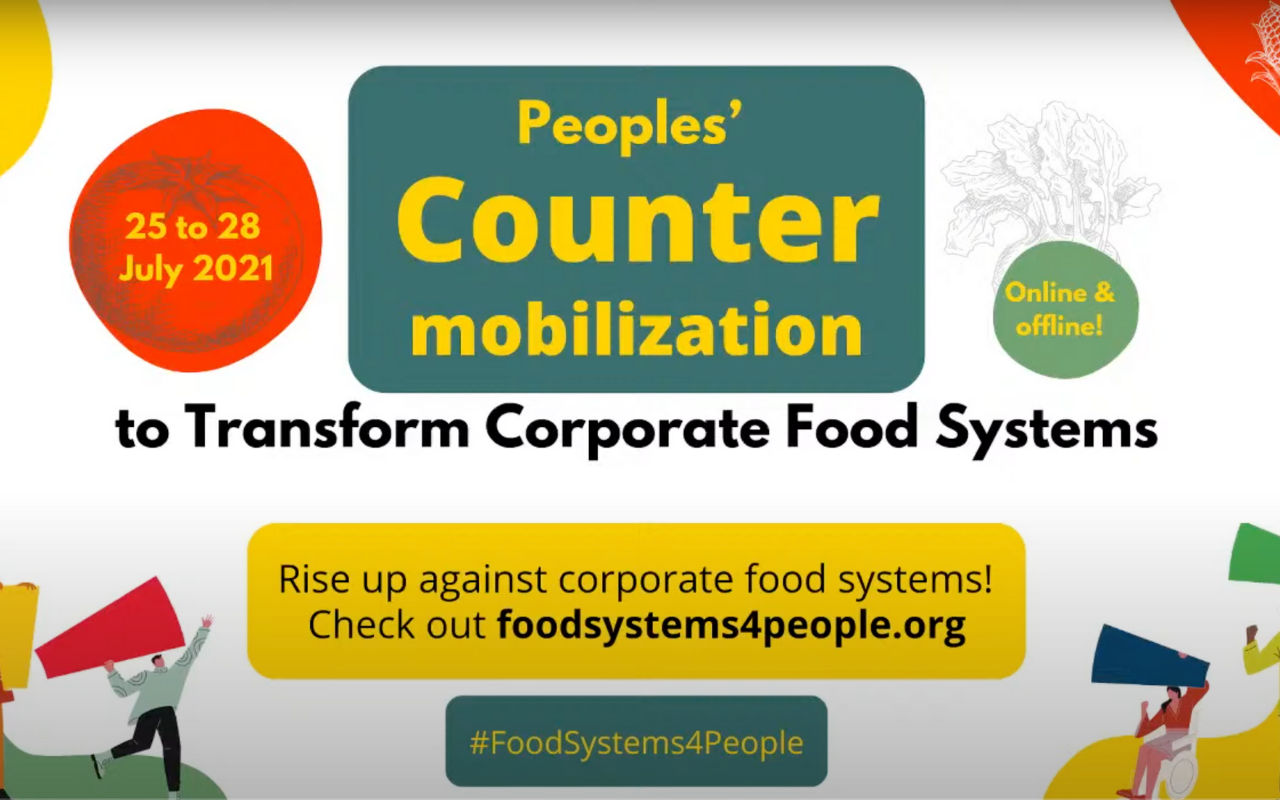
Read more Mr. Marí, what happened at the alternative summit?

Read more What is wrong with our nutrition in Germany, Mr. Plagge ?

Read more How Can We Feed The World in Times of Climate Change?

Read more Nine Harvests Left until 2030: How Will the BMZ Organise Itself in the Future?

Read more Cooperation and Effective Incentives for Sustainable Land Use

Read more What Needs to Change for Africa’s Youth, Ms Kah Walla?
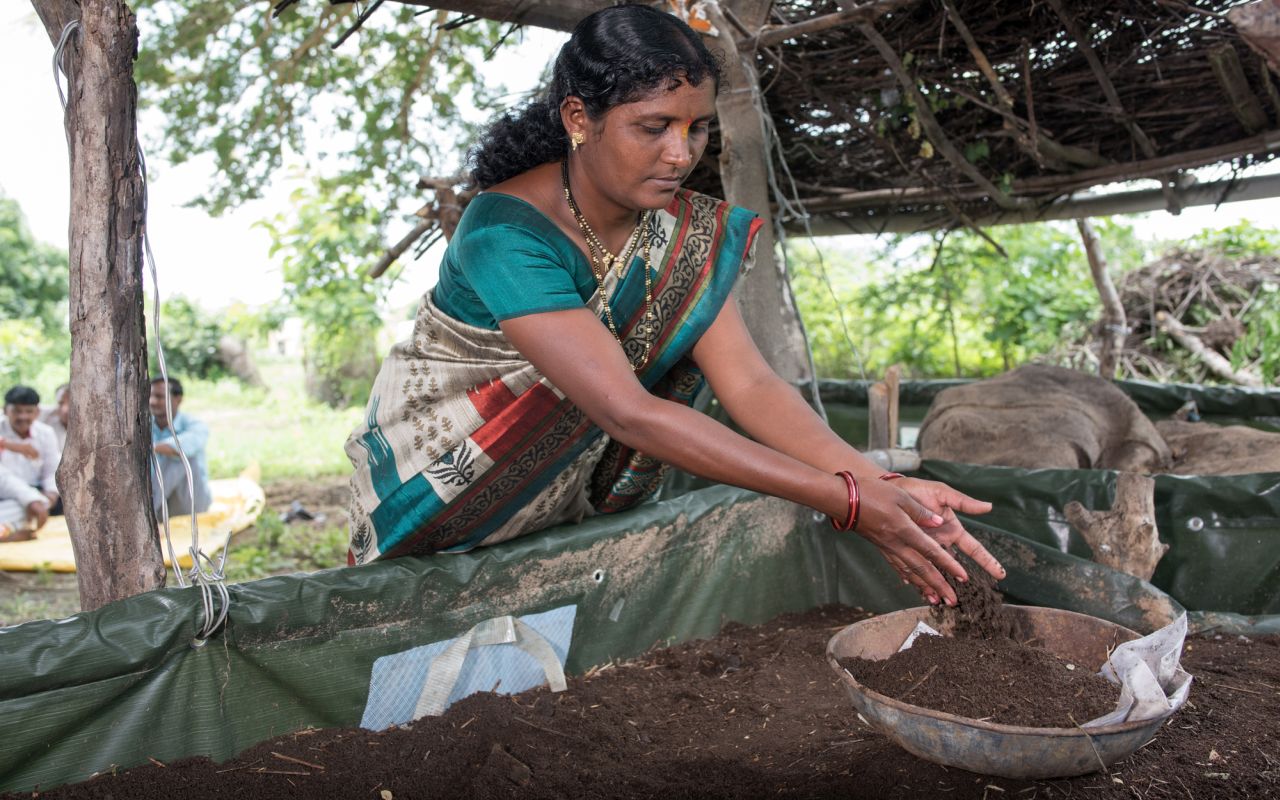
Read more How to Enhance Soil Organic Carbon – Uniting Traditional and Innovative Practices

Read more Digitalization: The Driving Force in the Future of Agriculture?

Read more Our Food Systems are in Urgent Need of Crisis-Proofing: what needs to be done

Read more "Human capital will play a pivotal role in the transformation of African economies"

Read more The importance of water for sustainable rural development

Read more New legal initiatives towards deforestation-free supply chains as a game changer

Read more 2022, a year of crisis – What does it mean for African trade and food security?

Read more How the War against Ukraine Destabilizes Global Grain Markets

Read more Controversy: Do supply chains need liability rules?

Read more 5 Questions for Jann Lay: What is Corona doing to the economy?

Read more Sustainable, feminist and socially just: The new Africa strategy of the BMZ

Read more Do import restrictions really benefit the local poor in West Africa?

Read more Sang'alo Institute invests in farming of sunflower crop

Read more Farmers' organizations want to be involved in designing agricultural policy

Read more BMZ releases video on the transformation of agricultural and food systems

Read more “More of the same is not enough - we need to rethink”

Read more Partners for change - Network meeting on transforming agricultural and food systems

Read more What is needed for a long-term fertiliser strategy?

Read more A framework for sustainable and fair agriculture and food systems

Read more Female Leadership: A Key Lever for Transformation?

Read more Gender-Transformative Approaches – Unlocking Everyone’s Potential

Read more Adapted financial services – a key to transformation

Read more From Pledges to Progress: Nutrition at the Heart of Inclusive Development

Read more A political opportunity to overcome structural barriers for women farmers

Read more Bundled Knowledge – The Compendium of the Green Innovation Centers

Read more „Young people tend to be on that curve of early adopter“

Read more “I feel the weight of hundreds of millions of farmers”


Read more One Health – What we are learning from the Corona crisis

Read more Ms Rudloff, what are the benefits of a supply chain law?

Read more The state of food security in Cape Town and St. Helena Bay

Read more School Feeding: A unique platform to address gender inequalities

Read more Freed from trade? Towards a fairer EU Trade Agenda

Read more Food security is more than production volumes and high yields

Read more The Agri-Food Map: An interactive map to explore sustainable agri-food systems