How much do we actually waste, Mr. McFeely?

The WWF has published a sensational study on food waste. The focus is on farm-stage loss. Peter McFeely, Global head of communications and strategic planning, Food, at WWF, explains what needs to be done.

The WWF report was published in July and is the first to shed light on global food losses in agricultural production © WWF

By Peter Mcfeely

Peter leads communications and strategic planning for WWF's global Food Practice. He worked in a leadership role with the UN Food Systems Summit communications team, overseeing communications for the Action Track on nature-positive production.

All contributions

World Wide Fund For Nature (WWF)

By Jan Rübel

Jan Rübel is author at Zeitenspiegel Reportagen, a columnist at Yahoo and writes for national newspapers and magazines. He studied History and Middle Eastern Studies.

All contributions

In your report you do not distinguish between food loss and food waste. What is the difference and why did you decide not to use this distinction?

There are often misconceptions that loss, which happens prior to the point of consumption, is down to uncontrollable factors-like market conditions, pests, disease, extreme weather and so on) and poor infrastructure, while waste at the end of the supply chain happens because people make bad decisions. As a result, loss is often seen as less avoidable. In Driven to Waste we talk about food loss and waste on the farm, in other words a stage normally defined only as food loss to be clear that there are a multitude of human factors, conscious decisions or otherwise, that mean a huge amount of food produced with the intention and suitability of human consumption never even makes it off the farm. So it is possible to avoid a lot of the issues at this stage.


In the report you also point out that the extent of food loss and waste is probably more like 40 percent than the previously assumed and frequently communicated one third, how do these different figures come about?

The commonly-accepted estimation of one third of all food being lost or wasted comes from an FAO 2011 report. Numerous food waste studies have been conducted since then; however, the supply chain stages and parameters of each vary. Driven to Waste measures outputs from primary food production that are, or were at some point, intended and suitable for human consumption but which end up either not being harvested or sent to one of a range of food waste destinations.


As well as including harvest waste, which many studies since FAO’s 2011 report do not, these estimations provide an up-to-date view of the potential scale of whole supply chain waste.


This data was then combined with latest figures from UNEP (Food Waste Index 2020) and FAO (Food Loss Index 2019) and, as the data came from different years, standardised against a common production total. This results in an estimate of approximately 40 percent of all food produced being lost or wasted. This figure is indicative and, if anything, is likely to be an underestimation - it is an estimate based on academic assumptions.


You criticise the fact that primary production and the resulting farm stage waste of up to 8.3 percent was not included in SDG 12. How do you explain this oversight and what do you demand from the United Nations?

SDG12.3 sets a specific target for reducing food waste by 50 percent and a non-specific target for reducing post-harvest food loss. SDG 12.3 therefore seemingly places greater importance on food waste. Champions 12.3 suggest that this reduces “both ambition and focus on an issue (food losses) that is important for many regions of the world” We need specific and ambitious targets to motivate action to reduce all ‘loss’ not just post-harvest. We aren’t calling for a rewriting of the SDGs, rather for stakeholders across food supply chains - farmers, businesses, civil society, governments, multilaterals like the UN - to adopt more ambitious targets
and ensure loss and waste earlier in the supply chain is given equal attention.


The environmental impacts of farm-stage food waste seem to be enormous. But how realistic is it to reduce these impacts? Wouldn’t GHG emissions, water use and land use occur even if the food would not be wasted? And how important is the monitoring of farm-stage food waste impacts?

We already produce enough food to feed 10 billion people. We are producing more than we need, largely because we are wasting so much of it! If we produced only what we needed today, we would dramatically decrease our agricultural land and water use, and food-related emissions. But feeding a growing population within planetary boundaries isn’t just about eliminating food loss and waste. It is also about adopting nature-positive production practices which allow us to produce food with nature, not against it, and shifting to healthier, more sustainable consumption patterns which are less resource-intensive to produce.


It also must be noted that a significant portion of emissions attributed to unconsumed food are those released while food decomposes in landfill, releasing methane.


Over 100 years methane is 28 times more warming than carbon dioxide. Even though methane accounts for only about 3 percent of total emissions by mass, it’s responsible for 30-50 percent of the global warming we see today. Tackling food loss and waste would make a big difference. Especially as methane only stays in the atmosphere for about 12 years before breaking down, while carbon dioxide stays there for centuries, meaning we could rapidly reduce the current rate of warming by reducing methane emissions. Measuring on-farm food loss and waste is very important- as it is across the whole supply chain. What isn’t measured isn’t addressed. Evidence shows us that better measurement and understanding of the drivers behind food loss and waste is a pathway to provoke action. Effective separation, measurement, and reporting enable strategic action to prevent loss and waste. Across the whole food supply chain, we need to institutionalise measurement, benchmarking, and goal setting.


In the study, the authors differentiate between direct drivers and indirect drivers of farm-stage waste and point out that combined approaches which consider the problem holistically are necessary to solve it. What kind of approaches are already in use?

Interventions in the past have tended to focus on discrete technical solutions addressing issues with farm technology or storage, whilst largely ignoring socio-economic and market factors that shape the agricultural system. Crucially, these wider influences involve actors and agencies beyond the farm gate which farmers and farm-stage interventions have little influence over. Moving forward, we need more holistic solutions that balance actions that combine actions of technology and training, and address biological and environmental drivers, markets factors and so on: no single intervention is likely to succeed.


That means actors all across food supply chains need to take action.


With help from WRAP and WWF, governments in Mexico, South Africa, and the United States Pacific Coast are building voluntary agreements and public-private sector partnerships, with a model proven first in the UK with the Courtauld Commitment.


With 44 percent loss in relation to total production, fishing is a major cause of food waste. What does this problem look like in Tanzania and Uganda and what countermeasures do you recommend?

One example is losses of dagaa, a small fish in Lake Victoria, which occurs while these fish are being sun-dried on the ground near landing sites. During rainy seasons, when it is hard to dry the fish, huge amounts of fish can rot or be washed away. The immediate issue is the lack of suitable drying equipment and technology, but it’s indirectly caused by low market prices and lack of access to capital; or lack of investment in infrastructure. Improving local micro-investment infrastructure could enable fishing communities to invest in simple technology such as raised platforms for drying the fish. This in turn could greatly reduce the volume of food wasted, increasing fishers incomes, food and nutrition security, and reducing the amount of fish removed from the lake and other environmental impacts.


Rice production in Asian countries also generates about 41 million tonnes of farm-stage rice waste annually. What practices drive the waste and what role does market demand play?

Rice waste is driven by numerous on-farm practices such as choice of rice variety for example, when farmers select a crop that may command a higher price, but be less suitable for the growing environment, use of poor quality rice seed, poor agricultural practices and the timing and method of harvesting and threshing. Some of these issues could be addressed by improving access to seeds and varieties, or providing improved training. However, a lot of the problem comes from market demands and behaviours: for example, many farmers are picking varieties not well suited for their region or land because of market demand for specific types of rice, such as basmati. They could grow something else, increase their yields and reduce their waste, and reduce impacts on the environment, but their livelihoods would likely suffer as there isn’t a market for the alternative grain. Despite lower yields and higher waste rates, farmers are able to secure better prices for more popular variants of rice, so they keep growing the high-waste varieties.


The implementation of true cost accounting, in which the social and environmental costs of food are accounted for in the price, would help shift market demand away from these wasteful products.


What measures do governments need to implement in order to reduce farm-stage food waste? Are there already countries that can be a role model for other nations and their food policies through incentives or taxes?

City, regional and national governments need to set clear and measurable goals to develop circular food economies and show measured reductions in food waste across the supply chain. One of the best examples of this is the US Food Waste Action Plan published in February 2021.Around the world we are seeing ambitious policies to shift away from waste going to landfills - landfill ban policies forbid landfill disposal of food waste, necessitating increased availability and access to government services and market-based solutions. In Korea, consumers and businesses are mandated to separate and measure their food waste and pay proportionate disposal costs. In France businesses are penalised if they throwaway any edible food. These approaches could be explored and adapted on the farm. At the same time, voluntary agreements and other partnerships are necessary to pressure governments to increase ambition and planning around circular food economies. There’s a responsibility for everyone across the food supply chain.


What do you think are the chances that we will better handle the farm-stage food waste problem globally by 2030?

Optimistic and hopeful! There’s more attention than ever before on sustainability, and on food loss and waste itself as an issue. Driven to Waste is a synthesis of nearly 4,000 farm stage food loss data points - there’s more data being produced and more measurement happening than ever before. The ‘Food is Never Waste’ coalition that has emerged from the UN Food Systems Summit is an exciting opportunity to accelerate the implementation of solutions.With all this information and the appetite for action across broader society, there is no reason for action not to happen. If we are to have any hope of delivering the SDGs we need to transform food systems - and tackling food loss and waste, including farm-stage, is essential to ending both hunger and the over-exploitation

Similar articles

A smiling person in traditional attire stands in a lush field with goats, enjoying a sunny day.

Policy against disasters

Interview with Thomas Loster

Insurance companies could provide protection during droughts in Africa. How exactly this could be done is what the industry is currently trying to figure out. First experiences are available. An interview with the Managing Director of the Munich Re Foundation, Thomas Loster

Read more

A woman with curly hair and hoop earrings speaks confidently in a formal setting with a blurred emblem in the background.

'It has never been more possible'

Interview with Carin Smaller (Ceres2030)

Over a period of two years, the Ceres2030 team spent researching answers to the questions of how much it will how much it will cost to realize SDG 2 and where that money should be spent most effectively. IISD Senior Advisor and Ceres2030 Co-director Carin Smaller about small farmers, machine learning and women empowerment.

Read more

Two women in colorful headscarves bend over to harvest crops in a lush green field.

„You must be multisectoral in your thinking”

Interview with Adriano Campolina (FAO)

For years, place-based approaches to development have been considered important features in development cooperation, at the BMZ and in FAO. Both organisations are aiming at advancing these approaches: an interview with Adriano Campolina from the FAO on territorial and landscape perspectives.

Read more

Is the international community still on track in the fight against hunger?

Interview with Miriam Wiemers (Welthungerhilfe)

The Global Hunger Index (GHI) 2020 shows that the world is not on track to meet the international goal of “zero hunger by 2030”. If we continue at our current speed, around 37 countries will not even have reached a low hunger level by 2030.

Read more

Jürgen Vögele, Weltbank

"Agricultural research unties the Gordian knot"

Interview with World Bank Vice President Voegele

The CGIAR agricultural research organization is systematically repositioning itself. We spoke with Juergen Voegele, Vice President for Sustainable Development at the World Bank, about progress to date - and discuss what needs to be done collectively to stop global hunger in ten years.

Read more

A large video wall displays numerous participants in a virtual conference with a "goes virtual" banner prominently featured.

GFFA 2021 focussed on climate and COVID-19

A report by David Sahay (Zeitenspiegel)

110 speakers from 120 countries met virtually at the Global Forum for Food and Agriculture (GFFA) to discuss the challenges to global food supply. They asked the question: How can food systems support the health of people and the planet?

Read more

Young corn plants grow in neat rows across a lush field under a cloudy sky, showcasing sustainable farming techniques.

COST-BENEFIT ANALYSES FOR MORE SOIL CONSERVATION

With the help of sustainable farming methods, soils can be preserved and made fertile again. The investment required is also worthwhile from a financial perspective.

A project of GIZ

Read more

A focused worker in blue coveralls operates machinery, wearing safety goggles on his head.

More than just a seat at the table

A contribution by Welthungerhilfe

Africa is home to the world’s youngest and fastest growing population. For many young people, agriculture could offer a job perspective. But to improve the living conditions and job prospects of young people in rural areas, political reforms and investments are desperately needed, as these people will be at the centre of agriculture and agricultural development in the future.

Read more

Farmers work together threshing rice in a field with a makeshift machine under the clear sky.

Leveraging investment impacts

A contribution by Heike Baumüller, Christine Husmann, Julia Machovsky-Smid, Oliver Kirui, Justice Tambo

Any initiative whose aim is to reduce poverty in Africa should focus first on agriculture. But what kind of investment has the greatest impact? The use of scientific criteria provides some answers.

Read more

A drone sprays pesticide over lush green tea plantations on a sunny hillside.

Pesticides – a blessing or a curse?

A debate between Lena Luig and Ludger Weß

What are the consequences of using synthetic pesticides in agriculture? Where do they help, where do they harm? Lena Luig, expert for the development policy organization INKOTA, and science journalist Ludger Weß discuss this controversial topic of international scope.

Read more

A large audience attentively listens to a speaker on stage during a conference in a well-lit auditorium.

Visions in agriculture

Video by Frank Schultze and Jan Rübel

At the beginning of December 2018, AGRA's board of directors met in Berlin. The "Alliance for a Green Revolution in Africa" ​​panel discussed the next steps in their policy of modernizing agriculture. How to go on in the next ten years? One question - many answers from experts.

Read more

A woman in a vibrant outfit inspects grains at a bustling market stall filled with colorful baskets of produce.

"Nutrition is a human right"

Interview with Joe DeVries (AGRA)

Joe DeVries is a breeder – and Vice President of AGRA (Alliance for a Green Revolution in Africa). What are the chances and risks of a ’green revolution‘ in Africa? A discourse between Jan Rübel and him about productivity, needs, and paternalism.

Read more

A man in a white coat examines labeled seed bags on wooden shelves, showcasing a collection of agricultural samples.

Wanted: German investment in African agriculture

Interview with Stefan Liebing

Stefan Liebing is chairman of the Africa Association of German Business. The manager calls for a better structure of African farms. Jan Rübel asked him about small farmers, the opportunities for German start-ups and a new fund.

Read more

(c) Christoph Pueschner/Zeitenspiegel
Somalia / Mogadischu, Juli 2011: diese Frau floh mit ihren Kindern aus dem 250 Kilometer entfernten Baidoa in das IDP-Camp Al-Hidaaya. © Christoph Püschner/Zeitenspiegel

Global responsibility: Tackling hunger is the only way forward

A contribution by Lisa Hücking (WHH)

Chancellor Merkel has begun an ambitious European political programme: Striving for compromise in budget negotiations, an orderly Brexit as well as an appropriate response to the corona crisis. Unfortunately, one of her positions that she previously held is nowhere to be found: Africa's prosperity is in the interest of Europe. 

Read more

A smiling woman wearing a colorful headscarf stands in a sunlit field, exuding joy and confidence.

Africa's face of agriculture is female

A contribution by Beatrice Gakuba (AWAN-AFRIKA)

Africa has a huge opportunity to make agriculture its economic driver. However, the potential for this is far from being made exhaustive use of, one reason being that women face considerable difficulties in their economic activities. The organisation AWAN Afrika seeks to change this state of affairs.

Read more

A person in patterned clothing holds a handful of white corn kernels over a large container, showcasing the grain harvest.

A partnership to fight hunger

A contribution by GAFSP

The Global Agriculture and Food Security Program (GAFSP) was launched by the G20 countries in 2010 in response to the 2008-09 food price crisis to increase both public and private investment in agriculture. An overview of the programme's approach, results and impact.

Read more

Two women in traditional attire discuss farming business strategies at a forum, with one holding a microphone.

Innovations for a secure food supply

A contribution by German Agribusiness Alliance

The COVID 19 pandemic is hitting developing and emerging countries and their poorest populations particularly hard. It is important to take countermeasures at an early stage. Companies in the German agricultural sector want to make their contribution to ensuring the availability of urgently needed operating resources.

Read more

A man in a red shirt hands cash to a customer through a service window with a sign about mobile money in the background.

News from the starting block: Changeover

A contribution by Michael Brüntrup (DIE)

The region of Sub-Saharan Africa is on the decisive verge of a great development boost in farming: it could skip entire generations of technological development. But how? About possible roles and potentials of digital services.

Read more

A woman presents agricultural produce to a seated group outside, near a house, emphasizing community engagement.

"The Green Revolution reaches its limits"

Interview with Stig Tanzmann (BfdW)

Stig Tanzmann is a farmer and adviser on agricultural issues at ‘Bread for the World’. Jan Rübel interviewed him about his reservations about AGRA's strategy.

Read more

A person speaks passionately at a podium during a presentation at the Ministry for Economic Cooperation and Development.

The communicator

A contribution by Jan Rübel

What do electrical engineering, telecommunications and agriculture have in common? They arouse the passion of Strive Masiyiwa: Thirty years ago, he started an electrical installation company with $75, later riding the telecommunications wave as a pioneer. Today he is committed to transforming African agriculture.

Read more

A man in a suit gestures expressively during a conversation, with green plants in the background.

Spiritual mortar for the young generation

A contribution by Jan Rübel

Fred Swaniker is working building a new era of leaders. And what about agriculture? ‘It needs to be more sexy!’

Read more

Farmers operate a blue and red tractor tilling dry soil in a dusty field under clear skies.

Continent in an uptrend

A report by Dr. Agnes Kalibata (AGRA)

Partnering for Africa’s Century: Innovation and Leadership as Drivers of Growth and Productivity in Rural Areas

Read more

A group of people and cattle walk through a lush green field near traditional huts, showcasing agricultural biodiversity.

Biodiversity and agriculture – rivalry or a new friendship?
A contribution by Irene Hoffmann (FAO)

In this article, the author describes what we know about interlinkages, what role agriculture has to play in the sustainable use and conservation of biodiversity, and what the necessary changes in agricultural systems might look like, both on small and large-scale farms.

Read more

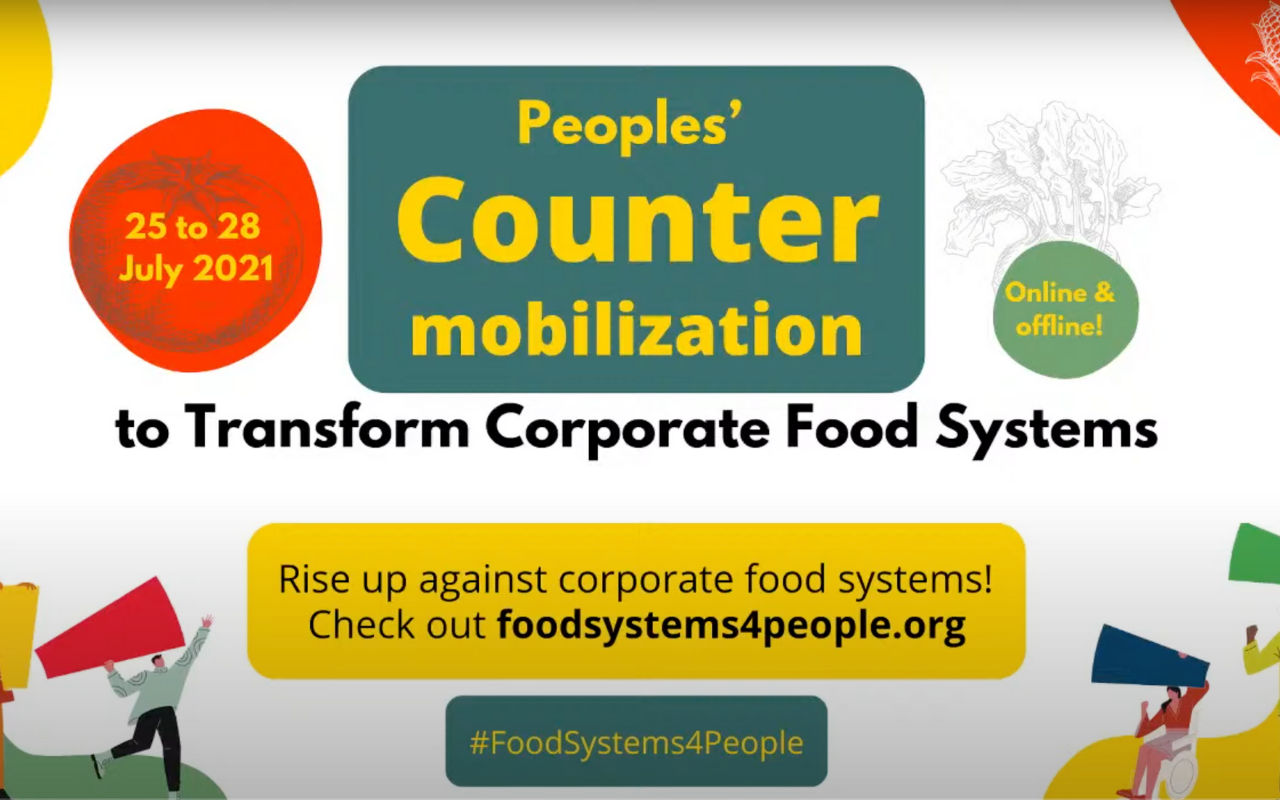
The image promotes a counter-mobilization event to transform corporate food systems, scheduled for July 25-28, 2021.

Mr. Marí, what happened at the alternative summit?

An Interview with Francisco Marí (Brot für die Welt)

Brot für die Welt (Bread for the World) did not attend the UNFSS pre-summit. Instead, the organisation took part in a counter-summit that took place at the same time. A conversation with Francisco Marí about the reasons, the process - and an outlook for the future

Read more

What is wrong with our nutrition in Germany, Mr. Plagge ?

An interview with Jan Plagge (Bioland)

Vitamin-poor nutrition must become more expensive, in-vitro meat is not a panacea, and agricultural systems should be more decentralised. Bioland President Jan Plagge in an interview about the challenge of (future) world nutrition.

Read more

Aerial view of a vibrant green field with parallel tractor lines and a distinct curved pattern.

How Can We Feed The World in Times of Climate Change?

A Contribution by Jan Grossarth

Genetically modified bacteria become edible proteins, cows graze on pasture, and no waste is produced in an industrial circular economy. Journalist Jan Grossarth sees a silver lining for the future of world nutrition

Read more

A person uses a tablet in a greenhouse, symbolizing innovation with a lightbulb icon featuring a tree.

Innovation Challenge 2021

Competition for ideas by BMZ

Out of 40 consortia that applied from all over the world, 14 were invited to present their innovative concept on agroecological approaches in the form of an online pitch and to face the questions of an international jury of experts. Find out which six semi-finalists were selected by the jury and what happens next in this article.

Read more

A facilitator leads a diverse group in a dynamic workshop activity, with participants standing in a circle and engaging actively.

The future is rural

A contribution by "World Without Hunger"

The future is rural. Young African entrepreneurs gave their generation a vocie during the G-20 conference in Berlin. "World Without Hunger" asked six of them, how more jobs can be created in rural areas.

Read more

The image shows a BMZ publication cover on sustainable agri-food systems with Earth and a focus on ending hunger.

Nine Harvests Left until 2030: How Will the BMZ Organise Itself in the Future?

An Interview with Dirk Schattschneider (BMZ)

"One World no Hunger" (SEWOH) becomes one of the five core themes of the BMZ. Dirk Schattschneider, SEWOH Commissioner about previous approaches, future areas of action, and the political will to end hunger.

Read more

Two people wearing conical hats are working in a lush green rice field, engaging in a focused discussion.

'The Doors are Open - We Farmers are Ready'

An Interview with Shamika Mone (INOFO) and Elizabeth Nsimadala (EAFF)

At the UN Food Systems Summit, farmers organizations have been represented on the international stage for the first time ever. Two representatives talk about bridging personal aspirations with the representation of regional needs and international negotiations.

Read more

Two women are tending to rows of seedlings in a lush, organized nursery garden.

Cooperation and Effective Incentives for Sustainable Land Use

A Contribution by GIZ

The second GFFA expert panel highlights the need for governance action to reverse global trends of land degradation.

Read more

A barren landscape near Lake Chad shows scattered animal bones and sparse vegetation under a clear sky.

GFFA for New Perspectives on the Planet’s Soils

A Contribution by Journalist Jan Ruebel

For five days, the 2022 Global Forum for Food and Agriculture (GFFA) in Berlin is all about strategies for a more sustainable land use.

Read more

Aerial view of widespread flooding covering agricultural fields and rural roads, showcasing the impact on the landscape.

Strenghtening Farmers' Rights with Soft Laws

A Contribution by Welthungerhilfe

How the UN Voluntary Guidelines on the Responsible Governance of Tenure of Land, Fisheries and Forests (VGGT) contribute to fairer and more secure land access.

Read more

A woman in a floral dress stands peacefully in a lush green field under a cloudy sky.

What Needs to Change for Africa’s Youth, Ms Kah Walla?
An Interview with Kah Walla

A conversation with the activist and entrepreneur Kah Walla about what needs to change for young people in rural Africa.

Read more

A woman in traditional attire processes compost in a rural Indian setting, highlighting sustainable agriculture practices.

How to Enhance Soil Organic Carbon – Uniting Traditional and Innovative Practices

A Contribution by GIZ

Indian farmers restore precious soil material combining traditional with innovative approaches. A case example how governance, agriculture and development cooperation can work together to combat climate change.

Read more

A person stands in a lush green field using a smartphone, highlighting the role of ICT in agriculture.

Digitalization: The Driving Force in the Future of Agriculture?

A Contribution by GIZ

At the ICTforAg conference in March 2022, the digital agriculture community exchanged on the challenges and opportunities associated with the next green revolution.

Read more

A herd of cattle walks along a rural road under a clear sky, guided by herders.

Our Food Systems are in Urgent Need of Crisis-Proofing: what needs to be done

An Artikel by TMG

Based on a scientific study by TMG Think Tank, the authors highlight various challenges in the fight against the hunger crisis. The findings show that climate change, conflict and covid-19 are increasing food and energy prices.


Read more

Lush green foliage thrives in a dense, vibrant display of biodiversity in a tropical jungle setting.

New UN Biodiversity Agreement

A Contribution by Rural 21

Nations adopted four goals and 23 targets for 2030 to foster biodiversity conservation and counter acceleration in the global rate of species extinction at the UN Biodiversity Conference (COP15).

Read more

A worker in a green shirt and red hard hat operates a control panel in a rural industrial setting.

"Human capital will play a pivotal role in the transformation of African economies"

A contribution by Ben Leyka

The potential the African food sector holds is still far too strongly associated with the continent’s natural resources, Ben Leyka maintains. He seeks to change this with the African Agri Council.

Read more

Four people engage in a panel discussion at a podium, with a backdrop featuring agricultural imagery.

And a semicolon in the middle

A contribution by Jan Rübel

After a two-year break due to Corona, the doors of the International Green Week (IGW) in Berlin are opening again. From 20th to 29th January, visitors from all over the world can discover, marvel and taste the produce. But the event is not only feasting and fun. The BMZ stand asks questions about where food comes from & where it goes – and in the process becomes a crash test for many habits.

Read more

A winding irrigation canal runs through a lush Ethiopian valley, showcasing effective water management techniques.

The importance of water for sustainable rural development

A contribtion by WE4F

How can the challenges related to water, rural development and climate resilient agriculture be addressed? What innovations need to be promoted? The Water and Energy for Food (WE4F) initiative presents strategies and innovations for sustainable, integrated water management in German and international cooperation.

Read more

A stormy sky looms over a vast green wheat field in Ukraine, creating a dramatic and contrasting landscape.

From reaction to action

A contribtion by GIZ

A Year of Multiple Crises: Russian war against Ukraine, extreme weather events, high prices for energy and fertilizer, food crisis had severe implications for food security and agriculture globally and especially in Sub-Saharan Africa. A Transformation of the food systems is needed.

Read more

Rows of young plants are neatly arranged in a field, surrounded by lush greenery and a forest backdrop.

New legal initiatives towards deforestation-free supply chains as a game changer

A Contribution by Gerhard Langenberger

Regarding deforestation free supply chains, there are challenges and opportunities for smallholder farmers as well as for international forest governance. Also, responsibilities for companies and potential incentives for manufacturers to use materials from fair trade and sustainable sources need to be explored. But what does “deforestation-free” actually mean?

Read more

A large red cargo ship loaded with colorful containers sails under a bright blue sky with scattered clouds.

2022, a year of crisis – What does it mean for African trade and food security?

A Contribution by Ousmane Badiane

The Africa Agriculture Trade Monitor 2022 (AATM) was published by IFPRI and AKADEMIYA2063. The report analyses the short- and long-term trends and drivers of African agricultural trade flows, including regional policies and the role of global markets.

Read more

Golden wheat fields sway under a vibrant blue sky with scattered clouds in Ukraine. | © Polina Rytova

How the War against Ukraine Destabilizes Global Grain Markets

A Contribution by GIZ

Since early February 2022, two of the biggest grain and oilseed exporters have been at war. An overview, which countries are affected most severely by the destabilized grain markets, and what comes next.

Read more

©GaÎl GellÈ
Cote d'Ivoire

Controversy: Do supply chains need liability rules?

Discussion about the potential supply chain law

The German government is struggling to pass a supply chain law. It is intended to address violations of human rights, social and environmental standards. What would the consequences be for business? A double interview with Veselina Vasileva from GEPA and economics professor Andreas Freytag.

Read more

GDP Growth 2020
GDP Growth 2020

5 Questions for Jann Lay: What is Corona doing to the economy?

Interview with Jann Lay (GIGA)

The Corona pandemic is hitting economies around the world very hard - but developments in African countries are quite diverse. There are different speeds, resiliences and vulnerabilities. What are the reasons for this? Apl. Prof. Jann Lay of the GIGA Institute provides answers.

Read more

The image shows a vibrant view of Earth from space, highlighting Africa and Europe amidst a starry sky.

Sustainable, feminist and socially just: The new Africa strategy of the BMZ

A contribution by Prof. Dr. Anna-Katharina Hornidge

In the video format "#99SecondsWith" of the German Institute of Development and Sustainability (IDOS), Prof. Dr Anna - Katharina Hornidge talks about the new Africa-Strategy of the Federal Ministry for Economic Cooperation and Development (BMZ).

Read more

A rooster with vibrant red comb and detailed plumage stands alert behind a wire fence in a rural setting.

Do import restrictions really benefit the local poor in West Africa?

A contribution by Isabel Knößlsdorfer

Protectionist policies like tariffs supposedly protect domestic producers if they cannot compete with cheaper imported products. Some African countries have therefore opted to impose such import restrictions for a number of products. For the case of chicken imports in Ghana, this study analyses whether restrictions would lead to overall positive or negative welfare effects among households.

Read more

A group of people walks through a field in Tanzania, with vibrant sunflowers blooming under a clear sky.

Sang'alo Institute invests in farming of sunflower crop

A contribution by James Wanzala

Kenya is a large importer of vetable oils mainly from Indonesia and Malaysia - amongst them sunflower oil. Due to the Russian war of aggression against Ukraine, there were supply bottlenecks and food shortages, leading to less affordable vegetable oils in Kenya. As a response to the lack of supply, the Sanga'alo Institute of Science and Technology, took that impulse, teamed up with the GIZ and established regional cultivation and refinement of sunflowers.

Read more

A woman in a colorful dress and hat works with a hoe in a vast, barren field under a cloudy sky.

Farmers' organizations want to be involved in designing agricultural policy

An interview with Kolyang Palebele

Four interviews kick off the relaunch under the new name „Food4Transformation“, asking the same questions from different perspectives. "Women and young people need access to land. And they need financial support to cultivate this land." - says Kolyang Palebele, President of the Pan African Farmers Organisation (PAFO).

Read more

Young green seedlings sprout from the soil, showcasing new growth in a lush garden setting.

Agricultural policy belongs in prime time

An interview with Dr. Julia Köhn

Four interviews kick off the relaunch under the new name „Food4Transformation“, asking the same questions from different perspectives. Dr Julia Köhn, Chair of the German AgriFood Society, points out in the interview: Only if innovation and transformation are profitable in the medium term can they close the food gap in the long term.

Read more

Aerial view of two people guiding oxen across a red, plowed field, highlighting agrifood transformation themes.

BMZ releases video on the transformation of agricultural and food systems

A contribution by GIZ

The Federal Ministry for Economic Cooperation and Development (BMZ) has released a video on the transformation of agricultural and food systems. In the video, Federal Minister Svenja Schulze also speaks about the urgent need to combat global hunger and contribute to resilient agricultural and food systems.

Read more

Colorful illustrations depict diverse economic activities and cooperation under the German Ministry for Economic Cooperation and Development.

“More of the same is not enough - we need to rethink”

An interview with Dirk Meyer

Four interviews kick off the relaunch under the new name „Food4Transformation“, asking the same questions from different perspectives. Dirk Meyer, Federal Ministry for Economic Cooperation and Development, thinks: less individual solutions are needed, but more systemic approaches. Because in addition to the goals for food security, the issues of climate and biodiversity must also be taken into account.

Read more

Solar panels are installed in a rural area, harnessing renewable energy under a clear blue sky.

Unlocking the potential of agrivoltaics

A contribution by Fraunhofer Institute

Agrivoltaics is a concept that combines photovoltaic electricity generation and agricultural production, providing the opportunity for a more efficient land use and contributing overall to the integration of food, energy and water systems. This can be particularly interesting for countries in the Global South, where rural electrification rates are often low and food security needs to be improved.

Read more

Four individuals stand together, holding and presenting a large policy document at a "Partners for Change" event.

Partners for change - Network meeting on transforming agricultural and food systems

A Contribution by the Federal Ministry for Economic Cooperation and Development

At the network meeting "Partners for change - Transformation to a food secure, resilient and sustainable future", almost 250 participants from over 20 countries came together to exchange experiences and ideas on the transformation of agricultural and food systems. The final product, joint recommendations to transform agricultural and food systems, can now be read online.

Read more

A large audience attentively listens to a panel discussion on "Partnering for Change" in an elegant, arched venue.

Just change starts with listening

A Contribution by Jan Rübel

Halfway through the 2030 Agenda, the BMZ invited participants to a network meeting entitled "Partners for change - Transformation to a food secure, resilient and sustainable future". Experts from around the world developed recommendations in a consultation process and then consolidated them in Berlin. A site visit.

Read more

A person in boots pulls a hose across a field, preparing for fertilization under a clear blue sky.

What is needed for a long-term fertiliser strategy?

A contribution by Michael Brüntrup

The world is currently experiencing a historic food crisis. High fertiliser prices are part of the problem. In addition to the necessary short-term aid measures, the crisis ought to be made use of to develop and implement longer-term fertiliser strategies for sustainable, in particular smallholder increases in production in the Global South.

Read more

Participants attentively listen during a policy briefing session in a well-lit conference room.

Think20 Policy Brief centres on Agroecology

Insights from the T20 Policy Brief

Given the urgency of transforming agricultural and food systems, GIZ India's Food Systems and Agroecology Working Group is exploring the potential of agroecology in collaboration with Think20 partners. A policy brief has now been published.

Read more

A diverse group of people gathers for a photo at a UN event focused on desertification and drought awareness.

A Call to Action against Desertification

A contribution by GIZ

Every second, worldwide, we lose valuable and healthy soil with the size of four football fields. This was only one of the many facts being presented to a wide audience in Bonn and worldwide via livestream at the World Desertification and Drought Day on 17th June 2024. This was the 30th anniversary of the United Nations Convention on Combatting Desertification (UNCCD), which was celebrated at the Bundeskunsthalle in Bonn.

Read more

A woman in a pink headscarf and floral dress stands confidently in a lush garden. | © Claudia Jordan

Stick together and learn from each other

By Claudia Jordan

During the Women Leadership Programme in May 2024, around 20 women from African countries and Germany met again for a one-week workshop in Bavaria, Germany to become fit for leadership in their organisations. One topic that concerns the women across countries is climate change, but also violence against women and their discrimination in agriculture.

Read more

A person in a yellow shirt holds a tray of eggs, smiling inside a chicken coop filled with hens.

Cultivating tomorrow

A Contribution by GIZ

Africa’s largest youth generation has the potential to transform agriculture sustainably. Young entrepreneurs like Febelsa in Mozambique are building agricultural businesses that fuel local growth.

Read more

A woman in a red headscarf observes young plants growing in a greenhouse, tending to them carefully.

Uprooting the Norm

A Contribution by GIZ

As a passionate social scientist and entrepreneur from Malawi, Ngabaghila Chatata knows that she can overcome any challenge. Her story stands out in a country faced with high unemployment, particularly in its rural areas. As the managing director of Thanthwe Farms, she has set out to inspire the next generation of young agripreneurs – proving that successful business starts with the right mindset, not only capital.


Read more

A diagram illustrates the concepts of decent livelihoods, resilience, protected environment, fairness, and healthy diets globally.

A framework for sustainable and fair agriculture and food systems

A Contribution by Gideon Tups

The guiding orientation framework developed by the Deutsche Gesellschaft für Internationale Zusammenarbeit (GIZ) summarizes the requirements for the transformation of agriculture and food systems – and identifies principles and approaches for transformative change.

Read more

A group of diverse professionals stands together at a CAADP event, with a presentation screen in the background.

African Union sets the Way for the Future

A Contribution by GIZ

From January 9 to 11, 2025, heads of state and government of the African Union met in Kampala, Uganda. With a clear vision and concrete measures, the Kampala Agenda aims to make the continent's agricultural and food systems climate-resilient, fair and future-proof by 2035.

Read more

Workers harvest cocoa pods in a lush green plantation, with one person pouring a basket of pods onto a pile.

Guide to a Sustainable Cocoa Sector

A Contribution by Jens Busma

The Federal Ministry ofor Economic Cooperation and Development (BMZ) and the Federal Ministry of Food and Agriculture (BMEL) presented a revised version of the 10-Point Plan for a sustainable cocoa sector. The plan takes into account new supply chain legislations and current developments. A particular focus is paid to a living incomes, responsible purchasing practices and ecological and climate-friendly cocoa cultivation.

Read more

A woman sorts cocoa beans in a wooden tray, wearing a colorful floral shirt and traditional patterned skirt.

"We didn't even make it halfway"

Interview with Claudia Brück and Torben Erbrath

The demand for fair-trade cocoa is growing – but how is the industry responding? In an interview, Claudia Brück, Executive Board Member of Fairtrade Germany, and Dr. Torben Erbrath, Managing Director of the Federal Association of the German Confectionery Industry, discuss progress as well as challenges, and why real change can only be achieved through long-term commitment along the entire supply chain.

Read more

A diverse group of women joyfully pose together on a rooftop, celebrating female leadership and empowerment.

Female Leadership: A Key Lever for Transformation?

A Conversation with Carmen Torres Ledezma & Oluwaseyi Kehinde-Peters

Female Leadership is vital to the transformation of agriculture and food systems. Therefore, it is so important to advance gender-sensitive approaches to increase the presence of women in leadership positions in agricultural production and to make these systems more equitable, sustainable and resilient.

Read more

A woman in a blue sari arranges white silk cocoons on a woven wall in a rural setting.

Gender-Transformative Approaches – Unlocking Everyone’s Potential

A Contribution by GIZ

Studies show that women often manage agricultural resources more effectively and sustainably. With equal access to production resources, agricultural yields could increase by up tp 30 per cent. But this is about more than just productivity. How can gender-transformative approaches (GTA) drive meaningful change and why are GTA key to sustainable change?

Read more

A woman at a trade show proudly displays organic food products in front of a booth showcasing diverse packaged goods.

BIOFACH as a game changer for organic producers

A Contribution by Claudia Jordan

In 2025, GIZ and the Import Promotion Desk (IPD) celebrate ten years of successful cooperation. With their joint stand at BIOFACH trade fair in Nuremberg, they were able to introduce over 300 organic companies of partner countries to the European market. And the journey continues – despite challenges on the global market.

Read more

A diverse group of professionals gather for a conference, posing together in a spacious lobby surrounded by greenery.

Adapted financial services – a key to transformation

A Contribution by GIZ

In March, delegations from nine partner countries met in Berlin at the Partner Conference Scaling Access to Finance for Agripreneurs. Alongside AUDA-NEPAD, IFAD, BMZ, GIZ, and others, around 100 participants worked on practical solutions to support financial inclusion in agricultural transformation and hand over their conclusions to the AU's Kampala CAADP process.

Read more

A woman in traditional attire inspects fresh vegetables at a bustling market, embodying voices from vibrant local cultures.

From Pledges to Progress: Nutrition at the Heart of Inclusive Development

A Contriution by GIZ

At the Nutrition for Growth 2025 Summit in Paris, Team Europe, comprising the European Commission and Member States, put nutrition at the centre of international politics as a driver for resilience, equality and human rights. There is a consensus on the results of the summit: to turn commitments into concrete progress through strong partnerships and innovative approaches.

Read more

A woman stands in a lush field holding freshly picked vegetables, with others in the background at the N4G Summit.

Working together to improve global nutrition

A Contribution by Jan Rübel

The global fight against malnutrition needs more than just words - as demonstrated by the Nutrition for Growth summit in Paris. With comprehensive commitments and clear receivables, a signal has been sent: Healthy nutrition must become a global priority. But what do participants from countries such as Yemen and Timor Leste think?

Read more

Participants engage in discussions during the SOILution P4C conference, with speakers addressing the audience from a stage.

Elevating Soil Health for a Sustainable Future

A Contribution by Kah Walla

In May, this year's "Partners for Change – SOILutions for a Food Secure, Resilient, and Sustainable Future" conference took place. Kah Walla, Moderator of the Conference and Director of Strategies!, summarises the discussions and declares that healthy soils are not just the foundation of agriculture, but the cornerstone of a resilient, equitable, and climate-smart future.

Read more

A portable radio with an extended antenna sits on freshly cut grass in a field. | © GIZ Ursula Meissner

Twelve countries, two podcasts, one goal 

A Contribution by GIZ

Two new podcast formats from the Deutsche Gesellschaft für Internationale Zusammenarbeit (GIZ) bring stories from on-the-ground project work to life: "Over to you!" from Malawi and "Voices of Change – Beneficiary Story Book" from Zambia. At the heart of these podcasts are the people behind the changes toward sustainable food security.

Read more

A collage illustrates themes of conflict, sustainability, and economic transformation with imagery of weapons, nature, and currency.
Copyright: GIZ

Extreme uncertainty as the new normal

A Contribution by GIZ

Disruption or transformation? With the new Strategic Foresight Report for Agriculture and Food Systems, the Deutsche Gesellschaft für Internationale Zusammenarbeit (GIZ) looks into future scenarios of the post 2030 era.

Read more

A political opportunity to overcome structural barriers for women farmers

A Contribution by Claudia Jordan

The International Year of the Woman Farmer (IYWF), launched by the United Nations for 2026, is more than a symbolic moment. It is a political opportunity – and responsibility – for German development cooperation. This is what the Federal Ministry for Economic Cooperation and Development (BMZ) emphasised during Grüne Woche trade fair in Berlin.

Read more

Bundled Knowledge – The Compendium of the Green Innovation Centers

A Contribution by GIZ

The results of twelve years of cooperation: a compendium by the Deutsche Gesellschaft für Internationale Zusammenarbeit (GIZ) takes stock of the work of green innovation centres in 16 countries. It brings together experiences, documents successes and challenges, and collects key findings for practical application and policy-making.

Read more

(c) Caritas San Miguel

The human finca

Interview with Marvin Antonio Garcia Otero

In Eastern El Salvador, campesinos are cultivating a self-image to encourage rural youth to remain in rural areas. With help from Caritas, they have adjusted the cultivation methods to their soils and traditions - Marvin Antonio Garcia Otero,the deputy director of Caritas of the Diocese of San Miguel believes this is the best way to prevent rural exodus and criminality.

Read more

Two people tend to seedlings inside a greenhouse, focusing on sustainable agriculture practices.

A classroom in the Garden of Eden

By Iris Manner

Deforestation harms people and the environment. With nurseries, farmers can earn money and do good. You just have to know how to do it

Read more

A woman stands on stage at the Climate Adaptation Summit 2021 with a backdrop of a stylized road and geometric design.

Climate Adaptation Summit 2021: ‘We can do better’

Event report by Jan Rübel (Zeitenspiegel)

The first Climate Adaptation Summit put climate adaptation at the center of politics for the first time. The virtual meeting united global players with one goal: building resilience is just as important as climate protection itself. Around 15,000 participants discussed direct proposals.

Read more

(c) Mali Lazell/GIZ
Ruanda / Kigali, 2020: Teilnehmer des IOT-Trainings im Digital Transformation Center Kigali.

Mr. Samimi, what is environmental change doing to Africa?

Interview with Cyrus Samimi (IAS)

Environmental change is having a particularly strong impact on the African continent. Its landscapes see both negative and positive processes. What is science's view of this? A conversation with Cyrus Samimi about mobility for livelihoods, urban gardening and dealing with nature.

Read more

“We have to prepare for the unexpected”

Interview with Dr Maria Flachsbarth (BMZ)

In August, Germany’s development ministry set up a division concentrating on One Health topics. Parliamentary State Secretary Maria Flachsbarth on knowledge gaps at the human-animal-environmental interface, the link between One Health and food security, and lessons learnt from previous pandemics.

Read more

Farmers energetically harvest and toss potatoes in a vibrant field, showcasing teamwork and productivity.

"Farmers are smart"

Interview with Maria Andrade

From the lab to the masses: Maria Andrade bred varieties of biofortified sweet potatoes which are now widely used all over the continent. She sets her hope on the transformation of African agriculture.

Read more

People in Niger construct a stone barrier to prevent soil erosion in a dry, arid landscape under a clear sky.

Revolutionising Humanitarian Aid

A contribution by Ralf Südhoff

Financial innovations can prevent a crisis turning into a catastrophe. The livelihoods of people in affected areas may well depend on intervention before a crisis – and on risk funds.

Read more

A vibrant quinoa plant with pink-red flowers stands tall in a sunlit field, surrounded by lush greenery.

"We must mobilise all available resources"

A contribution by Ismahane Elouafi (ICBA)

Freshwater deficits are affecting more and more people throughout the world. In order to counter this, our global food system will have to change, our author maintains. A case for more research on alternative crops and smart water solutions.

Read more

(c) Sonja Ritter/WWF
Paraguay / Tavapy, Jan. 2020: Kleinbäuerinnen bei der Mate-Ernte.

Resilient small-scale agriculture: A key in global crises

A contribution by Kerstin Weber and Brit Reichelt-Zolho (WWF)

Biodiversity and sustainable agriculture ensure the nutrition of whole societies. But there is more: These two factors also provide better protection against the outbreak of dangerous pandemics. Hence, the question of preserving ecosystems is becoming a global survival issue.

Read more

Two men stand in a sunny field in Ghana, one holding a camera and the other gesturing while speaking.

The Forest Maker and his director

Double interview with Tony Rinaudo and Volker Schlöndorff

Tony Rinaudo uses conventional reforestation methods to plant millions and millions of trees – and Volker Schlöndorff is filming a cinema documentary about the Australian. The outcome so far: An educational film on behalf of the BMZ (Federal Ministry for Economic Co-operation and Development).

Read more

Goats gather around a patch of fresh green grass, eagerly grazing together in a fenced area.

Green from the growth container

A contribution by Maria Smentek (WFP)

If there is a lack of fertile soil and rain, hunger breaks out quickly. Maria Smentek from the World Food Programme (WFP) explains how farmers and pastoralists can counter climate change with hydroponic-systems.

Read more

Women in Burkina Faso harvest fresh vegetables in a lush, green field, showcasing their agricultural skills.

Gender equality: Essential for food and nutrition security

A contribution by Carsta Neuenroth (BfdW)

The majority of producers in developing countries are women. Although they contribute significantly to the food security of their families, they remain chronically disadvantaged in male-dominated agriculture in terms of access to land, credit, technology and education.

Read more

(c) Britta Radike/GIZ
Burundi: Wiederaufforstung der Berghänge gegen Klimawandel und Bodenerosion.

Can we win the race against deforestation?

Interview with Bernadette Arakwiye und Salima Mahamoudou (World Resources Institute)

Deforestation is leading to a shortage of ressources. What are the options for counteracting? A conversation with Bernadette Arakwiye and Salima Mahamoudou about renaturation and the possibilities of artificial intelligence.

Read more

A woman and a man celebrate with a child in front of a backdrop announcing the success of planting 10,000 trees.

From Berlin to Yen Bai: 10,000 trees for Vietnam

A contribution by GIZ and BMZ

It began with clicks at a trade fair and ends with concrete reforestation: a campaign at the Green Week in Berlin is now enriching the forests of the Yen Bai Province in Vietnam. A chronicle of an education about climatic relevance to concrete action - and about the short distances on our planet.

Read more

Four women smile while selling dried fish and seafood in a lively green market setting.

Planetary Health: Recommendations for a Post-Pandemic World

A contribution by Dr. Kathleen Mar and Dr. Nicole de Paula

Against the backdrop of the COVID-19 pandemic, health is receiving unprecedented public and political attention. Yet the fact that climate change is also affecting the environmental and social determinants of health in a profound and far-reaching way deserves further recognition.

Read more

(c) dpa Picture-Alliance
Heuschreckenplage im Hochland von Madagaskar.

Actual Analysis: The locusts came with the crises

A report by Bettina Rudloff and Annette Weber (SWP)

The Corona-Virus exacerbates existing crises through conflict, climate, hunger and locusts in East Africa and the Horn of Africa. What needs to be done in these regions? To face these challenges for many countries, all of these crises need to be captured in their regional context.

Read more

A narrow dirt path leads to a village with thatched-roof huts surrounded by lush greenery and a dark, cloudy sky.

"Extreme is the new normal"

A report by Alexander Müller and Jes Weigelt (TMG)

As the climate changes, the population of Africa is growing and fertile land and jobs are becoming scarcer. New ways are currently leading to urbanisation of agriculture and a new mid-sized sector in the countryside

Read more

Two people operate a red tiller in a field, cultivating soil under lush trees, promoting resilience against drought.

This is how developing countries can adapt better to droughts

A contribution by Michael Brüntrup (DIE) und Daniel Tsegai (UNCCD)

Droughts are the natural disasters with far-reaching negative consequences. While rich countries are still vulnerable to drought, famines are no longer found.

Read more

Workers in colorful attire cultivate a lush hillside with a breathtaking view of expansive green landscapes.

Together and resourceful against worldwide hunger

A contribution by Brot für die Welt

Climate change disturbs the climate in Ethiopia. The answer from small farmers in the northern region is convincing: diversify!


Read more

A man in a green robe uses a tablet while standing in a lush field, with another person visible in the background.

Microinsurance against climate change

A contribution by Claudia Voß

Climate change is destroying development progress in many places. The clever interaction of digitalisation and the insurance industry protects affected small farmers.

Read more

A woman in a vibrant yellow dress washes her hands near a hut, while a person sits in the background on a sunny day.

Hunger is caused by people, not the climate

Interview with Jacob Schewe (PIK)

A study by the World Bank predicts that millions of people in sub-Saharan Africa will have to leave their homelands because of climate change. We have spoken with one of the authors

Read more

A young person collects water from a small pit in a dry landscape, with a donkey carrying containers nearby.

The North bears the responsibility, the South bears the burden

A report by Susanne Neubert (SLE)

Adaptation to climate change can be achieved by making agriculture more environmentally sustainable – if the rich countries also reduce their emissions

Read more

Hands arrange multiple circular molds filled with batter, creating a pattern of preparation and culinary artistry.

A Climate of Hunger: How the Climate Crisis Fuels the Hunger

A photo reportage by the Zeitenspiegel agency

Every one degree Celsius rise in temperature increases the risk of conflict by two to ten percent. The climate crisis is a humanitarian crisis, as the photos by Christoph Püschner and Frank Schultze illustrate.

Read more

The image showcases the "Innovate 2030" initiative, emphasizing SDG 11 for climate-smart and sustainable cities.

Innovate2030: Digital Ideas against Urban Climate Change

A Call by BMZ and Partners

Innovate2030 is looking for creative people from around the world to develop smart and innovative solutions against climate change in cities. Initiated by the Make IT-Alliance.

Read more

A group of protesters in Stockholm holds climate change signs during a Fridays for Future event in a sunny park.

‘None of the Three Traffic Light Coalition Parties is Close to the Paris Agreement’
An Interview with Leonie Bremer (FFF)

At the climate conference in Glasgow, activists from various groups protested again – Leonie Bremer from ‘Fridays for Future’ was there too. How can climate protection and development cooperation work hand in hand?

Read more

Cracked, dry soil with sparse green plants highlights drought conditions in a rural landscape.

How to Combat Hunger in Times of Climate Crisis?

An Interview with Martin Frick (WFP)

The climate crisis fuels world hunger. What needs to change in the global fight against hunger, and which role plays humanitarian aid in international development cooperation?

Read more

A person is pulling weeds by hand from dry soil, focusing on clearing the area around young plants.

No Food Security Without Climate Protection

A Contribution by Michael Kühn (WHH)

Climate change already affects the daily lives of people in the Global South. What are the challenges they face and what do these imply for negotiations at the climate conference in Glasgow?

Read more

A woman tends to lush green plants in a field at sunset, embodying sustainable agriculture.

Investing in Healthy Soils: Curse or Blessing?

A Contribution by WWF

How investing in healthy soils provides incentives for more sustainable agriculture even as it demonstrates the need for far reaching changes in the agrisector.

Read more

Rolling green hills and scattered trees stretch toward distant mountains under a clear sky.

Soil Restoration Starts with the People

A Contribution by TMG Think Tank for Sustainability

Highlighting how secure tenure rights are key to achieving land degradation neutrality and soil restoration targets..

Read more

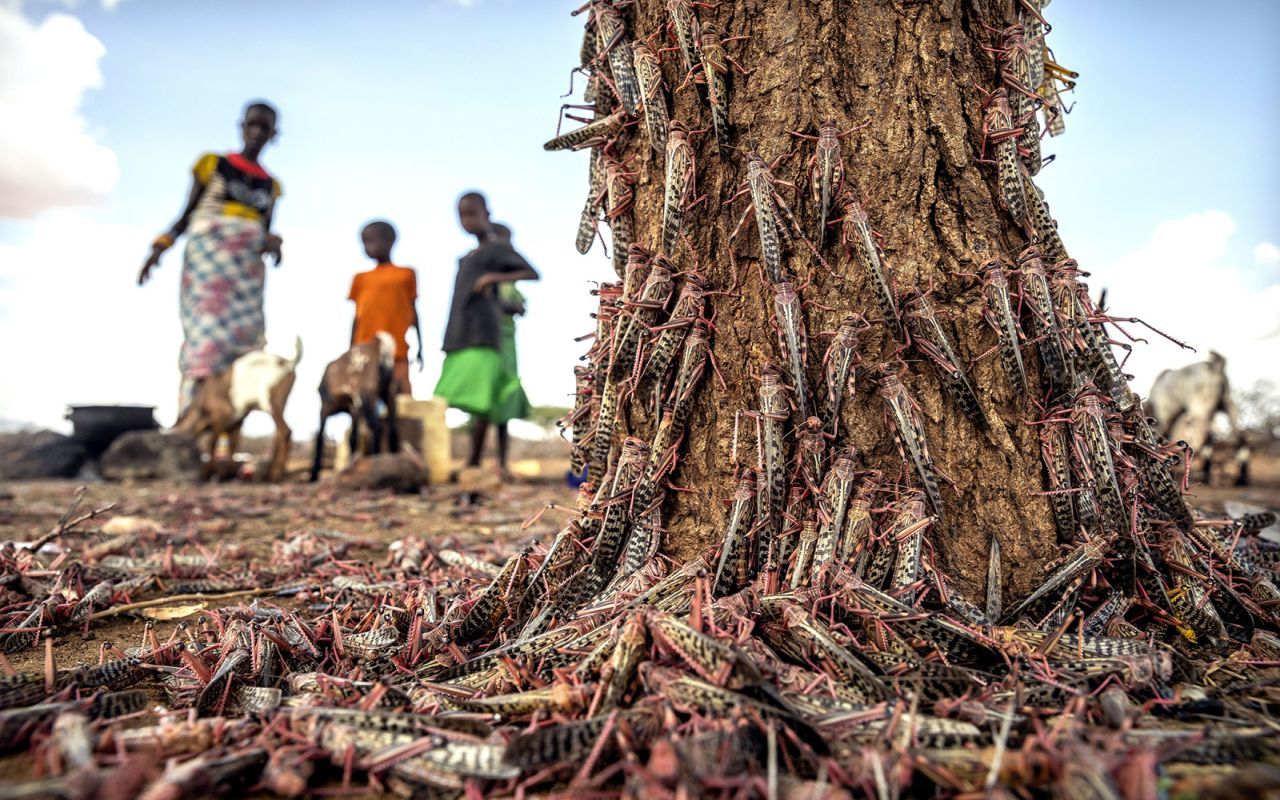
A tree trunk is covered with locusts as a group of people and goats stand in the background.

Building Better Resilience to Transboundary Threats

A Contribution by the TMG Think Tank for Sustainability

Fuelled by climate change, desert locust plagues become increasingly frequent. A plaidoyer for a paradigm shift on handling transboundary crises.

Read more

A modern glass and metal building with a unique curved design is illuminated at dusk along a landscaped pathway.

A New Mindset to Reform Agriresearch

A Contribution by Lennart Woltering (CGIAR)

In context of the 15th CGIAR System Council Meeting, Lennart Woltering shares his assessment of the ongoing One CGIAR reform process.

Read more

A dusty road winds through lush green hills at sunset, with smoke rising in the distance.

Drugs and the Environment

A Contribution by Jorrit Kamminga

This year's United Nations World Drug Report highlights for the first time the nexus between illicit drugs and the environment. In view of climate change, it is time to feed the debate with facts and make drug policy greener

Read more

A dry, barren cornfield stretches towards distant mountains, illustrating the severe drought conditions of 2022.

Building climate-resilient and equitable food systems: Why we need agroecology

Agroecological methods target diversity and resilience and can thus promote the protection of forests, water and soil. Julia Tomalka and Christoph Gornott, Potsdam Institute for Climate Impact Research (PIK), on the potential of agroecology to safeguard against climate change and build resilient agri-food system.

Read more

A vast expanse of cracked, dry earth stretches under a clear blue sky, highlighting the impact of drought.

How are transformation and crisis intervention related, Dr. Frick?
An Interview by Jan Rübel

Martin Frick has been director of the WFP office in Berlin for a year – since then one hunger crisis has followed another. What are the diplomat's answers? A conversation about opportunities in agriculture, the interplay of multiple crises, the importance of resilience and tighter budgets.

Read more

Aerial view of lush, green rice terraces with a small hut, showcasing intricate patterns and vibrant agriculture.

Five Questions for Dirk Meyer

An Interview with Dirk Meyer (BMZ)

Development cooperation needs to place good governance and a sustainable agri-food systems transformation at its center: After the first 100 days in office have passed, Dirk Meyer from the German Development Ministry (BMZ) spells out the goals, guidelines and priorities of the Ministry’s new lead.

Read more

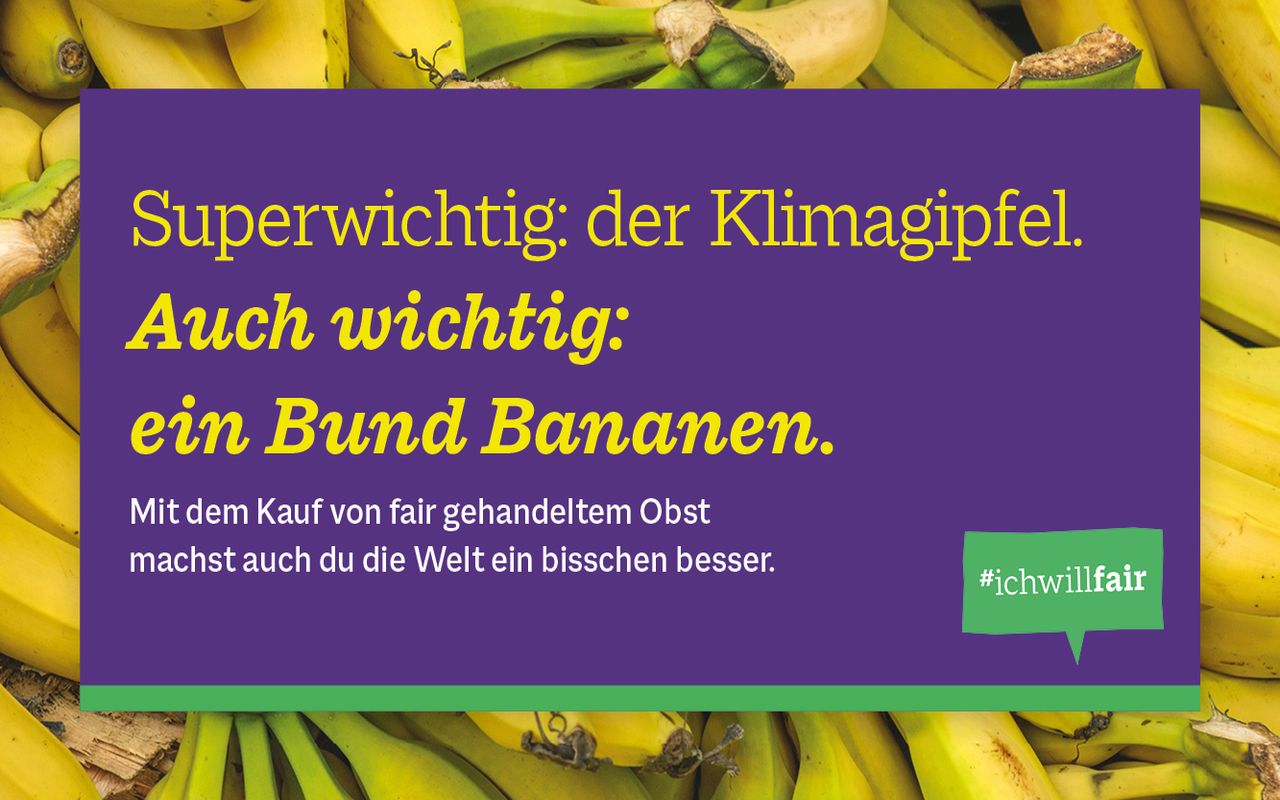
A bunch of yellow bananas is displayed with a purple banner promoting fair trade and climate awareness.

Fair Trade and Climate Justice: Everything is Conntected

A Contribution of the 'Initiative for Sustainable Agricultural Supply Chains' (INA)

Fair Trade organisations and the Initiative for Sustainable Agricultural Supply Chains (INA) have launched the #ichwillfair campaign during COP26 to highlight the link between global supply chains and climate change.

Read more

Flags of various countries flutter outside the COP27 venue against a clear blue sky.

COP27: Agri-food systems in the focus of the climate discussion

Stephanie Heiland, Project Manager at Sector Project Agriculture and part of this year’s Observer Delegation of the Deutsche Gesellschaft für Internationale Zusammenarbeit (GIZ) at COP27, shares her insights on the role of agriculture and food systems at the climate conference. Among other things, she reports from GIZ’s COP27 side event ‘Climate resilient agriculture and food systems in times of multiple crises and fragility’.

Read more

Four individuals stand smiling at the Food Systems Pavilion during the COP27 event in Egypt, 2022.

G7 Sustainable Supply Chains Initiative: From Commitment to Action

Future generations need more sustainable and stable agri-food systems. But how can this comprehensive transformation succeed and what responsibility does the private sector bear? These questions were the focus of the G7 Sustainable Supply Chains Initiative (G7 SSCI) side event as part of the ‘Champion Youth Action’ day at the 27th UN Climate Change Conference (COP27).

Read more

The cracked earth of a drought-stricken landscape is illuminated by a vibrant sunset behind sparse bushes.

Climate, biodiversity and nutrition are inextricably linked

The Federal Ministry for Economic Cooperation and Development sees sustainable agri-food systems as an opportunity to protect the climate, preserve biodiversity and ensure food security in the future. Dirk Meyer, Head of Directorate-General 1 at the Federal Ministry for Economic Cooperation and Development, looks ahead to the upcoming COP27.

Read more

Two people work in a lush green field with a mountainous backdrop, emphasizing sustainable farming.

Why biodiversity is important for climate protection & food security - and vice versa

The world is facing major challenges that need to be solved. We need to feed an ever-growing population, bring climate change under control and stop the loss of biodiversity. Martina Fleckenstein, Director of Global Policy at WWF, on what is expected from the climate conference in terms of biodiversity and biodiversity conservation.

Read more

Women in colorful attire sift grains under a sunny sky, engaging in traditional agriculture. | © GIZ Joerg Boethling

What connects gender and the environment

Women can play a vital role in the change process both when it comes to climate protection and adapting to climate change. But the reality is often still not quite like this: women and girls are particularly badly affected by the climate crisis. Is the topic of gender getting enough attention at the upcoming climate conference? Questions for Bettina Jahn from UN Women Germany.

Read more

A modern, angular building with geometric windows stands beside flags at the LCOY event, surrounded by autumn trees.

Social justice and climate justice: Fair Vibe at the Youth Climate Conference

At LCOY Germany, the local youth climate conference, views on climate protection from all political spectrums are discussed. The Fairactivists, a programme of Fairtrade Germany, participated with a panel discussion on the link between social justice and climate justice.

Read more

The image illustrates five climate-friendly agricultural methods with simple line drawings and highlighted text.

Five climate-friendly methods in agriculture

A Listicle for climate protection and adaptation

These five management practices can increase agricultural production and contribute to climate change mitigation and adaptation.

Read more

Lush green terraced fields curve around a winding river, showcasing nature's intricate patterns in action.

CompensACTION aims to reward farmers for climate performance

A Contribution of the Initiative

The CompensACTION Initiative for food security and a healthy planet, launched by the German Federal Ministry for Economic Cooperation and Development (BMZ) in 2022, is gaining momentum. It aims to financially compensate smallholder farmers for their contribution to preserving ecosystems. Initial successes have been achieved in Ethiopia, Lesotho and Brazil.

Read more

A young plant grows in dry, sunlit soil, symbolizing agricultural resilience in Iraq.

“It created hope. It created a life”

An interview with Ally-Raza Qureshi, WFP

Iraq suffered many years of war, sanctions and economic crises. However, Ally-Raza Qureshi from the World Food Programme in Iraq sees progress. But now the effects of climate change are becoming apparent in the country. What is to be done?

Read more

A person drives a blue tractor through a lush cornfield on a sunny day.

Farmers reap big from Climate Smart Farming

An Article by Angeline Ochieng & Victor Raballa

Journalists Angeline Ochieng and Victor Raballa visited Ms Bilha Munyole, a Kenyan farmer in Kimilili, Bungoma County, on her maize plantation. About the important role of mechanisation in climate-smart agriculture and in building resilience to the impacts of climate change.

Read more

Sparse desert vegetation stretches across a vast, sandy landscape under a clear blue sky. | © GIZ Fouad Bestandji

"Climate change is unifying people from the region"

A Contribution by Jan Rübel

In the West Bank, political tensions and increasingly poor weather conditions are making farming more difficult. What needs to be done? Questions for Abbas Milhem, Executive Director of the Palestinian Farmers Union (PFU).

Read more

A woman in a white shirt and colorful skirt smiles while sitting outdoors, surrounded by lush greenery, promoting Fairtrade.

Earth’s well, all’s well!

A Contribution by Fairtrade Germany

With the annual topic "Earth’s well, all’s well!", Fairtrade Germany is focusing on the concept of agroecology at all levels - and is thus taking the next step towards achieving greater global sustainability. At the Green Week trade fair, Fairtrade Germany will show how this can be achieved taking the cocoa supply chain as an example.

Read more

A smiling woman in colorful attire stands confidently in a blooming mustard field on a bright day.

Sowing change

A Contribution by Brot für die Welt

Roughly 800 million people suffer from hunger worldwide. Change is needed - for people and for the environment. Brot für die Welt reports on the starting points offered by everyone's ecological footprint and handprint.

Read more

Delegates sit around a large conference table at the Global Forum for Food and Agriculture, discussing sustainable practices.

Bioeconomy: Ready for a Joint Take-Off?

A Contribution by GIZ

The bioeconomy movement is fundamentally changing agriculture and food production: through innovative ideas, environmentally friendly approaches and the realization that we need to work together globally to ensure that change truly benefits everyone. At this years’ German Forum for Food and Agriculture (GFFA), the German Federal Ministry for Economic Cooperation and Development (BMZ) focused on this topic.

Read more

© GIZ / Ollivier Girard

"The virus does not need visa"

Interview by Dr. Ahmed Ouma (CDC)

Countries across Africa coordinate their efforts in the fight against corona by the Centre for Disease Control (CDC) of the African Union in Addis Abeba. Until now, the curve of new infections has been successfully flattened – why? Dr. Ahmed Ouma, Deputy Director, explains the work of CDC in an interview with Tilman Wörtz.

Read more

A man in camouflage distributes food to people, including women and children, from a large pot outdoors.

5 questions to F. Patterson: Why is there more hunger?

Interview with Fraser Patterson

Every year in October, the "Welthungerhilfe" aid organisation, with the Irish "Concern Worldwide" NGO, publishes the Global Hunger Index, a tool with which the hunger situation is recorded. What are the trends - and what needs to be done?

Read more

Stephan Exo-Kreischer ist Deutschland-Direktor der Lobby- und Kampagnenorganisation ONE.

New campaign for women: "Poverty is sexist"

Interview with Stephan Exo-Kreischer

This is a benchmark for everybody: More rights for women are a very influencing solution in the struggle against extreme poverty and hunger worldwide, says Stephan Exo-Kreischer, Director of ONE Germany. The organisation specialises in political campaigning as a lever for sustainable change.

Read more

Teilnehmer einer Schulung im Digital Transformation Center Kigali, Ruanda. © Mali Lazell, GIZ

Africa's rapid economic transformation

A report by T. S. Jayne, A. Adelaja and R. Mkandawire

Thirty years ago, Africa was synonymous with war, famine and poverty. That narrative is clearly outdated. African living standards are rising remarkably fast. Our authors are convinced that improving education and entrepreneurship will ensure irreversible progress in the region even as it confronts COVID-19.

Read more

Förderung einer nachhaltigen Landwirtschaft, Burkina Faso. Foto: Aude Rossignol, GIZ

Building our food systems back better

A contribution by Jes Weigelt and Alexander Müller

What is required to make food systems provide sufficient, healthy food while not harming the planet? How should food security be maintained given the threat posed by climate change? Our authors look at some aspects of tomorrow’s food systems against the backdrop of the corona crisis.

Read more

A small roadside shop with colorful signage stands under a clear blue sky next to a parked truck.

The state of food security in Cape Town and St. Helena Bay

A study by Markus Hanisch, Agustina Malvido, Johanna Hansmann, Alexander Mewes, Moritz Reigl, Nicole Paganini (SLE)

Post-Covid-19 lockdown: How food governance processes could include marginalised communities - an extract of the results of an SLE study applying digital and participatory methods.

Read more

A group of women, some wearing green "d.light" shirts, gather for a photo in a well-lit room.

How the self-help approach empowers smallholder women

A report by INEF and Kindernothilfe

Supporting groups of smallholding women substantially contributes to strengthen rural operations economically. The organisation and associated group activities can help to reduce extreme poverty and improve the food situation.

Read more

Four smiling children joyfully eat together at a table, sharing bowls of food in a warm, vibrant setting.

School Feeding: A unique platform to address gender inequalities

A contribution by Carmen Burbano de Lara (WFP)

Besides the well known impacts of Covid19 lockdowns for the adult population, the associated school closures led to 90 percent of the world’s children with no access to schools. However, school meals are in often the only daily meal for children. Without access to this safety net, issues like hunger, poverty and malnutrition are exacerbated for hundreds of millions of children.

Read more

A woman in Burkina Faso feeds her baby while children sit against a rustic wall in the background.

Hunger must not be a consequence of the epidemic!

A contribution by Michael Brüntrup (DIE)

Even though COVID-19 poses a threat to the health of humanity, the reaction to the pandemic must not cause more suffering than the disease itself. This is particularly relevant for poor developing countries, where the impact of the corona crisis on food security is even more severe!


Read more

A person stands on a rocky hill, overlooking a vast, scenic landscape with a towering cliff and expansive fields below.

Human Rights, Land and Rural Development

A contribution by Michael Windfuhr (German Institute for Human Rights)

Land rights are no longer governed by the law of the strongest. That is what the international community has agreed to. Governments and private companies have a duty to respect human rights and avoid corruption.

Read more

A man in a cap and blazer speaks at a podium during a presentation on small business competition winners.

How do you campaign “Food Systems”?

Interview with Paul Newnham, Director of the SDG 2 Advocacy Hub.

The UN Food Systems pre-Summit in Rome dealt with transforming the ways of our nutrition. How do you bring that to a broad public? Questions to Paul Newnham, the Director of the Sustainable Development Goal (SDG) 2 Advocacy Hub.

Read more

Farmers work together weeding a lush green maize field under a clear blue sky.

How Smallholders became Commodity Suppliers

Small farmers are often left behind in African agriculture. Access to markets and improved competitiveness can only be achieved if the small farms join forces. But those affected in partner countries are often at a loss as to how to implement cooperative models. Here, the BMZ provides support through the SEWOH ONE World – NO Hunger initiative and the Social Structure Promotion (Sozialstrukturförderung).

A project by Deutscher Genossenschafts- und Raiffeisenverband e. V.

Read more

A complex network of colorful wires is intricately connected on a white circuit board, demonstrating electrical engineering.

The Future of Development Politics: Voices from the Parliamentary Groups

A Contribution by Journalist Jan Rübel

Representatives of the six parliamentary groups offer their views on the future of German development cooperation.

Read more

Three people stand smiling on a modern staircase with photographers capturing the moment, reflecting a formal event.

From shared conviction to global response

A Contribution by Jan Rübel

The G7 is responding to the worsening global hunger crisis by mobilizing an additional $4.5 billion for this year alone. A key milestone for this in the run-up was the international conference on global food security "Uniting for Global Food Security".

Read more

Golden wheat stalks sway under a clear blue sky, capturing a serene agricultural landscape.

A dashboard as a key tool for global food security

A Contribution by BMZ

The Global Alliance for Food Security (GAFS), jointly launched by the German G7 Presidency and the World Bank, released the Global Food and Nutrition Security Dashboard during COP27: A Rapid Response Tool for Coordinating Global Action for Food Security.

Read more

A panel discusses food system transformation at the Global Forum for Food and Agriculture 2023, with a speaker at the podium.

How to govern food systems transformation

A contribution by Daniel Montas and Jan Rübel

The transformation of food systems is regarded as the new magic code, but effective strategies are lacking. A new group of experts discussed the prerequisites for efficiently managing this process. The experts representing politics, youth, civil society, farmers' organizations, private sector, and academia unanimously concluded: transformation is possible, but it needs a strong drive from within.

Read more

A winding road cuts through lush green mountains under a vast, clear sky, showcasing nature's breathtaking beauty.

“We want to overcome hunger and poverty”

An interview with Fernanda Machiaveli

After four years of the Bolsonaro administration, the new Brazilian government is trying to restart its engagement in agroecology, fighting deforestation in the Amazon and protecting indigenous communities and poor families from hunger. An interview with the Vice-minister for Rural Development and Family Farming, Fernanda Machiaveli.

Read more

An aerial view of a rural village showcases a network of dirt roads winding through houses and greenery.

“We have to focus on sustainability”

An interview with Karen Mapusua

Karen Mapusua, President of IFOAM Organics International Network, on the danger of the current fuel crises and inflation to loose track in sustainablity, why organic farmers should be heard and how the word “crisis” has a very different meaning where she lives in Fiji.

Read more

A man in a suit speaks at a podium under a colorful tent during a Farmers Day event.

Governor's Day with Farmers – For more discussion with local actors

A contribution by William Onura and Larissa Stiem-Bhatia

In agriculture it is important to include political stakeholders in the discourse. To build the bridge between practical application and political action, the think tank TMG launched the Governor's Day with Farmers in Kakamega County, Kenya. Now it took place for the second time. But what are the goals and benefits of the Governor's Day?

Read more

Aerial view of a lush agricultural landscape in Ethiopia, showcasing neatly arranged crops and a small building. | © GIZ

The Key to Transforming Food Systems Lies in Inclusive Governance

A Contribution by Daniel Montas

Experts from Burkina Faso, Cambodia, Ethiopia, India, Kenya and Malawi came together to discuss inclusive governance in a workshop entitled "Inclusive Governance of Food Systems Transformation". Daniel Montas, TMG Research, on the findings.

Read more

A woman in a red blazer speaks confidently in a modern conference room setting.

Podcast: Fighting world hunger together

Chancellor Angela Merkel in the Podcast of the Federal Government

At the start of World Food Week around World Food Day on 16 October, Chancellor Angela Merkel stressed that the fight against global hunger will only be successful with international responsibility and solidarity (german only).

Read more

A woman leans on a red and blue tractor in a field, using a mobile phone to connect with digital resources.

Can we democratize data in the age of digital extraction?

A contribution by Clare Crowe Pettersson & Lena Bassermann

The United Nations Committee on World Food Security (CFS) recently adopted new policy guidelines on the use of data and digital technologies in the context of food security and nutrition. What comes next?

Read more

A group of professionals engaged in a lively discussion at a round table, with notes and a water bottle visible.

Coordination as a Game-Changer

A Contribution by Emmanuel Atamba & Larissa Stiem-Bhatia

Drawing on dialogues with experts in Kenya, TMG Research releases its latest policy brief highlighting the critical need to strengthen coordination mechanisms in food systems governance. Emmanuel Atamba and Larissa Stiem-Bhatia from TMG Research summarize the results.

Read more

Five women in colorful attire proudly display their land titles in Madagascar, celebrating empowerment and ownership.

Towards more equitable rural realities

A Contribution by GIZ

In the #HerLand campaign for COP16, the UNCCD is focusing on women as key players in conserving soils and combating drought. The Deutsche Gesellschaft für Internationale Zusammenarbeit (GIZ) has also contributed to the campaign focusing on securing women's land rights.

Read more

A smiling farmer carries a tool in a lush green field, while a woman proudly holds a basket of harvested produce.

Ideas on the ground: Local solutions for global challenges

Interview with Sebastian Lesch (BMZ)

A world without hunger and with sufficient healthy food as well as climate-friendly agriculture can only be achieved if ideas are transformed into innovations and ultimately also applied - a conversation with BMZ Head of Division Sebastian Lesch on the Innovation Challenge programme of the new Agricultural Innovation Fund.

Read more

(c) Christoph Püschner/Diakonie Katastrophenhilfe
Liberia / Monrovia 2015: Vor dem Elwa Hospital kontrolliert ein Mitarbeiter mit einem Infrarot-Thermometern die Temperatur der ambulanten Patienten.

“Corona exposes the weaknesses of our nutritional systems"

Interview with Arif Husain (WFP)

The United Nations plan a Food Systems Summit - and now the Corona-Virus is dictating the agenda. The Chief Economist of the UN World Food Programme takes stock of the current situation: a conversation with Jan Rübel about pandemics, about the chromosomes of development - and about the conflicts that inhibit them.

Read more

Two farmers attentively inspect rice plants in a lush, green field, showcasing agricultural dedication.

The price isn’t everything

By Bettina Rühl

In Togo’s capital, Lomé, home-grown rice costs almost twice as much as the imported product from Thailand. Yet there are good reasons for preferring the local product

Read more

A man in a suit sits at a table with colorful artworks on the wall behind him, creating a professional front page image.

Slaves do not produce quality

By Tilman Wörtz

Every child in Germany knows Ritter Sport – but most of the children harvesting cocoa on western African plantations have never even eaten chocolate. Can a chocolate manufacturer change the world? Conversation with Alfred Ritter about the power and powerlessness of a businessman.

Read more

A person in a suit speaks into a microphone, holding papers, with an attentive audience in the background at a Rural Future Lab event.

The Big Bang is possible

Interview with Joachim von Braun

Happy youngsters in rural areas, green development and the connection to the digital age – professor Joachim von Braun believes in this future sceneraio for Africa. For three decades the agricultural scienties has been researching how politics can create prosperty on the continent. 

Read more

A lively panel discussion unfolds with a speaker gesturing energetically while others sit, including L. Hartmann, smiling.

A fresh opportunity

Interview with Lutz Hartmann

By leasing a three hundred hectare fruit plantation in Ethiopia, Lutz Hartmann has realised a long-cherished dream: to run his own business in Africa. Now he has a personal interest in the issue of Africa’s development.

Read more

A person holds a smartphone displaying the Maano virtual farmers' market app, with two people smiling in the background.

Ebay Against Hunger - How an App Supports Crop Sale of Rural Small Holders in Zambia

Small holders around the world are often forced to sell their harvests below market value due to a lack of market and pricing information. A new app by the UN World Food Programme (WFP) is going to change this.

A project of WFP

Read more

A smartphone screen displays the word "NOTAGER" with a diagonal slash, set against a green and white background.

Story: In Blocked Chains We Trust

A contribution by Solomon King Benge

It is 2080. We are on a farm somewhere in Africa. Everything is digital. The blockchain is an omnipotent point of reference, and the farm is flourishing. But then, everything goes wrong. A dystopian short story, written exclusively for SEWOH.

Read more

Fishermen and women sort fresh fish into colorful buckets by the lakeside, engaging in a lively market exchange.
Kisumu in Western Kenya: Landing of the small sardines on the shore of Lake Victoria. © Dirk Ostermeier, GIZ

Small fish with a big potential

A contribution by Paul van Zwieten

African inland fisheries are increasingly reliant on the capture of small fish species that are sundried and traded over long distances. They make an important contribution in alleviating “hidden hunger”: consumed whole, small fish are an important source of micronutrients. Only that, unfortunately, politicians haven’t yet realised this.

Read more

Vibrant scene in Abidjan market with vendors balancing colorful fruits and vegetables on trays amid bustling crowds.
Food market in Abidjan. © GIZ

Reference values: A building block on the road to social equality

A contribution by Friederieke Martin (GIZ)

A quick and cost-effective method calculates living wages and incomes for many different countries. The GIZ together with Fairtrade International and Richard and Martha Anker have developed a tool that companies can use to easily analyse income and wage gaps.

Read more

A supermarket receipt design displays "SUPERMARKT-CHECK 2020" with logos, focusing on retail evaluation.

Supermarket Scorecard on Human Rights

A contribution by Dr. Franziska Humbert (Oxfam)

Oxfam’s supermarket scorecard, which is in its third year, shows one thing in particular - it works! Supermarkets can change their business policies and focus more on the rights of those people around the world who plant and harvest food. However, this does not happen without pressure. 

Read more

(c) Christoph Püschner/Zeitenspiegel
Indonesien / Borneo, März 2000: Nördlich von Palangkaraya liegen inmitten der verwüsteten Landschaft die Basislager illegaler Holzfäller.

Do we have to dare a new food system?

A contribution by Dr. Felix zu Löwenstein (BÖLW)

Lack of seasonal workers and virus explosion in slaughterhouses, rising vegetable prices, climate crisis – all this demonstrates: Our food system is highly productive and (at least for the rich inhabitants of planet earth) guarantees an unprecedented rich and steady food supply - but it is not resilient.

Read more

A farmer walks through lush coffee plants on a misty morning, carrying a basket for harvesting.

Ms Rudloff, what are the benefits of a supply chain law?

By Jan Rübel

The Federal Government is fine-tuning a law that would require companies to ensure human rights – a supply chain law. What are the consequences for the agricultural sector? Dr Bettina Rudloff from the German Institute for International and Security Affairs (SWP) discusses linking policy fields with added value.

Read more

A cluster of colorful cocoa pods rests on a stone surface, showcasing their vibrant hues.

Bitter fruit

A contribution by Frank Brunner

Why aren’t bars of chocolate made where cocoa is grown? Author Frank Brunner analyses the industry’s fragile value chain from the plantation to the supermarket

Read more

People gather around a bowl holding a package of soy powder, discussing the product information on labels.

"Soy can be made into more than just flour"

A report by Johanna Steinkühler (GIZ)

The soybean is a natural crop that can be used to make a lot of food. So, Tata Bi started a small processing business first on her own, then with a few other women, which provides the women with an additional source of income year-round besides selling the soybeans.

Read more

Workers in uniforms and masks sort nuts in a processing facility, showcasing a clean and organized environment.

Freed from trade? Towards a fairer EU Trade Agenda

A contribution by Dr. Jan Orbie (University Gent)

‘Fair’ and ‘sustainable’ are key words in Germany’s EU Council Presidency. At the same time, Germany pursues ‘modernization’ of the WTO and ‘rapid progress’ on free trade agreements. Are these goals really compatible? Can we be concerned about fairness and sustainability while continuing with ‘business as usual’?

Read more

(c) Christoph Püschner/Diakonie Katastrophenhilfe
Republik Niger / Kollo, Nov. 2017: Müttern haben sich für den Vortrag "richtige Ernährung für Kinder" der NGO Kundji Fondo im Dorfzentrum versammelt.

Good health is impossible without healthy food

A contribution by Heino von Meyer

Corona makes it even more difficult to achieve a world without hunger by 2030. So that this perspective does not get out of sight, Germany must play a stronger role internationally - a summary of the Strategic Advisory Group of SEWOH.

Read more

A person in patterned clothing holds a handful of white corn kernels over a large container, showcasing the grain harvest.

Statement from GAFSP Co-Chairs: GAFSP and COVID-19 Pandemic

A contribution by GAFSP

COVID-19 has unprecedented effects on the world. As always, the most vulnerable are the hardest hit, both at home and - especially - abroad. A joint appeal by the German Federal Ministry for Economic Development and Cooperation (BMZ) and the Department for International Development (DFID).

Read more

A pile of raw cashew nuts with one split open to reveal the creamy interior, highlighting their natural texture.

The 'Grey Gold'

A contribution by Maria Schmidt (GIZ)

The Cashew Council is the first international organisation for a raw material stemming from Africa. The industry promises to make progress in processing and refining cashew nuts - and answers to climate change

Read more

A smiling woman in a vibrant blue patterned outfit stands confidently holding documents, with a group gathered in the background.

“They said: You can do it”

A contribution by Bread for the World

As President of the IABM cooperative in Muhanga, Alphonsine Mukankusi is not simply focused on the figures. She has learned how to deal with people and how to take on responsibility. At the same time, her work helps her to come to terms with the past


Read more

A worker in a yellow shirt tends to a lush palm oil plantation, surrounded by tall trees under a bright sky.

No rainforest for our consumption

A contribution by Jenny Walther-Thoß (WWF)

In the tropics rainforests are still being felled for the production of palm oil, meat and furniture. It is high time to act. Proposals are on the table.

Read more

A woman in a vibrant purple dress sits smiling beside an intricately carved wooden sculpture.

Small Farms, big money

A contribution by Agnes Kalibata

Agnes Kalibata, AGRA president since 2014 and former minister of agriculture and wildlife in Rwanda, is convinced that Africa's economy will only grow sustainably if small-scale agriculture is also seen as an opportunity.

Read more

In Haute Matsiatra, two fish farmers work with nets in a rice paddy, while another sits on a rock overlooking the fields.

Sustainable Artisanal Fisheries and Aquaculture in Rural Areas

Fish is important for combating malnutrition and undernourishment. But it is not only notable for its nutritional value, but also secures the livelihoods and employment for 600 million people worldwide.

A Project of GIZ

Read more

A hand picks vibrant cocoa pods from a pile on the ground in a lush forest setting, showcasing the cocoa story.

Côte d’Ivoire: The Future Starts With Food

A Contribution by GIZ

How nutrition trainer Edwige helps cocoa farmers in Côte d’Ivoire to prepare for a healthier future.

Read more

Illustrations accompany the text "Five tips to reduce food waste" with various food-related icons.

Five tips to reduce food waste

A listicle against food waste

Whether it's banana bread made from brown bananas, conscious shopping plans or foodsharing, we give you five tips on how to reduce your everyday food waste.

Read more

Three people engage in a lively discussion on stage, with a podcast logo displayed on a screen behind them.

The Case for Fair Fashion

A Contribution by Jan Rübel

On the podcast ‘From the Field to the Shelf’, Marie Nasemann calls for new attempts to promote fair fashion. An evening about burnt returns, filterless washing machines and a lot of room for improvement.

Read more

Illustration highlighting "knowledge about spice production" with icons of spices, people, and farming elements.

Knowledge about spice production

A listicle regarding spice production

The global trade in spices currently has a volume of over 10 billion euros. But at what price do these spices refine our Christmas cuisine? On closer inspection, aspects of the value chain leave a bitter taste.

Read more

A person in colorful clothing gathers fluffy cotton into a large sack under a clear blue sky.

Achieving more together – New forms of cooperation for sustainability in the cotton sector

A Contribution by Saskia Widenhorn

Saskia Widenhorn, Head of the Cotton Component in Cameroon and the Sub-Saharan Cotton Initiative at GIZ, reports on the Bremer Cotton Week, which brought together international industry experts. The agenda included supply chain transparency, sustainability and new forms of cooperation between the private sector and partner countries.


Read more

A tugboat guides a massive cargo ship loaded with colorful containers across the ocean, symbolizing David vs Goliath.

David versus Goliath: Consequences of mainstream agricultural export commodities and niche products

An Artikel by the Initiative for Sustainable Agricultural Supply Chains (INA)

A study published by the Deutsche Gesellschaft für Internationale Zusammenarbeit (GIZ) examines the differences between globally traded agricultural commodities and domestic niche products in terms of economic, environmental and social impact on the region of origin. The results provide new evidence to make supply chains more sustainable.  

Read more

Hands hold an open cacao pod displaying the white seeds inside, highlighting the raw chocolate source. | © GIZ Ute Grabowsky

Côte d’Ivoire: Sweet Temptation without a Bitter Taste

A Story by GIZ

Until Easter 2022, GIZ publishes a new episode every fortnight introducing people who are committed to fair and sustainable cocoa in Côte d'Ivoire and Germany.

Read more

Rows of young rice plants grow in a well-organized pattern, showcasing the SRI method in a lush green field.

The Rice Sector in West Africa: A Political Challenge

New insights on trade and value addition in the rice sector in West Africa

Low import tariffs, smuggling activities, unpredictable tax exemptions and weak enforcement of food safety standards: The potential of local rice value chains is undermined in West African countries.

Read more

Fishermen in hard hats unload a large net of fish onto a dock from a ship under a cloudy sky.

The fight against illegal fishing

A Report

The oceans are important for our food supply, but they are overfished. To halt this trend the global community is now taking action against illegal fishing. Journalist Jan Rübel spoke with Francesco Marí, a specialist for world food, agricultural trade and maritime policy at "Brot für die Welt," and others.

Read more

From field to fan shop: how to increase supply

A contribution by Jan Rübel

Organic cotton is extremely popular – but farmers still find it difficult to change their conventional cultivation methods. A new project addresses this dilemma: Bundesliga football teams in Germany are promoting the switch to organic cotton in India. And thereby setting an example.

Read more

An illustrated map showcases diverse agricultural and food-related activities on a vibrant island setting.

The Agri-Food Map: An interactive map to explore sustainable agri-food systems

A Contribution by GIZ

The complex interrelationships of the sustainable transformation of agricultural and food systems are not always easy to understand - the Agri-Food Map, an interactive online app, makes the comprehensive relations accessible by providing a wide range of comprehensibly prepared information.

Read more

A man waters crops in a sunlit field using a green watering can, promoting sustainable agriculture practices.

Strengthening the market linkages of smallholders in the face of global supply shocks

A Contribution by Niladri Sekhar Bagchi

The consequences of the Russian invasion of Ukraine have enabled many countries to open up new export markets for their agricultural goods. However, smallholder farms have been largely left out. Drawing on his experience in India, our author gives a brief overview of how this can be changed.

Read more

A group of people stands in line outdoors, waiting at a registration table under a tree.

The Principle of Sharing

A contribution by gebana

gebana, a Swiss fair trade company, follows the principle of "sharing" with its corporate philosophy: farming families in the Global South participate directly in the sales of their online shop. Caroline Schaar, Marketing at gebana, explains the company's approach.

Read more

A hand selects ripe cocoa pods from a pile on the forest floor in Côte d'Ivoire.

Nature conservation around the world

A Contribution by WWF

From measures to promote biodiversity in Germany to more sustainable cocoa cultivation methods in Ecuador: WWF works at many different levels. At the Green Week, it will be demonstrated just how multifaceted nature conservation work is and what role each individual's decision plays.

Read more

Tall trees with lush green leaves form a canopy against the sky in a Vietnamese forest. | © GIZPhan Nhat Anh

From Coexistence to Collaboration

A Contribution by Initiative für nachhaltige Agrarlieferketten (INA)

The demand for sustainable products and supply chains is constantly increasing. DIASCA is an alliance that works on interoperability of digital solutions in agricultural supply chains through the development of open standards for forest monitoring, farm income and traceability.  

Read more

A pile of fresh green coconuts showcases their textured husks and natural imperfections. | © Unsplash

Coconuts, Digitalization and the Future

An Interview with Ebun Feludu

Female founder Ebun Feludu wants to bring the coconut value chain to Nigeria with her start-up Kokari. In this interview, she explains why she envisions every coconut palm tree bearing its own name in the future and how digitalization can contribute to this.

Read more

A person stands joyfully with outstretched arms in a creatively decorated atelier featuring golden accents and various artworks.

From the perennial to the catwalk – banana silk as an alternative

A Contribution by Paul Kadjo

The textile industry contributes significantly to environmental pollution as it produces over 100 billion garments every year, resulting in huge CO2 emissions and water consumption. Fashion designer Paul Kadjo uses banana silk as an environmentally friendly alternative to make textile production more environmentally conscious and socially just.

Read more

A hand selects ripe coffee cherries from a lush coffee plant, showcasing the vibrant colors of the harvest.

The Idea of Coffee entirely made by Women

A Conversation with Allan Mubiru

Allan Mubiru was standing in front of a shelf in Kigali, Rwanda, and discovered a local type of coffee. He took it, tasted it and was thrilled. A story about a grocery shopping trip that became the beginning of a successful business idea.

Read more

The fresh produce section at ALDI SÜD in Hamminkeln-Mehrhoog displays a vibrant array of fruits and vegetables.

How does the ALDI SOUTH Group buy, Mrs Roach?

A Conversation with Sally Roach

Many of ALDI SOUTH Group supply chains begin in the Global South. How does the food retailer assume its responsibility? Questions for Sally Roach, Senior Manager - International Sustainability Department at the ALDI SOUTH Group.

Read more

Aerial view of lush green fields and dense forests in Chebangang, Kericho County, showcasing a harmonious landscape. | © Wallace Gichunge

How a Tea adds to Forest Conservation and Food Security

A Contribution by Wallace Gichunge

The Nyayo Tea Zones Development Corporation is committed to the preservation of forests in Kenya: The establishment of so-called buffer zones counteracts deforestation by planting trees and tea. In addition to the production of environmentally friendly tea, the project benefits the resources of the forests and the livelihoods of the communities living near the forests, says project manager Wallace Gichunge.

Read more

A person tends to drying coffee beans on raised beds under a bright blue sky in a lush rural setting.

Improving The World, Sip by Sip

A Conversation with Maura Oerding

Maura Oerding has a mission: With the specialty coffee Angelique's Finest, she not only wants to enter new markets but also revolutionize the coffee industry. Her recipe for success? Empowering women from Rwanda and Uganda from cultivation to marketing. Oerding’s goal: quality, fairness, and self-determination in every bean.

Read more

A man collects natural rubber from a tree, holding a container and tapping tool in a lush forest. | © GIZ

From the Tree to the Street: The Story of Natural Rubber

A Contribution by Carlos Castellanos & Yvonne Bielfeld

The shoe manufacturer Cueros Vélez as a good example of private sector responsibility: the photo gallery shows how the bark of the rubber tree becomes a reliable yet deforestation free companion on our roads.

Read more

Illustrated icons highlight six collaborations aimed at creating fair and sustainable supply chains.

Stronger toghether: Six collaborations for fair agricultural supply chains

A Listicle by Yvonne Bielfeld

For everyone in the supply chain to benefit, it is essential that politics and business work together. The measurable successes of such partnerships are demonstrated by the following six projects: they show how cooperation with the business sector can make supply chains fairer, more resilient, and more sustainable step by step.

Read more

A hand selects ripe coffee cherries from a lush coffee plant, showcasing the vibrant colors of the harvest.

Why Food is about Power, not Just Supply Chains

A Contribution by Mary Karanu

Food systems are often reduced to production and trade. Mary Karanu of Welthungerhilfe in Kenya shows that they also reflect social and political orders, shaping power relations, the recognition of labor, and structural vulnerability across smallholder contexts in Africa and global supply chains.

Read more