Achieving more together – New forms of cooperation for sustainability in the cotton sector

By

Saskia Widenhorn, Head of the Cotton Component in Cameroon and the Sub-Saharan Cotton Initiative at Deutsche Gesellschaft für Internationale Zusammenarbeit (GIZ), reports on the Bremer Cotton Week, which brought together international industry experts. The agenda included supply chain transparency, sustainability and new forms of cooperation between the private sector and partner countries.

To create fair working conditions in the cultivation and processing of cotton, sustainable innovations are needed along the entire supply chain. ©GIZ, 2022

By Saskia Widenhorn

Saskia Widenhorn is the head of the Cameroon cotton component and the Sub-Saharan Cotton Initiative of the GIZ Global Project "Sustainability and Value Chain in Agricultural Supply Chains" (GV AgriChains). Previously, she worked on sustainability in global supply chains at the International Labor Organization (ILO), the social enterprise Fairphone, and GIZ in Myanmar and Cambodia.

All contributions

In the Hanseatic city of Bremen, the last week of September is all about cotton: at the Bremen Cotton Week, international industry experts come together to discuss. The Cotton made in Africa (CmiA) Stakeholder Conference kicks off the week. The two-day conference will present innovative and sustainable solutions to challenges along the supply chain. The “International Cotton Conference” – to be held on 29 and 30 September at the Bremen Chamber of Commerce – will also focus on global supply chains.


The Cotton Conference’s motto, “Cotton Decoded”, highlights the enormous complexity of the global sector and the multitude of its players. For example, the topics of supply chain transparency and traceability are at the top of the agenda for the globally active companies in the sector – also because of the growing requirements and due diligence obligations.


To achieve sustainability and fair working and living conditions for the people in the production countries, various actors need to be involved along the supply chain.


Cooperation between companies from the private sector and organisations at international or national level in the production countries can drive change in a holistic way.


Ich bin ein Alternativtext
Organic cotton from Africa: produced with fewer inputs, lower environmental impact, and it is more traceable. ©GIZ, 2022

Ideas competition brings forth new cooperations

The Sub-Saharan Cotton Initiative (SSCI) is an example of a new format that paves the way for international cooperation. Embedded in the Bremer Cotton Week, the SSCI is now holding its first annual meeting of the stakeholders involved. Having emerged from an ideas competition of the GIZ Global Project “Sustainability and Value Creation in Agricultural Supply Chains”, the SSCI aims to mobilise the business community for transformative projects while making cotton supply chains more sustainable.


At the end of last year, four projects with high impact potential emerged from the SSCI.


Each project is implemented by a consortium of international companies and local companies and/or civil society organisations.


The resulting project ideas are adapted to the needs of the actors along the supply chain:  By joining in off their own bat, the participating companies can exert a decisive influence on the conditions along the supply chain based on their market power.  At the same time, demand and local impact are to be ensured by involving partners in the production countries. In this way, effective and at the same time sustainable partnerships were created.


Projects are currently being implemented in seven countries in sub-Saharan Africa – in Benin, Côte d'Ivoire, Mozambique, Zambia, Tanzania, Togo and Chad. For instance, they are strengthening the organic cotton sector, promoting sustainable production with the use of fewer inputs and less environmental impact, improving crop traceability via digital platforms and helping smallholder farmers become more resilient to climate change. In this way, around 240,000 people in the producing countries are reached.


The annual meeting of the SSCI is used to bolster the network of participating companies and organisations across the consortia. In doing so, all actors should benefit from their different perspectives.


After all, cotton supply chains are highly interconnected internationally and challenges need to be addressed at different levels at the same time.


In order to anchor the desired changes sustainably and in the long term, it is important to learn from the experiences of all actors. In this way, the SSCI forms a common umbrella – with great potential to further advance social-ecological change in the cotton supply chain.


For more information on the projects that have been created, see here.

Similar articles

A man in a suit sits at a table with colorful artworks on the wall behind him, creating a professional front page image.

Slaves do not produce quality

By Tilman Wörtz

Every child in Germany knows Ritter Sport – but most of the children harvesting cocoa on western African plantations have never even eaten chocolate. Can a chocolate manufacturer change the world? Conversation with Alfred Ritter about the power and powerlessness of a businessman.

Read more

Vibrant scene in Abidjan market with vendors balancing colorful fruits and vegetables on trays amid bustling crowds.
Food market in Abidjan. © GIZ

Reference values: A building block on the road to social equality

A contribution by Friederieke Martin (GIZ)

A quick and cost-effective method calculates living wages and incomes for many different countries. The GIZ together with Fairtrade International and Richard and Martha Anker have developed a tool that companies can use to easily analyse income and wage gaps.

Read more

A supermarket receipt design displays "SUPERMARKT-CHECK 2020" with logos, focusing on retail evaluation.

Supermarket Scorecard on Human Rights

A contribution by Dr. Franziska Humbert (Oxfam)

Oxfam’s supermarket scorecard, which is in its third year, shows one thing in particular - it works! Supermarkets can change their business policies and focus more on the rights of those people around the world who plant and harvest food. However, this does not happen without pressure. 

Read more

A farmer walks through lush coffee plants on a misty morning, carrying a basket for harvesting.

Ms Rudloff, what are the benefits of a supply chain law?

By Jan Rübel

The Federal Government is fine-tuning a law that would require companies to ensure human rights – a supply chain law. What are the consequences for the agricultural sector? Dr Bettina Rudloff from the German Institute for International and Security Affairs (SWP) discusses linking policy fields with added value.

Read more

Workers in uniforms and masks sort nuts in a processing facility, showcasing a clean and organized environment.

Freed from trade? Towards a fairer EU Trade Agenda

A contribution by Dr. Jan Orbie (University Gent)

‘Fair’ and ‘sustainable’ are key words in Germany’s EU Council Presidency. At the same time, Germany pursues ‘modernization’ of the WTO and ‘rapid progress’ on free trade agreements. Are these goals really compatible? Can we be concerned about fairness and sustainability while continuing with ‘business as usual’?

Read more

Three people engage in a lively discussion on stage, with a podcast logo displayed on a screen behind them.

The Case for Fair Fashion

A Contribution by Jan Rübel

On the podcast ‘From the Field to the Shelf’, Marie Nasemann calls for new attempts to promote fair fashion. An evening about burnt returns, filterless washing machines and a lot of room for improvement.

Read more

Illustration highlighting "knowledge about spice production" with icons of spices, people, and farming elements.

Knowledge about spice production

A listicle regarding spice production

The global trade in spices currently has a volume of over 10 billion euros. But at what price do these spices refine our Christmas cuisine? On closer inspection, aspects of the value chain leave a bitter taste.

Read more

©GaÎl GellÈ
Cote d'Ivoire

Controversy: Do supply chains need liability rules?

Discussion about the potential supply chain law

The German government is struggling to pass a supply chain law. It is intended to address violations of human rights, social and environmental standards. What would the consequences be for business? A double interview with Veselina Vasileva from GEPA and economics professor Andreas Freytag.

Read more

The fresh produce section at ALDI SÜD in Hamminkeln-Mehrhoog displays a vibrant array of fruits and vegetables.

How does the ALDI SOUTH Group buy, Mrs Roach?

A Conversation with Sally Roach

Many of ALDI SOUTH Group supply chains begin in the Global South. How does the food retailer assume its responsibility? Questions for Sally Roach, Senior Manager - International Sustainability Department at the ALDI SOUTH Group.

Read more

Delegates sit around a large conference table at the Global Forum for Food and Agriculture, discussing sustainable practices.

Bioeconomy: Ready for a Joint Take-Off?

A Contribution by GIZ

The bioeconomy movement is fundamentally changing agriculture and food production: through innovative ideas, environmentally friendly approaches and the realization that we need to work together globally to ensure that change truly benefits everyone. At this years’ German Forum for Food and Agriculture (GFFA), the German Federal Ministry for Economic Cooperation and Development (BMZ) focused on this topic.

Read more

A smiling farmer carries a tool in a lush green field, while a woman proudly holds a basket of harvested produce.

Ideas on the ground: Local solutions for global challenges

Interview with Sebastian Lesch (BMZ)

A world without hunger and with sufficient healthy food as well as climate-friendly agriculture can only be achieved if ideas are transformed into innovations and ultimately also applied - a conversation with BMZ Head of Division Sebastian Lesch on the Innovation Challenge programme of the new Agricultural Innovation Fund.

Read more

(c) Christoph Püschner/Diakonie Katastrophenhilfe
Liberia / Monrovia 2015: Vor dem Elwa Hospital kontrolliert ein Mitarbeiter mit einem Infrarot-Thermometern die Temperatur der ambulanten Patienten.

“Corona exposes the weaknesses of our nutritional systems"

Interview with Arif Husain (WFP)

The United Nations plan a Food Systems Summit - and now the Corona-Virus is dictating the agenda. The Chief Economist of the UN World Food Programme takes stock of the current situation: a conversation with Jan Rübel about pandemics, about the chromosomes of development - and about the conflicts that inhibit them.

Read more

Two farmers attentively inspect rice plants in a lush, green field, showcasing agricultural dedication.

The price isn’t everything

By Bettina Rühl

In Togo’s capital, Lomé, home-grown rice costs almost twice as much as the imported product from Thailand. Yet there are good reasons for preferring the local product

Read more

A person in a suit speaks into a microphone, holding papers, with an attentive audience in the background at a Rural Future Lab event.

The Big Bang is possible

Interview with Joachim von Braun

Happy youngsters in rural areas, green development and the connection to the digital age – professor Joachim von Braun believes in this future sceneraio for Africa. For three decades the agricultural scienties has been researching how politics can create prosperty on the continent. 

Read more

A lively panel discussion unfolds with a speaker gesturing energetically while others sit, including L. Hartmann, smiling.

A fresh opportunity

Interview with Lutz Hartmann

By leasing a three hundred hectare fruit plantation in Ethiopia, Lutz Hartmann has realised a long-cherished dream: to run his own business in Africa. Now he has a personal interest in the issue of Africa’s development.

Read more

A person holds a smartphone displaying the Maano virtual farmers' market app, with two people smiling in the background.

Ebay Against Hunger - How an App Supports Crop Sale of Rural Small Holders in Zambia

Small holders around the world are often forced to sell their harvests below market value due to a lack of market and pricing information. A new app by the UN World Food Programme (WFP) is going to change this.

A project of WFP

Read more

A smartphone screen displays the word "NOTAGER" with a diagonal slash, set against a green and white background.

Story: In Blocked Chains We Trust

A contribution by Solomon King Benge

It is 2080. We are on a farm somewhere in Africa. Everything is digital. The blockchain is an omnipotent point of reference, and the farm is flourishing. But then, everything goes wrong. A dystopian short story, written exclusively for SEWOH.

Read more

Fishermen and women sort fresh fish into colorful buckets by the lakeside, engaging in a lively market exchange.
Kisumu in Western Kenya: Landing of the small sardines on the shore of Lake Victoria. © Dirk Ostermeier, GIZ

Small fish with a big potential

A contribution by Paul van Zwieten

African inland fisheries are increasingly reliant on the capture of small fish species that are sundried and traded over long distances. They make an important contribution in alleviating “hidden hunger”: consumed whole, small fish are an important source of micronutrients. Only that, unfortunately, politicians haven’t yet realised this.

Read more

(c) Christoph Püschner/Zeitenspiegel
Indonesien / Borneo, März 2000: Nördlich von Palangkaraya liegen inmitten der verwüsteten Landschaft die Basislager illegaler Holzfäller.

Do we have to dare a new food system?

A contribution by Dr. Felix zu Löwenstein (BÖLW)

Lack of seasonal workers and virus explosion in slaughterhouses, rising vegetable prices, climate crisis – all this demonstrates: Our food system is highly productive and (at least for the rich inhabitants of planet earth) guarantees an unprecedented rich and steady food supply - but it is not resilient.

Read more

A large audience attentively listens to a speaker on stage during a conference in a well-lit auditorium.

Visions in agriculture

Video by Frank Schultze and Jan Rübel

At the beginning of December 2018, AGRA's board of directors met in Berlin. The "Alliance for a Green Revolution in Africa" ​​panel discussed the next steps in their policy of modernizing agriculture. How to go on in the next ten years? One question - many answers from experts.

Read more

A cluster of colorful cocoa pods rests on a stone surface, showcasing their vibrant hues.

Bitter fruit

A contribution by Frank Brunner

Why aren’t bars of chocolate made where cocoa is grown? Author Frank Brunner analyses the industry’s fragile value chain from the plantation to the supermarket

Read more

People gather around a bowl holding a package of soy powder, discussing the product information on labels.

"Soy can be made into more than just flour"

A report by Johanna Steinkühler (GIZ)

The soybean is a natural crop that can be used to make a lot of food. So, Tata Bi started a small processing business first on her own, then with a few other women, which provides the women with an additional source of income year-round besides selling the soybeans.

Read more

(c) Christoph Pueschner/Zeitenspiegel
Somalia / Mogadischu, Juli 2011: diese Frau floh mit ihren Kindern aus dem 250 Kilometer entfernten Baidoa in das IDP-Camp Al-Hidaaya. © Christoph Püschner/Zeitenspiegel

Global responsibility: Tackling hunger is the only way forward

A contribution by Lisa Hücking (WHH)

Chancellor Merkel has begun an ambitious European political programme: Striving for compromise in budget negotiations, an orderly Brexit as well as an appropriate response to the corona crisis. Unfortunately, one of her positions that she previously held is nowhere to be found: Africa's prosperity is in the interest of Europe. 

Read more

A smiling woman wearing a colorful headscarf stands in a sunlit field, exuding joy and confidence.

Africa's face of agriculture is female

A contribution by Beatrice Gakuba (AWAN-AFRIKA)

Africa has a huge opportunity to make agriculture its economic driver. However, the potential for this is far from being made exhaustive use of, one reason being that women face considerable difficulties in their economic activities. The organisation AWAN Afrika seeks to change this state of affairs.

Read more

(c) Christoph Püschner/Diakonie Katastrophenhilfe
Republik Niger / Kollo, Nov. 2017: Müttern haben sich für den Vortrag "richtige Ernährung für Kinder" der NGO Kundji Fondo im Dorfzentrum versammelt.

Good health is impossible without healthy food

A contribution by Heino von Meyer

Corona makes it even more difficult to achieve a world without hunger by 2030. So that this perspective does not get out of sight, Germany must play a stronger role internationally - a summary of the Strategic Advisory Group of SEWOH.

Read more

A person in patterned clothing holds a handful of white corn kernels over a large container, showcasing the grain harvest.

Statement from GAFSP Co-Chairs: GAFSP and COVID-19 Pandemic

A contribution by GAFSP

COVID-19 has unprecedented effects on the world. As always, the most vulnerable are the hardest hit, both at home and - especially - abroad. A joint appeal by the German Federal Ministry for Economic Development and Cooperation (BMZ) and the Department for International Development (DFID).

Read more

A man in a red shirt hands cash to a customer through a service window with a sign about mobile money in the background.

News from the starting block: Changeover

A contribution by Michael Brüntrup (DIE)

The region of Sub-Saharan Africa is on the decisive verge of a great development boost in farming: it could skip entire generations of technological development. But how? About possible roles and potentials of digital services.

Read more

A pile of raw cashew nuts with one split open to reveal the creamy interior, highlighting their natural texture.

The 'Grey Gold'

A contribution by Maria Schmidt (GIZ)

The Cashew Council is the first international organisation for a raw material stemming from Africa. The industry promises to make progress in processing and refining cashew nuts - and answers to climate change

Read more

A smiling woman in a vibrant blue patterned outfit stands confidently holding documents, with a group gathered in the background.

“They said: You can do it”

A contribution by Bread for the World

As President of the IABM cooperative in Muhanga, Alphonsine Mukankusi is not simply focused on the figures. She has learned how to deal with people and how to take on responsibility. At the same time, her work helps her to come to terms with the past


Read more

A worker in a yellow shirt tends to a lush palm oil plantation, surrounded by tall trees under a bright sky.

No rainforest for our consumption

A contribution by Jenny Walther-Thoß (WWF)

In the tropics rainforests are still being felled for the production of palm oil, meat and furniture. It is high time to act. Proposals are on the table.

Read more

A woman in a vibrant purple dress sits smiling beside an intricately carved wooden sculpture.

Small Farms, big money

A contribution by Agnes Kalibata

Agnes Kalibata, AGRA president since 2014 and former minister of agriculture and wildlife in Rwanda, is convinced that Africa's economy will only grow sustainably if small-scale agriculture is also seen as an opportunity.

Read more

A globe surrounded by farms and food illustrates the global impact of food loss and waste, with a "Driven to Waste" headline.

How much do we actually waste, Mr. McFeely?

An interview with Peter McFeely (WWF)

The WWF has published a sensational study on food waste. The focus: farm-stage food waste. Peter McFeely, Global head of communications and strategic planning at WWF, explains what needs to be done.

Read more

In Haute Matsiatra, two fish farmers work with nets in a rice paddy, while another sits on a rock overlooking the fields.

Sustainable Artisanal Fisheries and Aquaculture in Rural Areas

Fish is important for combating malnutrition and undernourishment. But it is not only notable for its nutritional value, but also secures the livelihoods and employment for 600 million people worldwide.

A Project of GIZ

Read more

The image shows a BMZ publication cover on sustainable agri-food systems with Earth and a focus on ending hunger.

Nine Harvests Left until 2030: How Will the BMZ Organise Itself in the Future?

An Interview with Dirk Schattschneider (BMZ)

"One World no Hunger" (SEWOH) becomes one of the five core themes of the BMZ. Dirk Schattschneider, SEWOH Commissioner about previous approaches, future areas of action, and the political will to end hunger.

Read more

A complex network of colorful wires is intricately connected on a white circuit board, demonstrating electrical engineering.

The Future of Development Politics: Voices from the Parliamentary Groups

A Contribution by Journalist Jan Rübel

Representatives of the six parliamentary groups offer their views on the future of German development cooperation.

Read more

A hand picks vibrant cocoa pods from a pile on the ground in a lush forest setting, showcasing the cocoa story.

Côte d’Ivoire: The Future Starts With Food

A Contribution by GIZ

How nutrition trainer Edwige helps cocoa farmers in Côte d’Ivoire to prepare for a healthier future.

Read more

Illustrations accompany the text "Five tips to reduce food waste" with various food-related icons.

Five tips to reduce food waste

A listicle against food waste

Whether it's banana bread made from brown bananas, conscious shopping plans or foodsharing, we give you five tips on how to reduce your everyday food waste.

Read more

Rows of young plants are neatly arranged in a field, surrounded by lush greenery and a forest backdrop.

New legal initiatives towards deforestation-free supply chains as a game changer

A Contribution by Gerhard Langenberger

Regarding deforestation free supply chains, there are challenges and opportunities for smallholder farmers as well as for international forest governance. Also, responsibilities for companies and potential incentives for manufacturers to use materials from fair trade and sustainable sources need to be explored. But what does “deforestation-free” actually mean?

Read more

A tugboat guides a massive cargo ship loaded with colorful containers across the ocean, symbolizing David vs Goliath.

David versus Goliath: Consequences of mainstream agricultural export commodities and niche products

An Artikel by the Initiative for Sustainable Agricultural Supply Chains (INA)

A study published by the Deutsche Gesellschaft für Internationale Zusammenarbeit (GIZ) examines the differences between globally traded agricultural commodities and domestic niche products in terms of economic, environmental and social impact on the region of origin. The results provide new evidence to make supply chains more sustainable.  

Read more

Hands hold an open cacao pod displaying the white seeds inside, highlighting the raw chocolate source. | © GIZ Ute Grabowsky

Côte d’Ivoire: Sweet Temptation without a Bitter Taste
A Story by GIZ

Until Easter 2022, GIZ publishes a new episode every fortnight introducing people who are committed to fair and sustainable cocoa in Côte d'Ivoire and Germany.

Read more

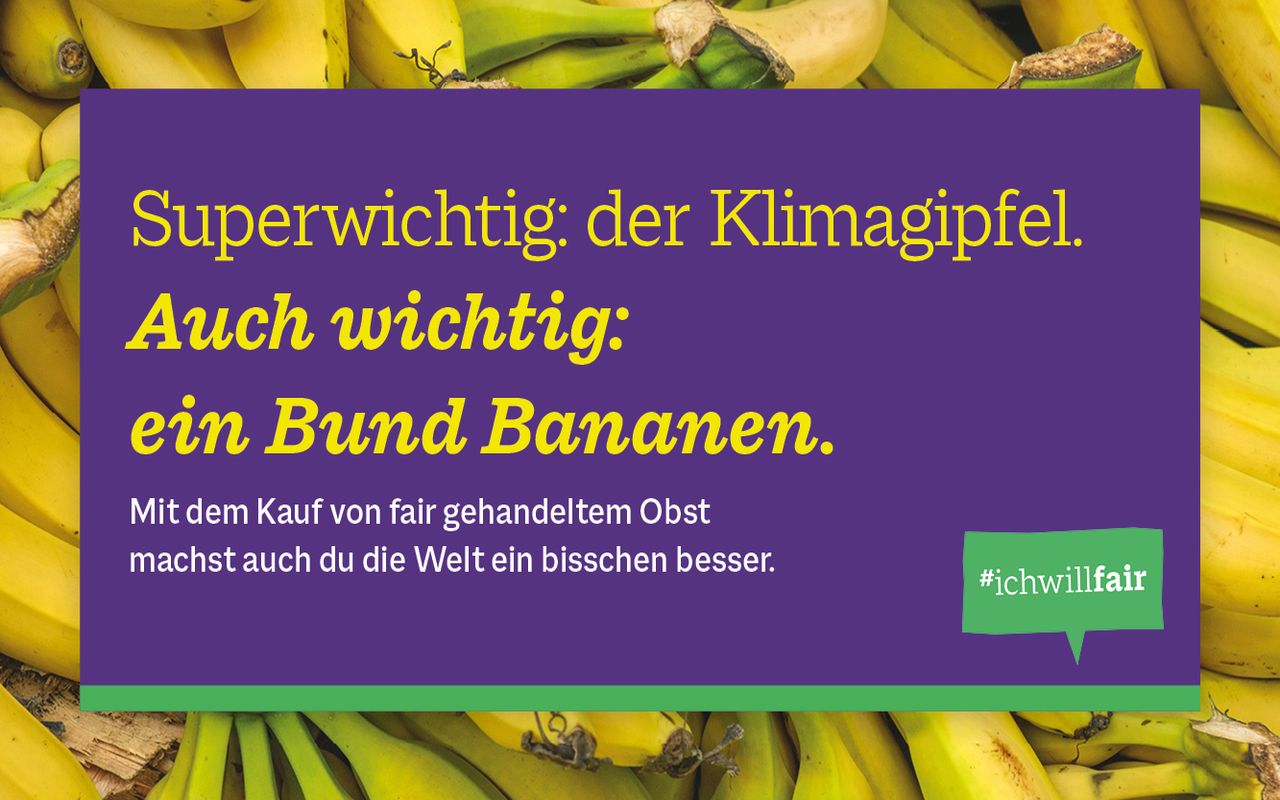
A bunch of yellow bananas is displayed with a purple banner promoting fair trade and climate awareness.

Fair Trade and Climate Justice: Everything is Conntected

A Contribution of the 'Initiative for Sustainable Agricultural Supply Chains' (INA)

Fair Trade organisations and the Initiative for Sustainable Agricultural Supply Chains (INA) have launched the #ichwillfair campaign during COP26 to highlight the link between global supply chains and climate change.

Read more

Rows of young rice plants grow in a well-organized pattern, showcasing the SRI method in a lush green field.

The Rice Sector in West Africa: A Political Challenge

New insights on trade and value addition in the rice sector in West Africa

Low import tariffs, smuggling activities, unpredictable tax exemptions and weak enforcement of food safety standards: The potential of local rice value chains is undermined in West African countries.

Read more

Fishermen in hard hats unload a large net of fish onto a dock from a ship under a cloudy sky.

The fight against illegal fishing

A Report

The oceans are important for our food supply, but they are overfished. To halt this trend the global community is now taking action against illegal fishing. Journalist Jan Rübel spoke with Francesco Marí, a specialist for world food, agricultural trade and maritime policy at "Brot für die Welt," and others.

Read more

A rooster with vibrant red comb and detailed plumage stands alert behind a wire fence in a rural setting.

Do import restrictions really benefit the local poor in West Africa?

A contribution by Isabel Knößlsdorfer

Protectionist policies like tariffs supposedly protect domestic producers if they cannot compete with cheaper imported products. Some African countries have therefore opted to impose such import restrictions for a number of products. For the case of chicken imports in Ghana, this study analyses whether restrictions would lead to overall positive or negative welfare effects among households.

Read more

A group of people walks through a field in Tanzania, with vibrant sunflowers blooming under a clear sky.

Sang'alo Institute invests in farming of sunflower crop

A contribution by James Wanzala

Kenya is a large importer of vetable oils mainly from Indonesia and Malaysia - amongst them sunflower oil. Due to the Russian war of aggression against Ukraine, there were supply bottlenecks and food shortages, leading to less affordable vegetable oils in Kenya. As a response to the lack of supply, the Sanga'alo Institute of Science and Technology, took that impulse, teamed up with the GIZ and established regional cultivation and refinement of sunflowers.

Read more

From field to fan shop: how to increase supply

A contribution by Jan Rübel

Organic cotton is extremely popular – but farmers still find it difficult to change their conventional cultivation methods. A new project addresses this dilemma: Bundesliga football teams in Germany are promoting the switch to organic cotton in India. And thereby setting an example.

Read more

An illustrated map showcases diverse agricultural and food-related activities on a vibrant island setting.

The Agri-Food Map: An interactive map to explore sustainable agri-food systems

A Contribution by GIZ

The complex interrelationships of the sustainable transformation of agricultural and food systems are not always easy to understand - the Agri-Food Map, an interactive online app, makes the comprehensive relations accessible by providing a wide range of comprehensibly prepared information.

Read more

A man waters crops in a sunlit field using a green watering can, promoting sustainable agriculture practices.

Strengthening the market linkages of smallholders in the face of global supply shocks

A Contribution by Niladri Sekhar Bagchi

The consequences of the Russian invasion of Ukraine have enabled many countries to open up new export markets for their agricultural goods. However, smallholder farms have been largely left out. Drawing on his experience in India, our author gives a brief overview of how this can be changed.

Read more

A group of people stands in line outdoors, waiting at a registration table under a tree.

The Principle of Sharing

A contribution by gebana

gebana, a Swiss fair trade company, follows the principle of "sharing" with its corporate philosophy: farming families in the Global South participate directly in the sales of their online shop. Caroline Schaar, Marketing at gebana, explains the company's approach.

Read more

A hand selects ripe cocoa pods from a pile on the forest floor in Côte d'Ivoire.

Nature conservation around the world

A Contribution by WWF

From measures to promote biodiversity in Germany to more sustainable cocoa cultivation methods in Ecuador: WWF works at many different levels. At the Green Week, it will be demonstrated just how multifaceted nature conservation work is and what role each individual's decision plays.

Read more

Tall trees with lush green leaves form a canopy against the sky in a Vietnamese forest. | © GIZPhan Nhat Anh

From Coexistence to Collaboration

A Contribution by Initiative für nachhaltige Agrarlieferketten (INA)

The demand for sustainable products and supply chains is constantly increasing. DIASCA is an alliance that works on interoperability of digital solutions in agricultural supply chains through the development of open standards for forest monitoring, farm income and traceability.  

Read more

A pile of fresh green coconuts showcases their textured husks and natural imperfections. | © Unsplash

Coconuts, Digitalization and the Future

An Interview with Ebun Feludu

Female founder Ebun Feludu wants to bring the coconut value chain to Nigeria with her start-up Kokari. In this interview, she explains why she envisions every coconut palm tree bearing its own name in the future and how digitalization can contribute to this.

Read more

A person stands joyfully with outstretched arms in a creatively decorated atelier featuring golden accents and various artworks.

From the perennial to the catwalk – banana silk as an alternative

A Contribution by Paul Kadjo

The textile industry contributes significantly to environmental pollution as it produces over 100 billion garments every year, resulting in huge CO2 emissions and water consumption. Fashion designer Paul Kadjo uses banana silk as an environmentally friendly alternative to make textile production more environmentally conscious and socially just.

Read more

A person in a blue sleeve harvests ripe coffee cherries from a vibrant coffee plant.

The Idea of Coffee entirely made by Women

A Conversation with Allan Mubiru

Allan Mubiru was standing in front of a shelf in Kigali, Rwanda, and discovered a local type of coffee. He took it, tasted it and was thrilled. A story about a grocery shopping trip that became the beginning of a successful business idea.

Read more

Aerial view of lush green fields and dense forests in Chebangang, Kericho County, showcasing a harmonious landscape. | © Wallace Gichunge

How a Tea adds to Forest Conservation and Food Security

A Contribution by Wallace Gichunge

The Nyayo Tea Zones Development Corporation is committed to the preservation of forests in Kenya: The establishment of so-called buffer zones counteracts deforestation by planting trees and tea. In addition to the production of environmentally friendly tea, the project benefits the resources of the forests and the livelihoods of the communities living near the forests, says project manager Wallace Gichunge.

Read more

Workers harvest cocoa pods in a lush green plantation, with one person pouring a basket of pods onto a pile.

Guide to a Sustainable Cocoa Sector

A Contribution by Jens Busma

The Federal Ministry ofor Economic Cooperation and Development (BMZ) and the Federal Ministry of Food and Agriculture (BMEL) presented a revised version of the 10-Point Plan for a sustainable cocoa sector. The plan takes into account new supply chain legislations and current developments. A particular focus is paid to a living incomes, responsible purchasing practices and ecological and climate-friendly cocoa cultivation.

Read more

A woman sorts cocoa beans in a wooden tray, wearing a colorful floral shirt and traditional patterned skirt.

"We didn't even make it halfway"

Interview with Claudia Brück and Torben Erbrath

The demand for fair-trade cocoa is growing – but how is the industry responding? In an interview, Claudia Brück, Executive Board Member of Fairtrade Germany, and Dr. Torben Erbrath, Managing Director of the Federal Association of the German Confectionery Industry, discuss progress as well as challenges, and why real change can only be achieved through long-term commitment along the entire supply chain.

Read more

A person tends to drying coffee beans on raised beds under a bright blue sky in a lush rural setting.

Improving The World, Sip by Sip

A Conversation with Maura Oerding

Maura Oerding has a mission: With the specialty coffee Angelique's Finest, she not only wants to enter new markets but also revolutionize the coffee industry. Her recipe for success? Empowering women from Rwanda and Uganda from cultivation to marketing. Oerding’s goal: quality, fairness, and self-determination in every bean.

Read more

A woman at a trade show proudly displays organic food products in front of a booth showcasing diverse packaged goods.

BIOFACH as a game changer for organic producers

A Contribution by Claudia Jordan

In 2025, GIZ and the Import Promotion Desk (IPD) celebrate ten years of successful cooperation. With their joint stand at BIOFACH trade fair in Nuremberg, they were able to introduce over 300 organic companies of partner countries to the European market. And the journey continues – despite challenges on the global market.

Read more

Illustrated icons highlight six collaborations aimed at creating fair and sustainable supply chains.

Stronger toghether: Six collaborations for fair agricultural supply chains

A Listicle by Yvonne Bielfeld

For everyone in the supply chain to benefit, it is essential that politics and business work together. The measurable successes of such partnerships are demonstrated by the following six projects: they show how cooperation with the business sector can make supply chains fairer, more resilient, and more sustainable step by step.

Read more

A man collects natural rubber from a tree, holding a container and tapping tool in a lush forest. | © GIZ

From the Tree to the Street: The Story of Natural Rubber

A Contribution by Carlos Castellanos & Yvonne Bielfeld

The shoe manufacturer Cueros Vélez as a good example of private sector responsibility: the photo gallery shows how the bark of the rubber tree becomes a reliable yet deforestation free companion on our roads.

Read more

Text highlights the potential of 71 million young people to enhance rural areas, with footprints symbolizing progress.

Answers from the youth: "Leave or stay? That depends on it!"

GIZ study; conducted by Geopoll

Does Africa's youth want to live in the city or in the country? Which career path seems particularly attractive? And how optimistic are the young people about the future? Young adults from rural areas answered these questions by SMS.

Read more

A group of people work together in a lush vegetable field under a clear blue sky.

"Agriculture can become a job engine"

Interview with Reiner Klingholz

How can agriculture modernise Africa? And does the road to the cities really lead out of poverty? Dr. Reiner Klingholz from the Berlin Institute for Population and Development in conversation with Jan Rübel .

Read more

Two women in vibrant traditional attire walk joyfully down a street, surrounded by smiling children.

Enough of being poor

By Marcellin Boguy

In western Africa a new middle class is emerging. Their consumer behaviour is determining the demand for products – home-produced and imported goods, on the internet or at the village market. The people of Ivory Coast in particular are looking to the future with optimism.

Read more

Teilnehmer einer Schulung im Digital Transformation Center Kigali, Ruanda. © Mali Lazell, GIZ

Africa's rapid economic transformation

A report by T. S. Jayne, A. Adelaja and R. Mkandawire

Thirty years ago, Africa was synonymous with war, famine and poverty. That narrative is clearly outdated. African living standards are rising remarkably fast. Our authors are convinced that improving education and entrepreneurship will ensure irreversible progress in the region even as it confronts COVID-19.

Read more

A person with curly hair is partially obscured by a large play button icon, suggesting a video is ready to be played.

Video: 4 Questions to Claudia Makdristo

A video clip by Seedstars

Startups are booming in African agriculture. What are the current trend and challenges – and can other regions benefit from innovative approaches? A Video-Interview with Claudia Makadristo, Regional Manager of Seedstars  

Read more

A smiling woman in a green shirt uses her phone while standing in a cornfield.

An opportunity for the continent

A contribution by the Bill & Melinda Gates Foundation

Africa’s population is young and ready to take its destiny into its own hands. Agriculture offers amazing opportunities in this regard. The Bill & Melinda Gates Foundation wants to support the next generation in this way.

Read more

Farmers work together threshing rice in a field with a makeshift machine under the clear sky.

Leveraging investment impacts

A contribution by Heike Baumüller, Christine Husmann, Julia Machovsky-Smid, Oliver Kirui, Justice Tambo

Any initiative whose aim is to reduce poverty in Africa should focus first on agriculture. But what kind of investment has the greatest impact? The use of scientific criteria provides some answers.

Read more

A gloved hand carefully inspects rows of neatly arranged chocolate bars on a production line.

From start to finish: a vision of interconnectivity

A contribution by Tanja Reith

At the moment, the agricultural industries of African countries exist in relative isolation. Imagine peasant farmers digitally connected to the value chains of the global food industry. How could this happen? A guidebook.

Read more

A speech bubble asks about taking over a farm, featuring emojis of a chick, potato, cow, rice bowl, and tractor.

The Life of Their Dreams - What Children Want

Interview with Gnininkaboka Dabiré and Innocent Somé

Later on you want to become a farmer yourself, or would you prefer to take up another profession? Two young people from Burkina-Faso talked to representatives of the Dreyer Foundation about their parents' farms, the profession of farmer and their own plans for the future.

Read more

A man with a rifle stands before a crowd holding pots, illustrating a tense situation at a distribution point.

"Without peace, there will be no development"

Interview with Karina Mroß (DIE)

What contribution does development cooperation make to conflict prevention? What can it do for sustainable peace? Political scientist Karina Mroß talks to Raphael Thelen about post-conflict societies and their chances for peaceful development.

Read more

A person speaks passionately at a podium during a presentation at the Ministry for Economic Cooperation and Development.

The communicator

A contribution by Jan Rübel

What do electrical engineering, telecommunications and agriculture have in common? They arouse the passion of Strive Masiyiwa: Thirty years ago, he started an electrical installation company with $75, later riding the telecommunications wave as a pioneer. Today he is committed to transforming African agriculture.

Read more

A man in a suit gestures expressively during a conversation, with green plants in the background.

Spiritual mortar for the young generation

A contribution by Jan Rübel

Fred Swaniker is working building a new era of leaders. And what about agriculture? ‘It needs to be more sexy!’

Read more

A man conducts a workshop, engaging an attentive group seated in a classroom setting.

A new attempt at Africa's industrialization?

A contribution by Helmut Asche

Afrika is about ready. There are promising approaches for a sustainable industrialization. However, the path poses challenges to the continent.

Read more

A person in a denim jacket stands in a lush banana plantation, holding a bunch of green bananas.

Youth Employment in Rural Areas

The world’s population keeps on growing; with this rise comes an increased need for food as well as productive employment opportunities. Offering young people in rural areas better employment prospects is one of the objectives of the sector project. The young population is the key to a modern and efficient agricultural economy.

A project of GIZ

Read more

A farmer waters crops in a lush field, showcasing sustainable agricultural practices under clear blue skies.

Youth as key actors for a transformation of agri-food systems

Five Questions for Anke Oppermann

In October, the Committee on World Food Security (CFS) adopted policy recommendations ‘Promoting Youth Engagement and Employment in Agriculture and Food Systems’. Anke Oppermann answers five questions on youth employment in the agricultural sector.

Read more

A woman in glasses and a patterned coat gestures while engaging in conversation at a social gathering.

Priscilla Impraim and her chocolate business

A contribution by Jan Rübel

Priscilla Impraim is one of the first women in Ghana to enter the chocolate business. Despite some hurdles, she founded the company Ab Ovo Confectionery Limited in 2006 with currently six permanent employees and 25 seasonal employees.

Read more

A woman in a vibrant pink dress tends to young rice plants in a lush, green paddy field.

Why organic is a „blessed” method

An Interview by Claudia Jordan

Three female entrepreneurs from Mozambique, Sri Lanka and Uganda tell their stories about starting organic businesses from scratch, now selling Baobab Oil, Gotukola powder and Shea butter in international markets. And they explain why their business is almost 100 percent female.

Read more

Handmade signs advertising various services like electrician and hairdresser are attached to a tree trunk.

Mozambique: How informal workers find jobs through an app

A Contribution by Leonie March

There are only about 1 million jobs in the East African country. The majority of the population works in the informal sector, and it can be difficult for them to find customers. Biscate offers a digital solution - without the need for internet, data or smartphones.

Read more

A group of smiling young people sit outdoors, engaging in a lively activity with a wooden box.

Stepping into the future: How youth organisations are driving change

A contribution by Felix Chiyenda

Together they are stronger: In many African countries, young men and women are coming together to form youth organisations. These organisations help young people in rural areas to earn a living in the agricultural and food sector, creating prospects for the future in rural areas.

Read more

A woman in a pink headscarf and floral dress stands confidently in a lush garden. | © Claudia Jordan

Stick together and learn from each other

By Claudia Jordan

During the Women Leadership Programme in May 2024, around 20 women from African countries and Germany met again for a one-week workshop in Bavaria, Germany to become fit for leadership in their organisations. One topic that concerns the women across countries is climate change, but also violence against women and their discrimination in agriculture.

Read more

A woman in a red headscarf observes young plants growing in a greenhouse, tending to them carefully.

Uprooting the Norm

A Contribution by GIZ

As a passionate social scientist and entrepreneur from Malawi, Ngabaghila Chatata knows that she can overcome any challenge. Her story stands out in a country faced with high unemployment, particularly in its rural areas. As the managing director of Thanthwe Farms, she has set out to inspire the next generation of young agripreneurs – proving that successful business starts with the right mindset, not only capital.


Read more

A diverse group of women in casual attire smiles together outdoors, celebrating unity and community spirit.

Where Goats Listen to the Radio

A Contribution by GIZ

German and Ugandan women farmers come together in Mecklenburg-Vorpommern to exchange experiences – from modern milking systems to the challenges of women's participation in agricultural decision-making. Amid goats, lavender ice cream, and engaging discussions, one thing becomes clear: women can achieve great things together, across borders and generations.

Read more

A diverse group of women joyfully pose together on a rooftop, celebrating female leadership and empowerment.

Female Leadership: A Key Lever for Transformation?

A Conversation with Carmen Torres Ledezma & Oluwaseyi Kehinde-Peters

Female Leadership is vital to the transformation of agriculture and food systems. Therefore, it is so important to advance gender-sensitive approaches to increase the presence of women in leadership positions in agricultural production and to make these systems more equitable, sustainable and resilient.

Read more

A woman in a blue sari arranges white silk cocoons on a woven wall in a rural setting.

Gender-Transformative Approaches – Unlocking Everyone’s Potential

A Contribution by GIZ

Studies show that women often manage agricultural resources more effectively and sustainably. With equal access to production resources, agricultural yields could increase by up tp 30 per cent. But this is about more than just productivity. How can gender-transformative approaches (GTA) drive meaningful change and why are GTA key to sustainable change?

Read more

A woman smiles confidently inside her small shop, surrounded by various goods, symbolizing economic equality and care.

The Gap the Economy cannot afford

A Study by CARE

In a new study, the international humanitarian agency CARE analyses how the economic and social barriers faced by women significantly reduces the global gross domestic product (GDP). At the current rate, it will take 152 years to close the economic gap between women and men – although closing this gap would be extremely profitable from an economic perspective.

Read more

A man wearing traditional attire and a purple hat stands outdoors in front of trees and a building.

"We have high expectations of the Kampala Declaration"

An Interview with Lawani Arouna

The rural population and vulnerable groups should be involved in the implementation of the African Union's Kampala Declaration on the transformation of agricultural and food systems. This is the demand of sociologist Lawani Arouna, Vice President of the Regional umbrella organisation of farmers' associations in West Africa (ROPPA).

Read more

A group of women stands smiling on a lawn in Herrsching am Ammersee, surrounded by lush greenery and a building.

"We want to change the narrative of rural women"

A Contribution by GIZ

Development cooperation doesn't resonate in Germany? The Bavarian rural women have a different story to tell. A visit to a training session with female smallholder farmers from Kenya, Zambia and Uganda in Bavarian Herrsching am Ammersee.

Read more