GIZ is a globally active provider of international cooperation for sustainable development. It has more than 50 years of experience in a wide range of fields.
Just in time for the United Nations’ climate conference COP26, fair trade organizations and the ‘Initiative for Sustainable Agricultural Supplychains’ (INA) launched a joint communiqué for fair trade. The conference serves as communicative anchor of the #ichwillfair campaign. Although the focus points of fair trade are primarily social and ecological justice in global supply chains, climate change is closely tied to the situations of smallholders and their fields.
Thus remains the expansion of agriculture in tropical regions the most severe threat to forests. According to the World Wildlife Fund (WWF), an estimated 5 million hectare (about 20,000 square miles) was converted annually into farmland between 2005 and 2017. Oftentimes, smallholders are forced to extend their acreage as previous revenues are insufficient to secure their livelihoods. Nonetheless, the responsibility for addressing this problem lies not with producing countries alone: Tropical deforestation and transformation of ecosystems are primarily fuelled by international trade.
Hence soy, palmoil, maize, timber, coffee, cacao, beef, and cotton represent the most important tropical export commodities to the EU. Following the WWF, their trade is responsible for the clearing of 1.3 million hectare (about 5,000 square miles) of tropical forest area, translating into an averaged 740 million tons of CO2 emissions – about a fifth of the EU’s total greenhousegas emissions in 2021. Moreover, data from satellite images released by NGO Global Forest Watch shows that in 2019, the humid primary forests of the tropics lost 3,75 million hectare (about 15,000 square miles) in woodlands. This amounts to the third largest loss of tropical forest since 2000.
The campaign by fair trade organizations and INA aims at raising awareness amongst the German citizenry on their consumption’s effects on the global climate. It does not aim at telling them that they carry the world on their shoulders, but that they are a little tool in the machinery of international supply chains. With their shopping behavior, their political voice and personal engagement in their group of friends and family, everybody is able to improve the world – bit by bit.
Such is the message #ichwillfair communicates nationwide since October 2021. Megalight-posters in the train stations of seven German cities promote the message to the public. Radiospots encourage listeners to follow up on the topic. Information can be found on the www.ichwillfair.de website as well as the social media channels of #ichwillfair. Besides, several podcast-hosts explain the connection between fair trade and climate change in their shows.
The INA, together with organizations such as ‘Forum Fair Trade’, the ‘association of fairtrade shops’ (Weltladen Dachverband), Fairtrade Germany, the working group of ‘one world’ (Eine Welt) national networks and GEPA use the joint hashtag #ichwillfair since 2020 in order to promote fair trade in Germany.
In Eastern El Salvador, campesinos are cultivating a self-image to encourage rural youth to remain in rural areas. With help from Caritas, they have adjusted the cultivation methods to their soils and traditions - Marvin Antonio Garcia Otero,the deputy director of Caritas of the Diocese of San Miguel believes this is the best way to prevent rural exodus and criminality.
Insurance companies could provide protection during droughts in Africa. How exactly this could be done is what the industry is currently trying to figure out. First experiences are available. An interview with the Managing Director of the Munich Re Foundation, Thomas Loster
The Global Hunger Index (GHI) 2020 shows that the world is not on track to meet the international goal of “zero hunger by 2030”. If we continue at our current speed, around 37 countries will not even have reached a low hunger level by 2030.
The first Climate Adaptation Summit put climate adaptation at the center of politics for the first time. The virtual meeting united global players with one goal: building resilience is just as important as climate protection itself. Around 15,000 participants discussed direct proposals.
110 speakers from 120 countries met virtually at the Global Forum for Food and Agriculture (GFFA) to discuss the challenges to global food supply. They asked the question: How can food systems support the health of people and the planet?
Environmental change is having a particularly strong impact on the African continent. Its landscapes see both negative and positive processes. What is science's view of this? A conversation with Cyrus Samimi about mobility for livelihoods, urban gardening and dealing with nature.
In August, Germany’s development ministry set up a division concentrating on One Health topics. Parliamentary State Secretary Maria Flachsbarth on knowledge gaps at the human-animal-environmental interface, the link between One Health and food security, and lessons learnt from previous pandemics.
From the lab to the masses: Maria Andrade bred varieties of biofortified sweet potatoes which are now widely used all over the continent. She sets her hope on the transformation of African agriculture.
Financial innovations can prevent a crisis turning into a catastrophe. The livelihoods of people in affected areas may well depend on intervention before a crisis – and on risk funds.
Freshwater deficits are affecting more and more people throughout the world. In order to counter this, our global food system will have to change, our author maintains. A case for more research on alternative crops and smart water solutions.
A contribution by Kerstin Weber and Brit Reichelt-Zolho (WWF)
Biodiversity and sustainable agriculture ensure the nutrition of whole societies. But there is more: These two factors also provide better protection against the outbreak of dangerous pandemics. Hence, the question of preserving ecosystems is becoming a global survival issue.
Double interview with Tony Rinaudo and Volker Schlöndorff
Tony Rinaudo uses conventional reforestation methods to plant millions and millions of trees – and Volker Schlöndorff is filming a cinema documentary about the Australian. The outcome so far: An educational film on behalf of the BMZ (Federal Ministry for Economic Co-operation and Development).
If there is a lack of fertile soil and rain, hunger breaks out quickly. Maria Smentek from the World Food Programme (WFP) explains how farmers and pastoralists can counter climate change with hydroponic-systems.
The majority of producers in developing countries are women. Although they contribute significantly to the food security of their families, they remain chronically disadvantaged in male-dominated agriculture in terms of access to land, credit, technology and education.
Interview with Bernadette Arakwiye und Salima Mahamoudou (World Resources Institute)
Deforestation is leading to a shortage of ressources. What are the options for counteracting? A conversation with Bernadette Arakwiye and Salima Mahamoudou about renaturation and the possibilities of artificial intelligence.
It began with clicks at a trade fair and ends with concrete reforestation: a campaign at the Green Week in Berlin is now enriching the forests of the Yen Bai Province in Vietnam. A chronicle of an education about climatic relevance to concrete action - and about the short distances on our planet.
A contribution by Dr. Kathleen Mar and Dr. Nicole de Paula
Against the backdrop of the COVID-19 pandemic, health is receiving unprecedented public and political attention. Yet the fact that climate change is also affecting the environmental and social determinants of health in a profound and far-reaching way deserves further recognition.
A report by Bettina Rudloff and Annette Weber (SWP)
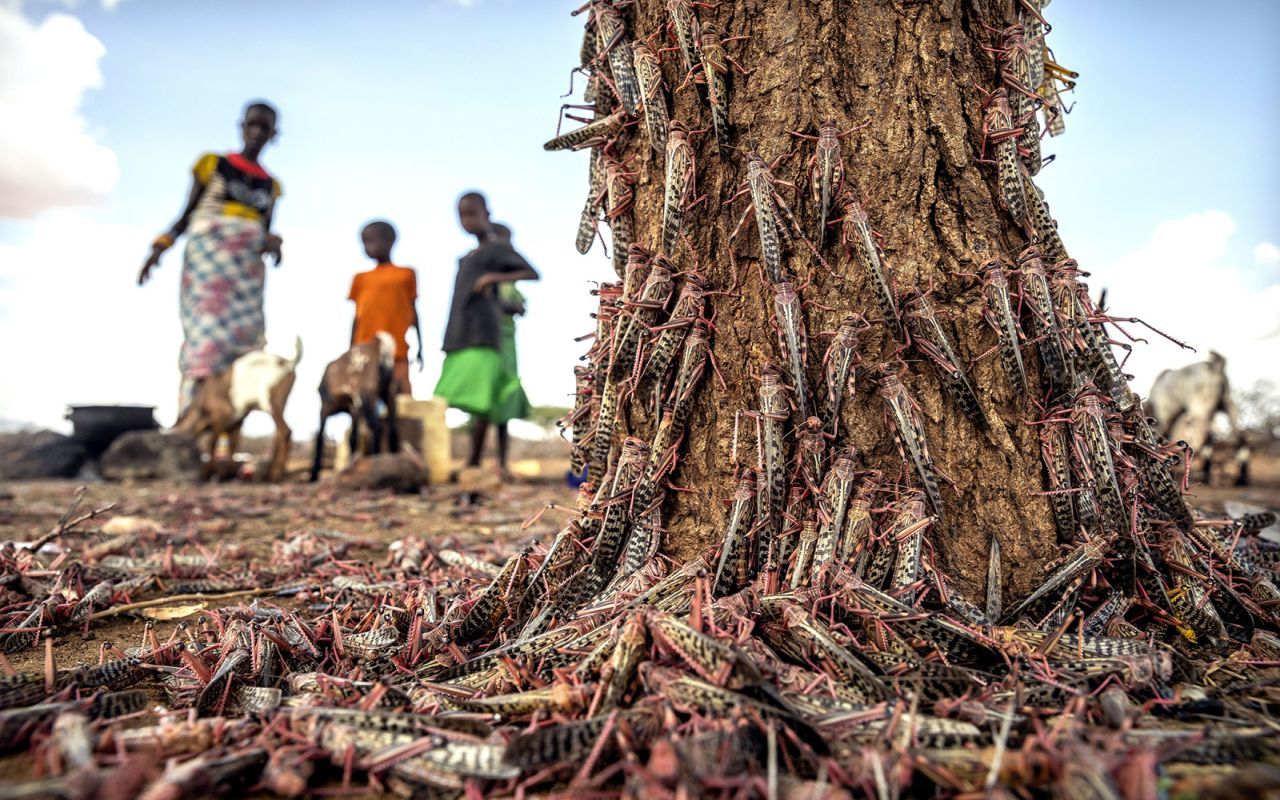
The Corona-Virus exacerbates existing crises through conflict, climate, hunger and locusts in East Africa and the Horn of Africa. What needs to be done in these regions? To face these challenges for many countries, all of these crises need to be captured in their regional context.
A report by Alexander Müller and Jes Weigelt (TMG)
As the climate changes, the population of Africa is growing and fertile land and jobs are becoming scarcer. New ways are currently leading to urbanisation of agriculture and a new mid-sized sector in the countryside
A contribution by Michael Brüntrup (DIE) und Daniel Tsegai (UNCCD)
Droughts are the natural disasters with far-reaching negative consequences. While rich countries are still vulnerable to drought, famines are no longer found.
Climate change is destroying development progress in many places. The clever interaction of digitalisation and the insurance industry protects affected small farmers.
A study by the World Bank predicts that millions of people in sub-Saharan Africa will have to leave their homelands because of climate change. We have spoken with one of the authors
Adaptation to climate change can be achieved by making agriculture more environmentally sustainable – if the rich countries also reduce their emissions
The WWF has published a sensational study on food waste. The focus: farm-stage food waste. Peter McFeely, Global head of communications and strategic planning at WWF, explains what needs to be done.
Genetically modified bacteria become edible proteins, cows graze on pasture, and no waste is produced in an industrial circular economy. Journalist Jan Grossarth sees a silver lining for the future of world nutrition
"One World no Hunger" (SEWOH) becomes one of the five core themes of the BMZ. Dirk Schattschneider, SEWOH Commissioner about previous approaches, future areas of action, and the political will to end hunger.
Every one degree Celsius rise in temperature increases the risk of conflict by two to ten percent. The climate crisis is a humanitarian crisis, as the photos by Christoph Püschner and Frank Schultze illustrate.
Innovate2030 is looking for creative people from around the world to develop smart and innovative solutions against climate change in cities. Initiated by the Make IT-Alliance.
At the climate conference in Glasgow, activists from various groups protested again – Leonie Bremer from ‘Fridays for Future’ was there too. How can climate protection and development cooperation work hand in hand?
The climate crisis fuels world hunger. What needs to change in the global fight against hunger, and which role plays humanitarian aid in international development cooperation?
Climate change already affects the daily lives of people in the Global South. What are the challenges they face and what do these imply for negotiations at the climate conference in Glasgow?
How investing in healthy soils provides incentives for more sustainable agriculture even as it demonstrates the need for far reaching changes in the agrisector.
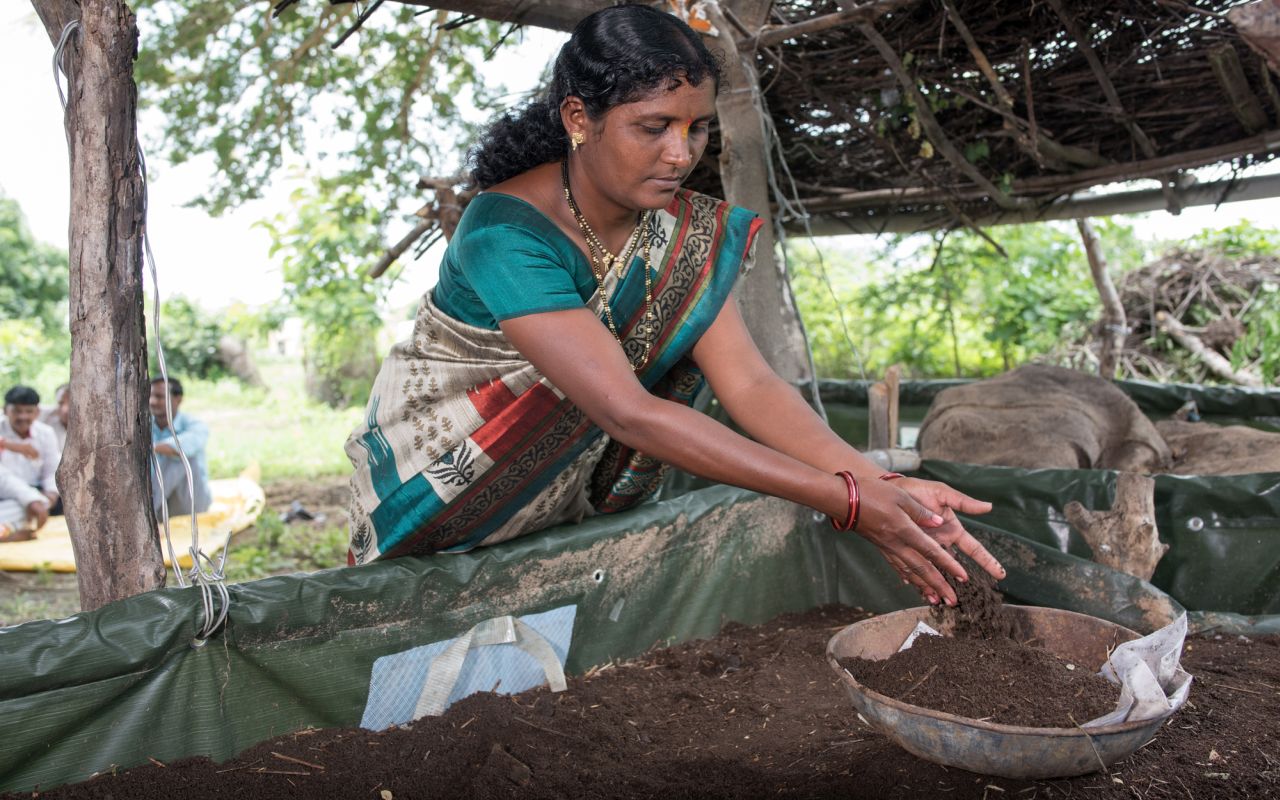
Indian farmers restore precious soil material combining traditional with innovative approaches. A case example how governance, agriculture and development cooperation can work together to combat climate change.
This year's United Nations World Drug Report highlights for the first time the nexus between illicit drugs and the environment. In view of climate change, it is time to feed the debate with facts and make drug policy greener
Agroecological methods target diversity and resilience and can thus promote the protection of forests, water and soil. Julia Tomalka and Christoph Gornott, Potsdam Institute for Climate Impact Research (PIK), on the potential of agroecology to safeguard against climate change and build resilient agri-food system.
Martin Frick has been director of the WFP office in Berlin for a year – since then one hunger crisis has followed another. What are the diplomat's answers? A conversation about opportunities in agriculture, the interplay of multiple crises, the importance of resilience and tighter budgets.
Nations adopted four goals and 23 targets for 2030 to foster biodiversity conservation and counter acceleration in the global rate of species extinction at the UN Biodiversity Conference (COP15).
Development cooperation needs to place good governance and a sustainable agri-food systems transformation at its center: After the first 100 days in office have passed, Dirk Meyer from the German Development Ministry (BMZ) spells out the goals, guidelines and priorities of the Ministry’s new lead.
Stephanie Heiland, Project Manager at Sector Project Agriculture and part of this year’s Observer Delegation of the Deutsche Gesellschaft für Internationale Zusammenarbeit (GIZ) at COP27, shares her insights on the role of agriculture and food systems at the climate conference. Among other things, she reports from GIZ’s COP27 side event ‘Climate resilient agriculture and food systems in times of multiple crises and fragility’.
Future generations need more sustainable and stable agri-food systems. But how can this comprehensive transformation succeed and what responsibility does the private sector bear? These questions were the focus of the G7 Sustainable Supply Chains Initiative (G7 SSCI) side event as part of the ‘Champion Youth Action’ day at the 27th UN Climate Change Conference (COP27).
The Federal Ministry for Economic Cooperation and Development sees sustainable agri-food systems as an opportunity to protect the climate, preserve biodiversity and ensure food security in the future. Dirk Meyer, Head of Directorate-General 1 at the Federal Ministry for Economic Cooperation and Development, looks ahead to the upcoming COP27.
The world is facing major challenges that need to be solved. We need to feed an ever-growing population, bring climate change under control and stop the loss of biodiversity. Martina Fleckenstein, Director of Global Policy at WWF, on what is expected from the climate conference in terms of biodiversity and biodiversity conservation.
Women can play a vital role in the change process both when it comes to climate protection and adapting to climate change. But the reality is often still not quite like this: women and girls are particularly badly affected by the climate crisis. Is the topic of gender getting enough attention at the upcoming climate conference? Questions for Bettina Jahn from UN Women Germany.
At LCOY Germany, the local youth climate conference, views on climate protection from all political spectrums are discussed. The Fairactivists, a programme of Fairtrade Germany, participated with a panel discussion on the link between social justice and climate justice.
The CompensACTION Initiative for food security and a healthy planet, launched by the German Federal Ministry for Economic Cooperation and Development (BMZ) in 2022, is gaining momentum. It aims to financially compensate smallholder farmers for their contribution to preserving ecosystems. Initial successes have been achieved in Ethiopia, Lesotho and Brazil.
Iraq suffered many years of war, sanctions and economic crises. However, Ally-Raza Qureshi from the World Food Programme in Iraq sees progress. But now the effects of climate change are becoming apparent in the country. What is to be done?
Journalists Angeline Ochieng and Victor Raballa visited Ms Bilha Munyole, a Kenyan farmer in Kimilili, Bungoma County, on her maize plantation. About the important role of mechanisation in climate-smart agriculture and in building resilience to the impacts of climate change.
Given the urgency of transforming agricultural and food systems, GIZ India's Food Systems and Agroecology Working Group is exploring the potential of agroecology in collaboration with Think20 partners. A policy brief has now been published.
In the West Bank, political tensions and increasingly poor weather conditions are making farming more difficult. What needs to be done? Questions for Abbas Milhem, Executive Director of the Palestinian Farmers Union (PFU).
With the annual topic "Earth’s well, all’s well!", Fairtrade Germany is focusing on the concept of agroecology at all levels - and is thus taking the next step towards achieving greater global sustainability. At the Green Week trade fair, Fairtrade Germany will show how this can be achieved taking the cocoa supply chain as an example.
Roughly 800 million people suffer from hunger worldwide. Change is needed - for people and for the environment. Brot für die Welt reports on the starting points offered by everyone's ecological footprint and handprint.
Every second, worldwide, we lose valuable and healthy soil with the size of four football fields. This was only one of the many facts being presented to a wide audience in Bonn and worldwide via livestream at the World Desertification and Drought Day on 17th June 2024. This was the 30th anniversary of the United Nations Convention on Combatting Desertification (UNCCD), which was celebrated at the Bundeskunsthalle in Bonn.
From January 9 to 11, 2025, heads of state and government of the African Union met in Kampala, Uganda. With a clear vision and concrete measures, the Kampala Agenda aims to make the continent's agricultural and food systems climate-resilient, fair and future-proof by 2035.
The bioeconomy movement is fundamentally changing agriculture and food production: through innovative ideas, environmentally friendly approaches and the realization that we need to work together globally to ensure that change truly benefits everyone. At this years’ German Forum for Food and Agriculture (GFFA), the German Federal Ministry for Economic Cooperation and Development (BMZ) focused on this topic.
In May, this year's "Partners for Change – SOILutions for a Food Secure, Resilient, and Sustainable Future" conference took place. Kah Walla, Moderator of the Conference and Director of Strategies!, summarises the discussions and declares that healthy soils are not just the foundation of agriculture, but the cornerstone of a resilient, equitable, and climate-smart future.
In Mali, women farmers are facing multiple challenges at once. Climate change is degrading land and making natural resources increasingly scarce, while conflict is forcing communities to leave behind their livelihoods. At the same time, women continue to produce food, feed their families and contribute to peace and community development. An interview with Fatoumata Goundou Sissoko, President of the Network of Women for Environmental Rights (REFEDE Mali).
The United Nations plan a Food Systems Summit - and now the Corona-Virus is dictating the agenda. The Chief Economist of the UN World Food Programme takes stock of the current situation: a conversation with Jan Rübel about pandemics, about the chromosomes of development - and about the conflicts that inhibit them.
African countries still face huge gender gaps in terms of access to work and capital. What are the consequences of Corona for women in Africa? Jan Rübel interviewed Léa Rouanet on lockdowns and gender-based violence. The economist works at the Africa Gender Innovation Lab of the World Bank.
Every year in October, the "Welthungerhilfe" aid organisation, with the Irish "Concern Worldwide" NGO, publishes the Global Hunger Index, a tool with which the hunger situation is recorded. What are the trends - and what needs to be done?
Shortly before ending his position as Director General of the International Food Policy Research Institute (IFPR) Dr. Shenggen Fan talks about the reforms and new modes of operation needed to achieve global food security in the coming decade.
Over a period of two years, the Ceres2030 team spent researching answers to the questions of how much it will how much it will cost to realize SDG 2 and where that money should be spent most effectively. IISD Senior Advisor and Ceres2030 Co-director Carin Smaller about small farmers, machine learning and women empowerment.
The CGIAR agricultural research organization is systematically repositioning itself. We spoke with Juergen Voegele, Vice President for Sustainable Development at the World Bank, about progress to date - and discuss what needs to be done collectively to stop global hunger in ten years.
Yemen is currently experiencing one of the worst disasters, due to war, hunger and disease outbreaks. The GIZ is locally engaged to improve the nutrition and resilience of Yemenites.
International agricultural research is responding to new challenges: Their advisory group is undergoing a fundamental reform process and unites knowledge, partnerships and physical assets into OneCGIAR.
A contribution by Heike Baumüller, Christine Husmann, Julia Machovsky-Smid, Oliver Kirui, Justice Tambo
Any initiative whose aim is to reduce poverty in Africa should focus first on agriculture. But what kind of investment has the greatest impact? The use of scientific criteria provides some answers.
The lockdown due to COVID-19 hit the economy hard - including agriculture in particular with its supply chains and sales markets. What creative coping strategies have those affected found? The Seminar for Rural Development has begun a research study on th
African inland fisheries are increasingly reliant on the capture of small fish species that are sundried and traded over long distances. They make an important contribution in alleviating “hidden hunger”: consumed whole, small fish are an important source of micronutrients. Only that, unfortunately, politicians haven’t yet realised this.
A contribution by Jes Weigelt and Alexander Müller
What is required to make food systems provide sufficient, healthy food while not harming the planet? How should food security be maintained given the threat posed by climate change? Our authors look at some aspects of tomorrow’s food systems against the backdrop of the corona crisis.
Lack of seasonal workers and virus explosion in slaughterhouses, rising vegetable prices, climate crisis – all this demonstrates: Our food system is highly productive and (at least for the rich inhabitants of planet earth) guarantees an unprecedented rich and steady food supply - but it is not resilient.
A contribution by Sarah D´haen & Alexander Müller, Louisa Nelle, Bruno St. Jaques, Sarah Kirangu-Wissler and Matteo Lattanzi (TMG)
Young farmers’ insights on the effects of the COVID-19 pandemic on food systems in Sub-Saharan Africa @CovidFoodFuture and video diaries from Nairobi’s informal settlements.
There is a clear global task: We need to feed nine billion people by 2050. We, the people of Earth, must produce more food and waste less. That is the top priority of the UN World Food Programme (WFP), too - the description of a challenge.
At the beginning of December 2018, AGRA's board of directors met in Berlin. The "Alliance for a Green Revolution in Africa" panel discussed the next steps in their policy of modernizing agriculture. How to go on in the next ten years? One question - many answers from experts.
A study by Markus Hanisch, Agustina Malvido, Johanna Hansmann, Alexander Mewes, Moritz Reigl, Nicole Paganini (SLE)
Post-Covid-19 lockdown: How food governance processes could include marginalised communities - an extract of the results of an SLE study applying digital and participatory methods.
Joe DeVries is a breeder – and Vice President of AGRA (Alliance for a Green Revolution in Africa). What are the chances and risks of a ’green revolution‘ in Africa? A discourse between Jan Rübel and him about productivity, needs, and paternalism.
Insect farming is economical and environmentally sustainable, they are high in protein and they live on agricultural waste. Marwa Abdel Hamid Shumo thinks: They are the best weapon to combat hunger
Urban gardening is becoming increasingly popular in northern metropoles. People who consider themselves part of a green movement are establishing productive gardens in the city, for example on rooftops or in vacant lots. In severely impoverished regions of the global South, urban agriculture is a component of the food strategy.
Supporting groups of smallholding women substantially contributes to strengthen rural operations economically. The organisation and associated group activities can help to reduce extreme poverty and improve the food situation.
Chancellor Merkel has begun an ambitious European political programme: Striving for compromise in budget negotiations, an orderly Brexit as well as an appropriate response to the corona crisis. Unfortunately, one of her positions that she previously held is nowhere to be found: Africa's prosperity is in the interest of Europe.
A contribution by Nadine Babatounde and Anne Floquet (MISEREOR)
To prevent malnutrition among young children and strengthen the role of women in their communities, Misereor, together with the local non-governmental organisation CEBEDES, is implementing a programme on integrated home gardens in Benin - a series of pictures.
The Global Agriculture and Food Security Program (GAFSP) was launched by the G20 countries in 2010 in response to the 2008-09 food price crisis to increase both public and private investment in agriculture. An overview of the programme's approach, results and impact.
Even though COVID-19 poses a threat to the health of humanity, the reaction to the pandemic must not cause more suffering than the disease itself. This is particularly relevant for poor developing countries, where the impact of the corona crisis on food security is even more severe!
In most African countries, the infection COVID-19 is likely to trigger a combined health and food crisis. This means: In order to cope with this unprecedented crisis, consistently aligning our policies to the Sustainable Development Goals (SDGs) is more important than ever, our author maintains.
COVID-19 has unprecedented effects on the world. As always, the most vulnerable are the hardest hit, both at home and - especially - abroad. A joint appeal by the German Federal Ministry for Economic Development and Cooperation (BMZ) and the Department for International Development (DFID).
The region of Sub-Saharan Africa is on the decisive verge of a great development boost in farming: it could skip entire generations of technological development. But how? About possible roles and potentials of digital services.
A contritbution by Essa Chanie Mussa (University of Gondar)
Rural youth need viable livelihood opportunities to escape out of poverty and realize their aspirations. How could they be helped to fully unleash their potential? This is an aloud call that needs novel strategies among governments, policy makers, and international development partners and donors.
Enabling smallholders to trade across regions and borders promotes food security and economic growth. Although everyone is calling for exactly that, implementation is still difficult
Nutrition experts from all over the world are coming together in Rome. They are not only distilling 2000 ideas to improve food systems - they are also preparing for the big UN summit in New York in September. An interview.
Journalist Jan Rübel spoke with Joao Campari ahead of the UNFSS Pre-Summit. The Chair of Action Track 3 highlights key challenges in transforming existing food systems towards sustainable production and shares his expectations for the Summit.
A contribution by Dr. Karin Gaesing and Prof. Dr. Frank Bliss (INEF)
Especially in densely populated areas, land pressure leads to overexploitation of available land and a lack of conservation measures. The West African country of Benin, with heavily depleted soils in many places, is no exception.
Interview with Paul Newnham, Director of the SDG 2 Advocacy Hub.
The UN Food Systems pre-Summit in Rome dealt with transforming the ways of our nutrition. How do you bring that to a broad public? Questions to Paul Newnham, the Director of the Sustainable Development Goal (SDG) 2 Advocacy Hub.
An Interview with Francisco Marí (Brot für die Welt)
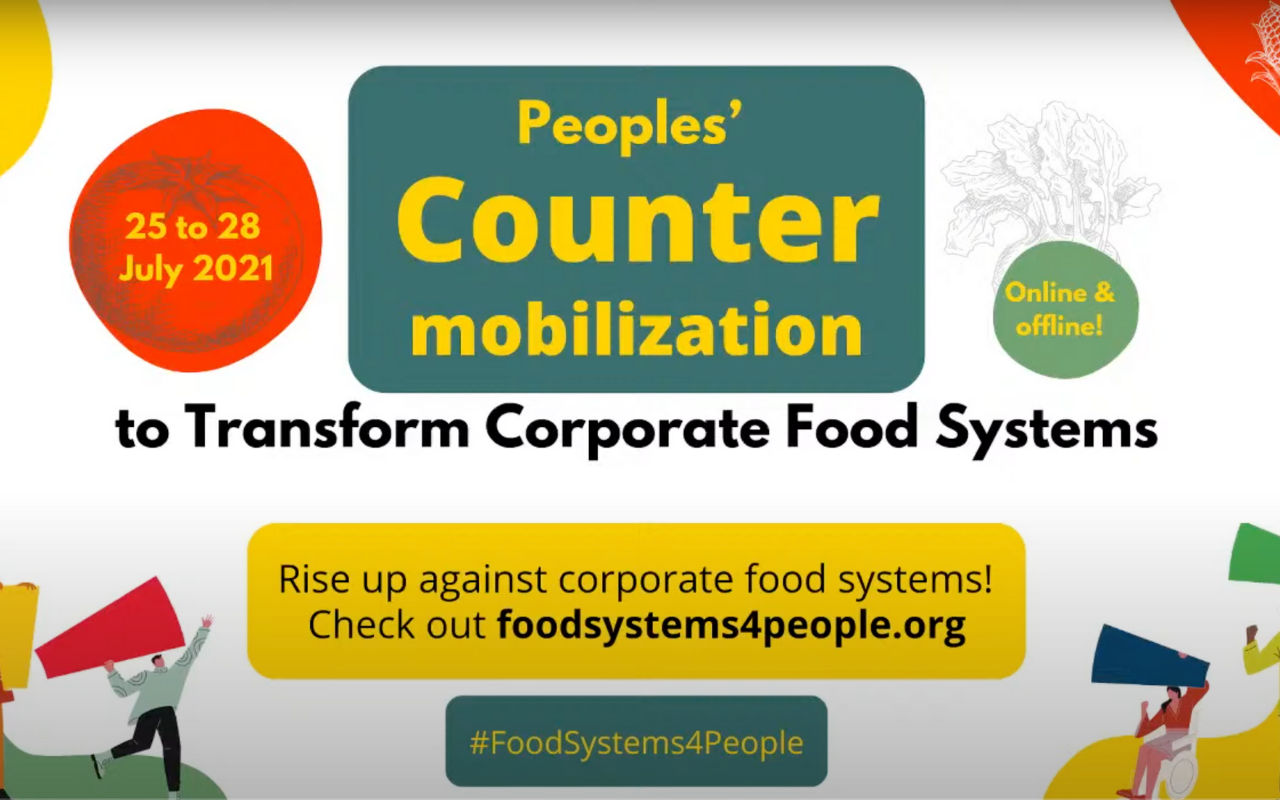
Brot für die Welt (Bread for the World) did not attend the UNFSS pre-summit. Instead, the organisation took part in a counter-summit that took place at the same time. A conversation with Francisco Marí about the reasons, the process - and an outlook for the future
Interview with Martina Fleckenstein (WWF), Michael Kühn (WHH) and Christel Weller-Molongua (GIZ)
After the summit means pre-summit: It was the first time that the United Nations held a summit on food systems. Martina Fleckenstein, Michael Kühn and Christel Weller-Molongua reviewed the situation in this joint interview.
Vitamin-poor nutrition must become more expensive, in-vitro meat is not a panacea, and agricultural systems should be more decentralised. Bioland President Jan Plagge in an interview about the challenge of (future) world nutrition.
A Contribution by Emile Frison and Nick Jacobs (IPES-Food)
While having failed to solve the hunger problem, industrial agriculture appears to be causing additional ones both in environmental and health terms. Emile Frison and Nick Jacobs call for a transformation.
Fish is important for combating malnutrition and undernourishment. But it is not only notable for its nutritional value, but also secures the livelihoods and employment for 600 million people worldwide.
Three quarters of the world's population do not have secure land rights, which hinders investment and innovation. The project "Improvement of Livelihood and Food Security" supports smallholder farmers in acquiring land.
Vertically growing plants, magnetic cotton. Hairy leftovers fertilizing fields, tractors running on algae? These six innovations could lead agriculture’s next Green Revolution!
A Contribution by the Forestry Research Institute Nigeria
The 'Domestication of Small Monogastric and Ruminant Animals' (DSMR) project led by a Nigerian research institute works with local communities to solve the bushmeat crisis.
In the run-up to the G7 summit, experts from politics and civil society discussed sustainable and more effective options for action by the G7 states to combat hunger.
The G7 is responding to the worsening global hunger crisis by mobilizing an additional $4.5 billion for this year alone. A key milestone for this in the run-up was the international conference on global food security "Uniting for Global Food Security".
Healthy, productive soils are a prerequisite for global food security – one of the priorities of German development cooperation. State Secretary Jochen Flasbarth on Germany’s efforts to support sustainable land management and why the VGGT are more important than ever today.
How can we reach more people with successful approaches to food security? In Berlin, an international conference organized by the Deutsche Gesellschaft für Internationaler Zusammenarbeit (GIZ) addressed this issue.
Whether it's banana bread made from brown bananas, conscious shopping plans or foodsharing, we give you five tips on how to reduce your everyday food waste.
Why are short- and long-term responses important to address current and future global crises? Sebastian Lesch, Head of the Agriculture Division at the German Federal Ministry for Economic Cooperation and Development (BMZ), provides answers to these and other questions in an interview with the Global Donor Platform for Rural Development (GDPRD) and explains how much Germany welcomes all donors pulling together and acting in concert.
How to maintain functioning food markets in global food supply chains in the face of vulnerability and disruption? Markets that support local and territorial food systems are part of the solution. Thomas Forster presents proposals for these markets to cope with future shocks.
The Global Alliance for Food Security (GAFS), jointly launched by the German G7 Presidency and the World Bank, released the Global Food and Nutrition Security Dashboard during COP27: A Rapid Response Tool for Coordinating Global Action for Food Security.
How can the challenges related to water, rural development and climate resilient agriculture be addressed? What innovations need to be promoted? The Water and Energy for Food (WE4F) initiative presents strategies and innovations for sustainable, integrated water management in German and international cooperation.
A Year of Multiple Crises: Russian war against Ukraine, extreme weather events, high prices for energy and fertilizer, food crisis had severe implications for food security and agriculture globally and especially in Sub-Saharan Africa. A Transformation of the food systems is needed.
Since early February 2022, two of the biggest grain and oilseed exporters have been at war. An overview, which countries are affected most severely by the destabilized grain markets, and what comes next.
Rising food and gas prices, physical destruction and supply chain disruptions: Why the Black Sea region matters and how the war in Ukraine affects global food security.
New insights on trade and value addition in the rice sector in West Africa
Low import tariffs, smuggling activities, unpredictable tax exemptions and weak enforcement of food safety standards: The potential of local rice value chains is undermined in West African countries.
The Corona pandemic is hitting economies around the world very hard - but developments in African countries are quite diverse. There are different speeds, resiliences and vulnerabilities. What are the reasons for this? Apl. Prof. Jann Lay of the GIGA Institute provides answers.
A contribution by Prof. Dr. Anna-Katharina Hornidge
In the video format "#99SecondsWith" of the German Institute of Development and Sustainability (IDOS), Prof. Dr Anna - Katharina Hornidge talks about the new Africa-Strategy of the Federal Ministry for Economic Cooperation and Development (BMZ).
Four interviews kick off the relaunch under the new name „Food4Transformation“, asking the same questions from different perspectives. Mareike Haase and Stig Tanzmann from Brot für die Welt explain why the right to food, inclusivity, agroecology and food sovereignty are the central levers for a successful transformation.
Four interviews kick off the relaunch under the new name „Food4Transformation“, asking the same questions from different perspectives. Dr Julia Köhn, Chair of the German AgriFood Society, points out in the interview: Only if innovation and transformation are profitable in the medium term can they close the food gap in the long term.
The Federal Ministry for Economic Cooperation and Development (BMZ) has released a video on the transformation of agricultural and food systems. In the video, Federal Minister Svenja Schulze also speaks about the urgent need to combat global hunger and contribute to resilient agricultural and food systems.
Four interviews kick off the relaunch under the new name „Food4Transformation“, asking the same questions from different perspectives. Dirk Meyer, Federal Ministry for Economic Cooperation and Development, thinks: less individual solutions are needed, but more systemic approaches. Because in addition to the goals for food security, the issues of climate and biodiversity must also be taken into account.
A Contribution by Dr. Fatima Olanike Kareem and Dr. Olayinka Idowu Kareem
High agricultural prices affect developed and developing countries alike, but the problem is aggravated for the latter through the lack of or inadequate resilience measures. Dr. Fatima Olanike Kareem, AKADEMIYA2063, and Dr. Olayinka Idowu Kareem, University of Hohenheim, explain what can be done to mitigate the negative effects on food security.
The consequences of the Russian invasion of Ukraine have enabled many countries to open up new export markets for their agricultural goods. However, smallholder farms have been largely left out. Drawing on his experience in India, our author gives a brief overview of how this can be changed.
A contribution by the Global Donor Platform for Rural Development
Two years following the UN Food Systems Summit, the Global Donor Platform for Rural Development and the Shamba Centre for Food & Climate hosted an official side event at the UNFSS+2. The event explored how public donors can increase the impact of their investments.
The world is currently experiencing a historic food crisis. High fertiliser prices are part of the problem. In addition to the necessary short-term aid measures, the crisis ought to be made use of to develop and implement longer-term fertiliser strategies for sustainable, in particular smallholder increases in production in the Global South.
In a world facing crises – from pandemics, armed conflicts, and climate change – how do we ensure everyone has enough food within planetary boundaries? A new podcast by Food4Transformation discover solutions talking to government officials, scientists, NGOs and farmers around the world.
The Gaza Strip depends heavily on humanitarian aid, more than ever with the current war. Gaza population is very young: Half of them are children. What is their situation on the ground? Questions for Lucia Elmi, Unicef Special Representative to the State of Palestine.
In Sub-Saharan Africa, not all financial institutions (FIs) have access to knowledge about how to implement processes to enhance rural financial inclusion. The pan-African Community of Practice (CoP) plays a pivotal role in supporting these institutions along this transformative journey.
How can agriculture engage more young people in rural areas? Advocacy and education campaigns can play an important role here. Simeon Kambalame, Timveni Child and Youth Media Organisation, has launched such a campaign in Malawi.
Women and girls in poorer countries are affected in particular ways by the multiple crises the world is currently facing. Uncovering the linkages between gender, resilience and food security, experts from International Food Policy Research Institute (IFPRI) look at ways to support women and girls’ capacity to respond to crises.
The armed conflict between Israeli forces and the Hamas is escalating. What does this mean for a Gaza, region that was already heavily dependent on external aid? Questions for Dr. Muriel Asseburg, Senior Fellow at the German Institute for International and Security Affairs (SWP) in Berlin.
Chancellor Angela Merkel in the Podcast of the Federal Government
At the start of World Food Week around World Food Day on 16 October, Chancellor Angela Merkel stressed that the fight against global hunger will only be successful with international responsibility and solidarity (german only).
From measures to promote biodiversity in Germany to more sustainable cocoa cultivation methods in Ecuador: WWF works at many different levels. At the Green Week, it will be demonstrated just how multifaceted nature conservation work is and what role each individual's decision plays.
The Agriculture and Food Security Cluster of the Deutsche Gesellschaft für Internationale Zusammenarbeit (GIZ) GmbH in Zambia shows how synergies among different projects and partner organisations can help people to eat healthier, diversified food. A delegation of the Bonn based Division of Agriculture and Rural Development learned this in a field visit in the Eastern Province of the Southern African country.
Felix Phiri has been Head of the Department of Nutrition, HIV and AIDS at the Ministry of Health in Malawi for almost 20 years. A conversation about constants and change.
In Himachal Pradesh, India, natural disasters are becoming more frequent and climatic conditions are changing – with negative consequences for apple production and farmers' livelihoods. Holistic and multidimensional innovation bundles are required for the entire value chain in order to make the food system more resilient in the future.
Africa’s largest youth generation has the potential to transform agriculture sustainably. Young entrepreneurs like Febelsa in Mozambique are building agricultural businesses that fuel local growth.
The guiding orientation framework developed by the Deutsche Gesellschaft für Internationale Zusammenarbeit (GIZ) summarizes the requirements for the transformation of agriculture and food systems – and identifies principles and approaches for transformative change.
A Contribution by Emmanuel Atamba & Larissa Stiem-Bhatia
Drawing on dialogues with experts in Kenya, TMG Research releases its latest policy brief highlighting the critical need to strengthen coordination mechanisms in food systems governance. Emmanuel Atamba and Larissa Stiem-Bhatia from TMG Research summarize the results.
Diversifying our protein supply to include plant-based foods and cultivated meat can be a game-changer for climate mitigation and climate adaptation, especially in the countries of the Global South. However, a great deal of research is still required to capitalise on this potential. And political support, as Ivo Rzegotta, Good Food Institute, demonstrates.
The Federal Ministry ofor Economic Cooperation and Development (BMZ) and the Federal Ministry of Food and Agriculture (BMEL) presented a revised version of the 10-Point Plan for a sustainable cocoa sector. The plan takes into account new supply chain legislations and current developments. A particular focus is paid to a living incomes, responsible purchasing practices and ecological and climate-friendly cocoa cultivation.
At the Nutrition for Growth 2025 Summit in Paris, Team Europe, comprising the European Commission and Member States, put nutrition at the centre of international politics as a driver for resilience, equality and human rights. There is a consensus on the results of the summit: to turn commitments into concrete progress through strong partnerships and innovative approaches.
The global fight against malnutrition needs more than just words - as demonstrated by the Nutrition for Growth summit in Paris. With comprehensive commitments and clear receivables, a signal has been sent: Healthy nutrition must become a global priority. But what do participants from countries such as Yemen and Timor Leste think?
With a simple but effective idea to combat malnutrition: in Nairobi, Fabio Rappenecker and his start-up TenX Nutrition produce mandazi, which become a real power biscuit thanks to added micronutrients. The aim is to strengthen food security through local, affordable and healthy food.
Amid rising global hunger, urbanization, and shrinking international funding, informal food systems are crucial for food access and livelihoods in low-income African urban areas. The TMG Think Tank’s paper, “Working with Informality for Food Systems Transformation and Resilient Communities,” highlights the importance of recognizing and working with informality to achieve Sustainable Development Goal 2.
Two new podcast formats from the Deutsche Gesellschaft für Internationale Zusammenarbeit (GIZ) bring stories from on-the-ground project work to life: "Over to you!" from Malawi and "Voices of Change – Beneficiary Story Book" from Zambia. At the heart of these podcasts are the people behind the changes toward sustainable food security.
Food systems vary widely between communities. While global agendas offer general guidance, effective change requires context-specific interventions at the local level. Placing the needs of local communities at the center of these efforts is essential. The visioning process can help achieve this, says Fyness Lydia Ching’oma from GIZ Malawi.
A Contribution by the German Institute for International and Security Affairs (SWP)
Against the backdrop of the current conflict in Iran and the associated closure of the Strait of Hormuz, the strategic significance of maritime infrastructure has acquired renewed urgency. A 2024 study by the Stiftung Wissenschaft und Politik (SWP) examines this relevance and discusses appropriate protective measures for different forms of critical infrastructure within the maritime space.
A focus on fragile contexts highlights development policy’s unique contribution to security policy and shows how the special initiative “Transformation of Agricultural and Food Systems“ itself needs to develop further. An article by Jes Weigelt, Head of Programmes at the TMG Think Tank for Sustainability.
AnInterview with Rashid Sumaila and Andreas Schaumayer
Against the backdrop of the eleventh Our Ocean Conference in Mombasa, Kenia, leading fisheries economist Rashid Sumaila and Andreas Schaumayer, German Federal Ministry for Economic Cooperation and Development (BMZ), reflect on the state of global fisheries in 2026: from the hidden economic power of small-scale fishing communities to the data gaps that leave millions of fishers uncounted.
Risk Reduction is his job. As Head of Disaster Risk Management at the Intergovernmental Authority on Development (IGAD), Dr. Ahmed Amdihun works at the intersection of climate resilience, early warning systems and humanitarian preparedness across the Greater Horn of Africa. In this interview, he explains what is needed to strengthen resilience in one of the world's most fragile regions.
Small farmers in developing countries must modernise their farming methods, but poorly understood reforms could exacerbate poverty instead of alleviating it.
In western Africa a new middle class is emerging. Their consumer behaviour is determining the demand for products – home-produced and imported goods, on the internet or at the village market. The people of Ivory Coast in particular are looking to the future with optimism.
Every child in Germany knows Ritter Sport – but most of the children harvesting cocoa on western African plantations have never even eaten chocolate. Can a chocolate manufacturer change the world? Conversation with Alfred Ritter about the power and powerlessness of a businessman.
A quick and cost-effective method calculates living wages and incomes for many different countries. The GIZ together with Fairtrade International and Richard and Martha Anker have developed a tool that companies can use to easily analyse income and wage gaps.
Oxfam’s supermarket scorecard, which is in its third year, shows one thing in particular - it works! Supermarkets can change their business policies and focus more on the rights of those people around the world who plant and harvest food. However, this does not happen without pressure.
At the moment, the agricultural industries of African countries exist in relative isolation. Imagine peasant farmers digitally connected to the value chains of the global food industry. How could this happen? A guidebook.
The Federal Government is fine-tuning a law that would require companies to ensure human rights – a supply chain law. What are the consequences for the agricultural sector? Dr Bettina Rudloff from the German Institute for International and Security Affairs (SWP) discusses linking policy fields with added value.
Stefan Liebing is chairman of the Africa Association of German Business. The manager calls for a better structure of African farms. Jan Rübel asked him about small farmers, the opportunities for German start-ups and a new fund.
Why aren’t bars of chocolate made where cocoa is grown? Author Frank Brunner analyses the industry’s fragile value chain from the plantation to the supermarket
‘Fair’ and ‘sustainable’ are key words in Germany’s EU Council Presidency. At the same time, Germany pursues ‘modernization’ of the WTO and ‘rapid progress’ on free trade agreements. Are these goals really compatible? Can we be concerned about fairness and sustainability while continuing with ‘business as usual’?
Time to dig deeper: We can only benefit from technical progress if we have a solid legal framework for everybody. But so far, none is in sight - in many countries. Instead, international corporations grow ever more powerful.
What do electrical engineering, telecommunications and agriculture have in common? They arouse the passion of Strive Masiyiwa: Thirty years ago, he started an electrical installation company with $75, later riding the telecommunications wave as a pioneer. Today he is committed to transforming African agriculture.
The Cashew Council is the first international organisation for a raw material stemming from Africa. The industry promises to make progress in processing and refining cashew nuts - and answers to climate change
As President of the IABM cooperative in Muhanga, Alphonsine Mukankusi is not simply focused on the figures. She has learned how to deal with people and how to take on responsibility. At the same time, her work helps her to come to terms with the past
In the tropics rainforests are still being felled for the production of palm oil, meat and furniture. It is high time to act. Proposals are on the table.
At the 8th German-African Agribusiness Forum (GAAF) representatives from business and politics discussed successful investment models to improve living conditions in Africa.
Based on a scientific study by TMG Think Tank, the authors highlight various challenges in the fight against the hunger crisis. The findings show that climate change, conflict and covid-19 are increasing food and energy prices.
The Africa Agriculture Trade Monitor 2022 (AATM) was published by IFPRI and AKADEMIYA2063. The report analyses the short- and long-term trends and drivers of African agricultural trade flows, including regional policies and the role of global markets.
An Artikel by the Initiative for Sustainable Agricultural Supply Chains (INA)
A study published by the Deutsche Gesellschaft für Internationale Zusammenarbeit (GIZ) examines the differences between globally traded agricultural commodities and domestic niche products in terms of economic, environmental and social impact on the region of origin. The results provide new evidence to make supply chains more sustainable.
Taking a look at the data (as of February 11th 2022) what the current price hike means for world hunger and what can be done to prevent from another food crisis.
Until Easter 2022, GIZ publishes a new episode every fortnight introducing people who are committed to fair and sustainable cocoa in Côte d'Ivoire and Germany.
The oceans are important for our food supply, but they are overfished. To halt this trend the global community is now taking action against illegal fishing. Journalist Jan Rübel spoke with Francesco Marí, a specialist for world food, agricultural trade and maritime policy at "Brot für die Welt," and others.
The German government is struggling to pass a supply chain law. It is intended to address violations of human rights, social and environmental standards. What would the consequences be for business? A double interview with Veselina Vasileva from GEPA and economics professor Andreas Freytag.
gebana, a Swiss fair trade company, follows the principle of "sharing" with its corporate philosophy: farming families in the Global South participate directly in the sales of their online shop. Caroline Schaar, Marketing at gebana, explains the company's approach.
Many of ALDI SOUTH Group supply chains begin in the Global South. How does the food retailer assume its responsibility? Questions for Sally Roach, Senior Manager - International Sustainability Department at the ALDI SOUTH Group.
Maura Oerding has a mission: With the specialty coffee Angelique's Finest, she not only wants to enter new markets but also revolutionize the coffee industry. Her recipe for success? Empowering women from Rwanda and Uganda from cultivation to marketing. Oerding’s goal: quality, fairness, and self-determination in every bean.
In 2025, GIZ and the Import Promotion Desk (IPD) celebrate ten years of successful cooperation. With their joint stand at BIOFACH trade fair in Nuremberg, they were able to introduce over 300 organic companies of partner countries to the European market. And the journey continues – despite challenges on the global market.
In a new study, the international humanitarian agency CARE analyses how the economic and social barriers faced by women significantly reduces the global gross domestic product (GDP). At the current rate, it will take 152 years to close the economic gap between women and men – although closing this gap would be extremely profitable from an economic perspective.
A Contribution by Carlos Castellanos & Yvonne Bielfeld
The shoe manufacturer Cueros Vélez as a good example of private sector responsibility: the photo gallery shows how the bark of the rubber tree becomes a reliable yet deforestation free companion on our roads.
For everyone in the supply chain to benefit, it is essential that politics and business work together. The measurable successes of such partnerships are demonstrated by the following six projects: they show how cooperation with the business sector can make supply chains fairer, more resilient, and more sustainable step by step.
Food systems are often reduced to production and trade. Mary Karanu of Welthungerhilfe in Kenya shows that they also reflect social and political orders, shaping power relations, the recognition of labor, and structural vulnerability across smallholder contexts in Africa and global supply chains.
A world without hunger and with sufficient healthy food as well as climate-friendly agriculture can only be achieved if ideas are transformed into innovations and ultimately also applied - a conversation with BMZ Head of Division Sebastian Lesch on the Innovation Challenge programme of the new Agricultural Innovation Fund.
In Togo’s capital, Lomé, home-grown rice costs almost twice as much as the imported product from Thailand. Yet there are good reasons for preferring the local product
Happy youngsters in rural areas, green development and the connection to the digital age – professor Joachim von Braun believes in this future sceneraio for Africa. For three decades the agricultural scienties has been researching how politics can create prosperty on the continent.
By leasing a three hundred hectare fruit plantation in Ethiopia, Lutz Hartmann has realised a long-cherished dream: to run his own business in Africa. Now he has a personal interest in the issue of Africa’s development.
Small holders around the world are often forced to sell their harvests below market value due to a lack of market and pricing information. A new app by the UN World Food Programme (WFP) is going to change this.
It is 2080. We are on a farm somewhere in Africa. Everything is digital. The blockchain is an omnipotent point of reference, and the farm is flourishing. But then, everything goes wrong. A dystopian short story, written exclusively for SEWOH.
The soybean is a natural crop that can be used to make a lot of food. So, Tata Bi started a small processing business first on her own, then with a few other women, which provides the women with an additional source of income year-round besides selling the soybeans.
Africa has a huge opportunity to make agriculture its economic driver. However, the potential for this is far from being made exhaustive use of, one reason being that women face considerable difficulties in their economic activities. The organisation AWAN Afrika seeks to change this state of affairs.
Corona makes it even more difficult to achieve a world without hunger by 2030. So that this perspective does not get out of sight, Germany must play a stronger role internationally - a summary of the Strategic Advisory Group of SEWOH.
Agnes Kalibata, AGRA president since 2014 and former minister of agriculture and wildlife in Rwanda, is convinced that Africa's economy will only grow sustainably if small-scale agriculture is also seen as an opportunity.
On the podcast ‘From the Field to the Shelf’, Marie Nasemann calls for new attempts to promote fair fashion. An evening about burnt returns, filterless washing machines and a lot of room for improvement.
The global trade in spices currently has a volume of over 10 billion euros. But at what price do these spices refine our Christmas cuisine? On closer inspection, aspects of the value chain leave a bitter taste.
Regarding deforestation free supply chains, there are challenges and opportunities for smallholder farmers as well as for international forest governance. Also, responsibilities for companies and potential incentives for manufacturers to use materials from fair trade and sustainable sources need to be explored. But what does “deforestation-free” actually mean?
Saskia Widenhorn, Head of the Cotton Component in Cameroon and the Sub-Saharan Cotton Initiative at GIZ, reports on the Bremer Cotton Week, which brought together international industry experts. The agenda included supply chain transparency, sustainability and new forms of cooperation between the private sector and partner countries.
Protectionist policies like tariffs supposedly protect domestic producers if they cannot compete with cheaper imported products. Some African countries have therefore opted to impose such import restrictions for a number of products. For the case of chicken imports in Ghana, this study analyses whether restrictions would lead to overall positive or negative welfare effects among households.
Kenya is a large importer of vetable oils mainly from Indonesia and Malaysia - amongst them sunflower oil. Due to the Russian war of aggression against Ukraine, there were supply bottlenecks and food shortages, leading to less affordable vegetable oils in Kenya. As a response to the lack of supply, the Sanga'alo Institute of Science and Technology, took that impulse, teamed up with the GIZ and established regional cultivation and refinement of sunflowers.
Organic cotton is extremely popular – but farmers still find it difficult to change their conventional cultivation methods. A new project addresses this dilemma: Bundesliga football teams in Germany are promoting the switch to organic cotton in India. And thereby setting an example.
The complex interrelationships of the sustainable transformation of agricultural and food systems are not always easy to understand - the Agri-Food Map, an interactive online app, makes the comprehensive relations accessible by providing a wide range of comprehensibly prepared information.
A Contribution by Initiative für nachhaltige Agrarlieferketten (INA)
The demand for sustainable products and supply chains is constantly increasing. DIASCA is an alliance that works on interoperability of digital solutions in agricultural supply chains through the development of open standards for forest monitoring, farm income and traceability.
Female founder Ebun Feludu wants to bring the coconut value chain to Nigeria with her start-up Kokari. In this interview, she explains why she envisions every coconut palm tree bearing its own name in the future and how digitalization can contribute to this.
The textile industry contributes significantly to environmental pollution as it produces over 100 billion garments every year, resulting in huge CO2 emissions and water consumption. Fashion designer Paul Kadjo uses banana silk as an environmentally friendly alternative to make textile production more environmentally conscious and socially just.
Allan Mubiru was standing in front of a shelf in Kigali, Rwanda, and discovered a local type of coffee. He took it, tasted it and was thrilled. A story about a grocery shopping trip that became the beginning of a successful business idea.
The Nyayo Tea Zones Development Corporation is committed to the preservation of forests in Kenya: The establishment of so-called buffer zones counteracts deforestation by planting trees and tea. In addition to the production of environmentally friendly tea, the project benefits the resources of the forests and the livelihoods of the communities living near the forests, says project manager Wallace Gichunge.
The demand for fair-trade cocoa is growing – but how is the industry responding? In an interview, Claudia Brück, Executive Board Member of Fairtrade Germany, and Dr. Torben Erbrath, Managing Director of the Federal Association of the German Confectionery Industry, discuss progress as well as challenges, and why real change can only be achieved through long-term commitment along the entire supply chain.
We use cookies on our website. Some of them are essential, while others help to improve your user experience. Your consent is voluntary and can be revoked at any time on the "Privacy" page.
Protects against cross-site request forgery attacks
Retention period: This cookie remains only for the current browser session.
Saves the current PHP session.
Retention period: This cookie remains only for the current browser session.
Content from third-party providers, such as YouTube, which collect data about usage. Third-party content embedded on this website will only be displayed to you if you expressly agree to this here.
Provider: Google Ireland Ltd., Gordon House, Barrow Street, Dublin 4, Ireland
Retention period: Here you can learn more about the storage period of the cookie: https://policies.google.com/privacy.
Provider: Vimeo, Inc. / 555 West 18th Street New York, New York 10011, USA
Retention period: Here you can learn more about the storage period of the cookie: https://vimeo.com/privacy.
We use Matomo analytics software, which collects anonymous data about website usage and functionality to improve our website and user experience.