Blooming landscapes? Only with biodiversity!

By

What do chocolate, carrots and tequila have in common? What sounds like the ingredients for an experimental cocktail are foods that would not exist without certain animal species. They are examples of how nature works for us every day, often behind the scenes.

Landscape elements create new habitats and are important for restoring biodiversity © Andrés Verdezoto, GIZ

By NABU

NABU (Nature and Biodiversity Conservation Union) is committed to biodiversity and the protection of intact habitats, fresh air, clean water, healthy soil, and the careful use of our finite resources. It is the oldest and, with more than 900,000 members and supporters, and largest environmental association in Germany.

All contributions

Fascinating biological processes are responsible for the rich diet that we often take for granted. Despite its dependence, agriculture often has a negative impact on nature with its diversity of species, habitats and genes - in short, biodiversity. This problem - and what we can do about it - is the focus of the NABU (Nature and Biodiversity Conservation Union) stand at this year's Green Week. The focus will be on Germany, Tanzania and Indonesia, with different challenges and solutions, sometimes playful, sometimes serious - from a biodiversity wobble tower to an exciting quiz and relaxing forest bathing.


How biodiversity secures our food supply


80 percent of all wild plants and crops are pollinated by insects and are partly dependent on certain species. For example, two species of bearded midge are responsible for pollinating a large proportion of the world's cocoa trees and are therefore the world's true suppliers of chocolate. In our latitudes, hoverflies are among the silent heroes, as it is only with their help that carrot seeds are produced. The larvae eat pests such as aphids and thus carry out natural pest control.  


Contrary to the perception of humans as "managers", food production is based on the interaction between plants, animals and microorganisms.


But there is also a lot going on beneath the earth's surface. Billions of microorganisms, such as worms and insect larvae, live in our soil. Together with microorganisms such as bacteria and fungi, they decompose organic matter, build up humus and make the soil fertile. A single gram of soil already contains 100 million bacteria from up to 7,000 species. This biodiversity is a basic prerequisite for productive agriculture. Humus-rich soils also store large amounts of CO2, retain water in the landscape and are less susceptible to erosion.


Germany's fields are becoming increasingly poor in nature


Over the last few decades, politicians have driven the intensification of agriculture ever further with their regulations. The excessive use of fertilizers and synthetic chemical pesticides, heavy agricultural machinery and intensive soil cultivation have significantly increased yields - at the expense of biodiversity. The transformation of the agricultural landscape has destroyed original habitats and led to an increasing standardization of the landscape.


The lack of structural diversity makes it difficult for native species to find suitable habitats, retreats or food.


This can be seen in the dramatic decline in breeding birds, e.g. in lapwings by 81 percent and partridges by 88 percent since 1990. These practices have also had a negative impact on below-ground biodiversity: 61 percent of all soils in the EU are in a poor condition and the humus content in the soil in Germany is also decreasing every year.


What solutions are out there?


Landscape elements (e.g. hedges, flower strips and stone walls) create new habitats and are important for restoring biodiversity as a refuge and feeding ground for many species. To protect biodiversity, we must reduce the use of fertilizers and pesticides and work the soil more carefully - especially in protected areas and adjacent agricultural land. Proven nature-friendly cultivation systems such as organic farming must be promoted by federal policy, as provided for in the organic strategy of the Federal Ministry of Food and Agriculture. NABU will be using studies available to visitors at the stand to show that such measures can be implemented without reducing crop yields. It is now up to politicians to set the appropriate framework conditions.


Looking beyond the horizon: How NGOs in Africa and Asia are reducing conflicts of interest between nature conservation and agriculture


While the focus in Germany is on alternatives to conventional, intensive agriculture, the situation is different in other countries around the world. The effects of the climate crisis are already exacerbating poor harvests in many African countries with heavy weather phenomena such as heavy rainfall, frost and extreme dry spells.


The already high levels of poverty are further exacerbated by these crop failures and the pressure on natural resources is growing.
 

Ich bin ein Alternativtext
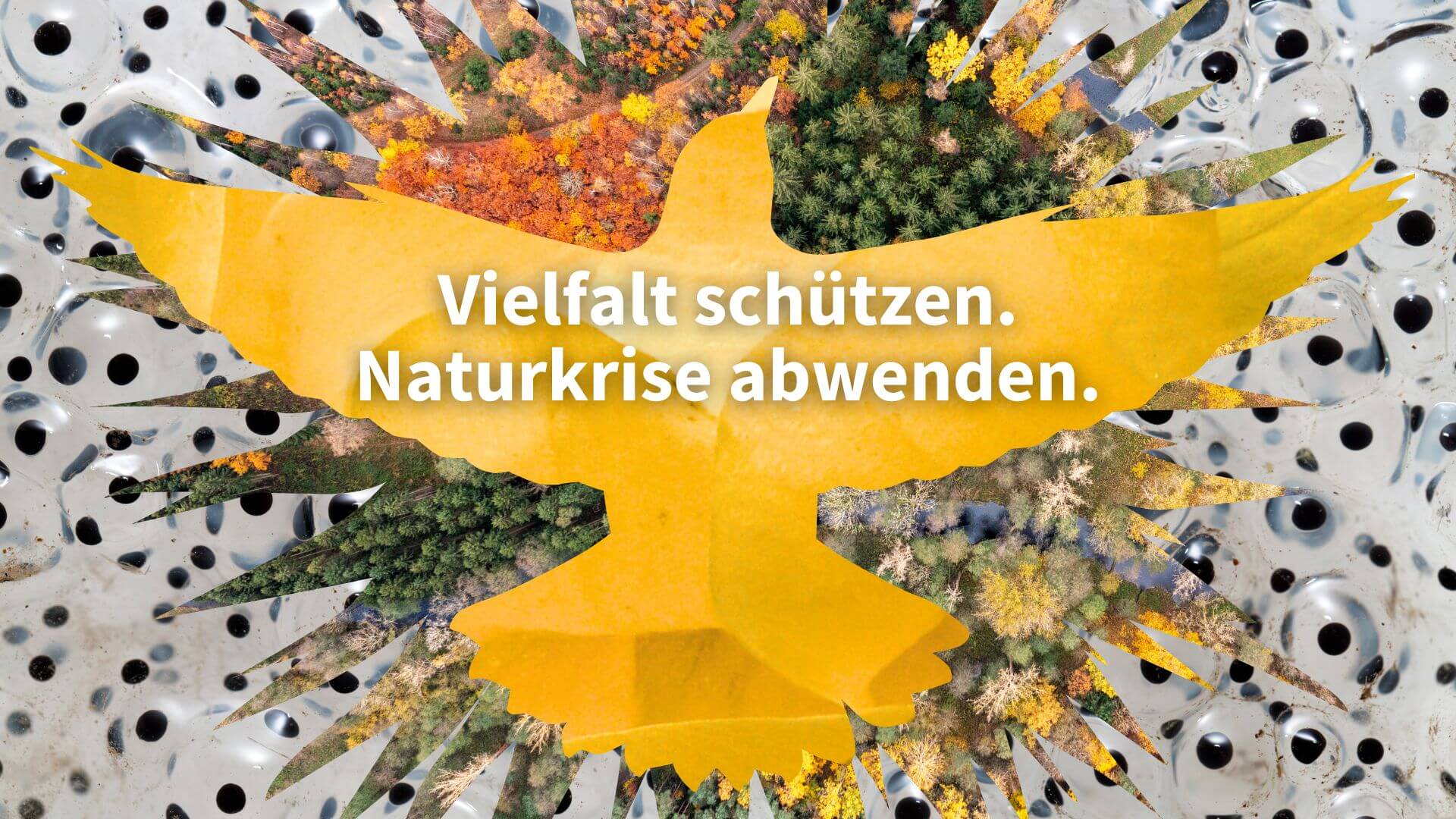
The NABU Biodiversity Campaign sets a colorful statement © NABU

From East Africa, we turn our attention to Southeast Asia.Here, too, the destruction of nature has a direct negative impact on local people.In the coastal communities of Gorontalo on the Indonesian island of Sulawesi, 60 percent of the original mangrove forests have already been destroyed to make way for aquaculture. Yet mangroves are crucial to the livelihoods of local fishing families, as they provide a refuge for juvenile fish, keep sediments and nutrients out of the sea and protect the coasts from erosion as sea levels rise. NABU is also active here with a project that brings together all relevant interest groups to reconcile mangrove protection and sustainable management.


Curious? The NABU experts at stand 107 are looking forward to a lively exchange on the topics of agriculture, food and biodiversity in Germany and beyond.

Similar articles

Two men in a lush field discuss data sovereignty, holding papers amidst workers gathering crops.

Empowering farmers to control their own data

A contribution by GIZ

A new study on the digitalisation of agriculture puts farmers back at the centre of their own sector, identifies market gaps and gives recommendations on how to support relevant actors.

Read more

Four people engage in a panel discussion at a podium, with a backdrop featuring agricultural imagery.

And a semicolon in the middle

A contribution by Jan Rübel

After a two-year break due to Corona, the doors of the International Green Week (IGW) in Berlin are opening again. From 20th to 29th January, visitors from all over the world can discover, marvel and taste the produce. But the event is not only feasting and fun. The BMZ stand asks questions about where food comes from & where it goes – and in the process becomes a crash test for many habits.

Read more

Golden hay bales rest on a sunlit stubble field under a clear blue sky, evoking a tranquil rural landscape.

How farmers are facing the crisis

A contribution by GIZ

Russia's war against Ukraine and its impact on food, energy and fertiliser prices is worrying farmers all over the world. Young farmers, farmer organisations and politicians from Kenya, Chad and Ukraine tell their stories and what keeps them in agriculture.


Read more

A woman in glasses and a patterned coat gestures while engaging in conversation at a social gathering.

Priscilla Impraim and her chocolate business

A contribution by Jan Rübel

Priscilla Impraim is one of the first women in Ghana to enter the chocolate business. Despite some hurdles, she founded the company Ab Ovo Confectionery Limited in 2006 with currently six permanent employees and 25 seasonal employees.

Read more

The image illustrates five climate-friendly agricultural methods with simple line drawings and highlighted text.

Five climate-friendly methods in agriculture

A Listicle for climate protection and adaptation

These five management practices can increase agricultural production and contribute to climate change mitigation and adaptation.

Read more

A farmer irrigates a lush green field with a hose under a clear sky in Tanzania, utilizing solar irrigation techniques.

Water may offer the only chance

Interview with Caroline Milow and Ramon Brentführer

Groundwater resources remain dormant in the soil of African regions. Where does it make sense to use them – and where does overexploitation of nature begin? Caroline Milow (GIZ) and Ramon Brentführer (BGR) talk about potentials in the future and lessons from the past.

Read more

Hands display a colorful variety of chillies, including red, green, and orange, showcasing 2023 Black Mamba chillies.

Sandisiwe Dlamini and the chilli pepper business

A portrait by Jan Rübel

By processing chilli peppers, Black Mamba wants to give something back to the rural population. In a short portrait, Sandisiwe Dlamini, Food Safety Officer, reveals how.

Read more

A winding road cuts through lush green mountains under a vast, clear sky, showcasing nature's breathtaking beauty.

“We want to overcome hunger and poverty”

An interview with Fernanda Machiaveli

After four years of the Bolsonaro administration, the new Brazilian government is trying to restart its engagement in agroecology, fighting deforestation in the Amazon and protecting indigenous communities and poor families from hunger. An interview with the Vice-minister for Rural Development and Family Farming, Fernanda Machiaveli.

Read more

An aerial view of a rural village showcases a network of dirt roads winding through houses and greenery.

“We have to focus on sustainability”

An interview with Karen Mapusua

Karen Mapusua, President of IFOAM Organics International Network, on the danger of the current fuel crises and inflation to loose track in sustainablity, why organic farmers should be heard and how the word “crisis” has a very different meaning where she lives in Fiji.

Read more

A man in a suit speaks at a podium under a colorful tent during a Farmers Day event.

Governor's Day with Farmers – For more discussion with local actors

A contribution by William Onura and Larissa Stiem-Bhatia

In agriculture it is important to include political stakeholders in the discourse. To build the bridge between practical application and political action, the think tank TMG launched the Governor's Day with Farmers in Kakamega County, Kenya. Now it took place for the second time. But what are the goals and benefits of the Governor's Day?

Read more

Women in colorful attire joyfully thresh grain in a sunny, rural field, showcasing agricultural teamwork and tradition.

The goals of transformation should leave no one behind

An Interview with Mareike Haase and Stig Tanzmann

Four interviews kick off the relaunch under the new name „Food4Transformation“, asking the same questions from different perspectives. Mareike Haase and Stig Tanzmann from Brot für die Welt explain why the right to food, inclusivity, agroecology and food sovereignty are the central levers for a successful transformation.

Read more

Young green seedlings sprout from the soil, showcasing new growth in a lush garden setting.

Agricultural policy belongs in prime time

An interview with Dr. Julia Köhn

Four interviews kick off the relaunch under the new name „Food4Transformation“, asking the same questions from different perspectives. Dr Julia Köhn, Chair of the German AgriFood Society, points out in the interview: Only if innovation and transformation are profitable in the medium term can they close the food gap in the long term.

Read more

From field to fan shop: how to increase supply

A contribution by Jan Rübel

Organic cotton is extremely popular – but farmers still find it difficult to change their conventional cultivation methods. A new project addresses this dilemma: Bundesliga football teams in Germany are promoting the switch to organic cotton in India. And thereby setting an example.

Read more

A goat grazes in a lush field near a charming house surrounded by palm trees under a clear sky.

How a Nigerian fintech wants to secure 1 billion US dollars for farms

An Interview with Blessing Mene

Small farmers often have a hard time getting financing. An app in Nigeria wants to change that: Founder Blessing Mene about what his app offers - and about the opportunities and limitations of agricultural financing.

Read more

Aerial view of two people guiding oxen across a red, plowed field, highlighting agrifood transformation themes.

BMZ releases video on the transformation of agricultural and food systems

A contribution by GIZ

The Federal Ministry for Economic Cooperation and Development (BMZ) has released a video on the transformation of agricultural and food systems. In the video, Federal Minister Svenja Schulze also speaks about the urgent need to combat global hunger and contribute to resilient agricultural and food systems.

Read more

Wind turbines stand on a lush rural landscape, harnessing green energy under a cloudy sky.

The rush for green energy shouldn’t undermine rights of pastoralist communities

A contribution by Hussein Tadicha Wario

Africa’s drylands seem to be predestined for generating solar and wind power – especially given the current hype over green hydrogen. However, pastoral communities are often put at a disadvantage in this respect. Our author describes the arising conflicts and what successful coexistence of green energy projects and the communities could look like.

Read more

Lush green terraced fields curve around a winding river, showcasing nature's intricate patterns in action.

CompensACTION aims to reward farmers for climate performance

A Contribution of the Initiative

The CompensACTION Initiative for food security and a healthy planet, launched by the German Federal Ministry for Economic Cooperation and Development (BMZ) in 2022, is gaining momentum. It aims to financially compensate smallholder farmers for their contribution to preserving ecosystems. Initial successes have been achieved in Ethiopia, Lesotho and Brazil.

Read more

An illustrated map showcases diverse agricultural and food-related activities on a vibrant island setting.

The Agri-Food Map: An interactive map to explore sustainable agri-food systems

A Contribution by GIZ

The complex interrelationships of the sustainable transformation of agricultural and food systems are not always easy to understand - the Agri-Food Map, an interactive online app, makes the comprehensive relations accessible by providing a wide range of comprehensibly prepared information.

Read more

A woman feeds sheep in a rustic pen while a man observes during an agricultural event. | © Apollo Habtamu ILRI

Climate change mitigation and adaptation strategies for the African livestock sector

A Contribution by ILRI and GIZ

The production of animal-source foods is becoming increasingly difficult due to the impact of climate change on the livestock sector in Africa. Though, Livestock make a crucial contribution to food security in Africa. Three papers by the Federal Ministry for Economic Cooperation and Development (BMZ), GIZ, ILRI and World Bank analyze, how Africas future livestock sector can look like.

Read more

A young plant grows in dry, sunlit soil, symbolizing agricultural resilience in Iraq.

“It created hope. It created a life”

An interview with Ally-Raza Qureshi, WFP

Iraq suffered many years of war, sanctions and economic crises. However, Ally-Raza Qureshi from the World Food Programme in Iraq sees progress. But now the effects of climate change are becoming apparent in the country. What is to be done?

Read more

A smartphone displays the "Food 4 Transformation" podcast screen, flanked by wireless earbuds on a wooden surface.

New Podcast – Out now!

A Podcast by Food4Transformation

In a world facing crises – from pandemics, armed conflicts, and climate change – how do we ensure everyone has enough food within planetary boundaries? A new podcast by Food4Transformation discover solutions talking to government officials, scientists, NGOs and farmers around the world.

Read more

A woman in a white shirt and colorful skirt smiles while sitting outdoors, surrounded by lush greenery, promoting Fairtrade.

Earth’s well, all’s well!

A Contribution by Fairtrade Germany

With the annual topic "Earth’s well, all’s well!", Fairtrade Germany is focusing on the concept of agroecology at all levels - and is thus taking the next step towards achieving greater global sustainability. At the Green Week trade fair, Fairtrade Germany will show how this can be achieved taking the cocoa supply chain as an example.

Read more

A group of people kneel on the ground in Zambia, engaged in a discussion around a small agricultural plot.

Together for food security in Zambia

A Contribution by Claudia Jordan (GIZ)

The Agriculture and Food Security Cluster of the Deutsche Gesellschaft für Internationale Zusammenarbeit (GIZ) GmbH in Zambia shows how synergies among different projects and partner organisations can help people to eat healthier, diversified food. A delegation of the Bonn based Division of Agriculture and Rural Development learned this in a field visit in the Eastern Province of the Southern African country.

Read more

A woman with pink earrings smiles while sitting in a sunny wheat field, under a clear blue sky.

The Answer is Healthy Soil

A Conversation with Nina Mannheimer

The Berlin start-up Klim is forging an alliance between farmers and companies. The aim is to use regenerative farming to remove CO2 from the atmosphere and sequester it as carbon in the soil. An interview with Nina Mannheimer.

Read more

A person stands joyfully with outstretched arms in a creatively decorated atelier featuring golden accents and various artworks.

From the perennial to the catwalk – banana silk as an alternative

A Contribution by Paul Kadjo

The textile industry contributes significantly to environmental pollution as it produces over 100 billion garments every year, resulting in huge CO2 emissions and water consumption. Fashion designer Paul Kadjo uses banana silk as an environmentally friendly alternative to make textile production more environmentally conscious and socially just.

Read more

A person in a blue sleeve harvests ripe coffee cherries from a vibrant coffee plant.

The Idea of Coffee entirely made by Women

A Conversation with Allan Mubiru

Allan Mubiru was standing in front of a shelf in Kigali, Rwanda, and discovered a local type of coffee. He took it, tasted it and was thrilled. A story about a grocery shopping trip that became the beginning of a successful business idea.

Read more

A freshly plowed field stretches under a cloudy sky, bordered by trees and distant hills. | © GIZ

Reforming agricultural policies to sustainably transform food systems

A Contribution by IFPRI

Global food systems are confronted with multiple stresses. It is more urgent than ever to make them more resilient, healthier and more sustainable. A key tool in such a transformation is reforming agricultural policies and repurposing agricultural support, as discussed in an online seminar co-organised by the International Food Policy Research Institute (IFPRI).

Read more

A diverse group of people gathers for a photo at a UN event focused on desertification and drought awareness.

A Call to Action against Desertification

A contribution by GIZ

Every second, worldwide, we lose valuable and healthy soil with the size of four football fields. This was only one of the many facts being presented to a wide audience in Bonn and worldwide via livestream at the World Desertification and Drought Day on 17th June 2024. This was the 30th anniversary of the United Nations Convention on Combatting Desertification (UNCCD), which was celebrated at the Bundeskunsthalle in Bonn.

Read more

A woman in a pink headscarf and floral dress stands confidently in a lush garden. | © Claudia Jordan

Stick together and learn from each other

By Claudia Jordan

During the Women Leadership Programme in May 2024, around 20 women from African countries and Germany met again for a one-week workshop in Bavaria, Germany to become fit for leadership in their organisations. One topic that concerns the women across countries is climate change, but also violence against women and their discrimination in agriculture.

Read more

Women in colorful attire harvest apples from a lush orchard, placing them into yellow baskets.

Climate Resilience in the Apple Value Chain

A Contribution by Puneet Bansal

In Himachal Pradesh, India, natural disasters are becoming more frequent and climatic conditions are changing – with negative consequences for apple production and farmers' livelihoods. Holistic and multidimensional innovation bundles are required for the entire value chain in order to make the food system more resilient in the future.

Read more

A woman in a red headscarf observes young plants growing in a greenhouse, tending to them carefully.

Uprooting the Norm

A Contribution by GIZ

As a passionate social scientist and entrepreneur from Malawi, Ngabaghila Chatata knows that she can overcome any challenge. Her story stands out in a country faced with high unemployment, particularly in its rural areas. As the managing director of Thanthwe Farms, she has set out to inspire the next generation of young agripreneurs – proving that successful business starts with the right mindset, not only capital.


Read more

A diagram illustrates the concepts of decent livelihoods, resilience, protected environment, fairness, and healthy diets globally.

A framework for sustainable and fair agriculture and food systems

A Contribution by Gideon Tups

The guiding orientation framework developed by the Deutsche Gesellschaft für Internationale Zusammenarbeit (GIZ) summarizes the requirements for the transformation of agriculture and food systems – and identifies principles and approaches for transformative change.

Read more

A diverse group of women joyfully pose together on a rooftop, celebrating female leadership and empowerment.

Female Leadership: A Key Lever for Transformation?

A Conversation with Carmen Torres Ledezma & Oluwaseyi Kehinde-Peters

Female Leadership is vital to the transformation of agriculture and food systems. Therefore, it is so important to advance gender-sensitive approaches to increase the presence of women in leadership positions in agricultural production and to make these systems more equitable, sustainable and resilient.

Read more

A woman in a blue sari arranges white silk cocoons on a woven wall in a rural setting.

Gender-Transformative Approaches – Unlocking Everyone’s Potential

A Contribution by GIZ

Studies show that women often manage agricultural resources more effectively and sustainably. With equal access to production resources, agricultural yields could increase by up tp 30 per cent. But this is about more than just productivity. How can gender-transformative approaches (GTA) drive meaningful change and why are GTA key to sustainable change?

Read more

A woman at a trade show proudly displays organic food products in front of a booth showcasing diverse packaged goods.

BIOFACH as a game changer for organic producers

A Contribution by Claudia Jordan

In 2025, GIZ and the Import Promotion Desk (IPD) celebrate ten years of successful cooperation. With their joint stand at BIOFACH trade fair in Nuremberg, they were able to introduce over 300 organic companies of partner countries to the European market. And the journey continues – despite challenges on the global market.

Read more

A diverse group of professionals gather for a conference, posing together in a spacious lobby surrounded by greenery.

Adapted financial services – a key to transformation

A Contribution by GIZ

In March, delegations from nine partner countries met in Berlin at the Partner Conference Scaling Access to Finance for Agripreneurs. Alongside AUDA-NEPAD, IFAD, BMZ, GIZ, and others, around 100 participants worked on practical solutions to support financial inclusion in agricultural transformation and hand over their conclusions to the AU's Kampala CAADP process.

Read more

A portable radio with an extended antenna sits on freshly cut grass in a field. | © GIZ Ursula Meissner

Twelve countries, two podcasts, one goal 

A Contribution by GIZ

Two new podcast formats from the Deutsche Gesellschaft für Internationale Zusammenarbeit (GIZ) bring stories from on-the-ground project work to life: "Over to you!" from Malawi and "Voices of Change – Beneficiary Story Book" from Zambia. At the heart of these podcasts are the people behind the changes toward sustainable food security.

Read more

“Healthy ground brings good and many fruits”

Interview with Ben Sekamatte and Boaz Ogola

Africa's cotton production plays a key role in the fight against poverty. The "Cotton Made in Africa" initiative promotes sustainable cultivation - one element of which is the use of organic pesticides. Entomologist Ben Sekamatte and cotton company manager Boaz Ogola talked with Jan Rübel about soil and yields.

Read more

Two people tend to seedlings inside a greenhouse, focusing on sustainable agriculture practices.

A classroom in the Garden of Eden

By Iris Manner

Deforestation harms people and the environment. With nurseries, farmers can earn money and do good. You just have to know how to do it

Read more

A man waters plants in a greenhouse while smiling and chatting with a woman, showcasing restoration efforts.

Support for sustainable start-ups

Companies in Africa that need financing between $20,000 and $200,000 find relatively few investors, as this sector is too large for microcredit and too small for institutional investors. This creates a "gap in the middle" where companies have limited options. A project of the World Resource Institute provides a remedy with the Landaccelerator 2020.

A World Resources Institute project

Read more

A woman stands on stage at the Climate Adaptation Summit 2021 with a backdrop of a stylized road and geometric design.

Climate Adaptation Summit 2021: ‘We can do better’

Event report by Jan Rübel (Zeitenspiegel)

The first Climate Adaptation Summit put climate adaptation at the center of politics for the first time. The virtual meeting united global players with one goal: building resilience is just as important as climate protection itself. Around 15,000 participants discussed direct proposals.

Read more

(c) Mali Lazell/GIZ
Ruanda / Kigali, 2020: Teilnehmer des IOT-Trainings im Digital Transformation Center Kigali.

Mr. Samimi, what is environmental change doing to Africa?

Interview with Cyrus Samimi (IAS)

Environmental change is having a particularly strong impact on the African continent. Its landscapes see both negative and positive processes. What is science's view of this? A conversation with Cyrus Samimi about mobility for livelihoods, urban gardening and dealing with nature.

Read more

Young corn plants grow in neat rows across a lush field under a cloudy sky, showcasing sustainable farming techniques.

COST-BENEFIT ANALYSES FOR MORE SOIL CONSERVATION

With the help of sustainable farming methods, soils can be preserved and made fertile again. The investment required is also worthwhile from a financial perspective.

A project of GIZ

Read more

A drone sprays pesticide over lush green tea plantations on a sunny hillside.

Pesticides – a blessing or a curse?

A debate between Lena Luig and Ludger Weß

What are the consequences of using synthetic pesticides in agriculture? Where do they help, where do they harm? Lena Luig, expert for the development policy organization INKOTA, and science journalist Ludger Weß discuss this controversial topic of international scope.

Read more

(c) Sonja Ritter/WWF
Paraguay / Tavapy, Jan. 2020: Kleinbäuerinnen bei der Mate-Ernte.

Resilient small-scale agriculture: A key in global crises

A contribution by Kerstin Weber and Brit Reichelt-Zolho (WWF)

Biodiversity and sustainable agriculture ensure the nutrition of whole societies. But there is more: These two factors also provide better protection against the outbreak of dangerous pandemics. Hence, the question of preserving ecosystems is becoming a global survival issue.

Read more

(c) Christoph Püschner/Zeitenspiegel
Deutschland / Stuttgart, Aug. 2019: Pflanzen, die auf Bienen zur Bestäubung angewiesen sind, sind häufig auffallend bunt.

One Health – What we are learning from the Corona crisis

A contribution by Dr. May Hokan and Dr. Arnulf Köhncke (WWF)

Due to the coronavirus crisis, the connection between human and animal health has gained new attention. Politicians and scientists are joining forces to propagate the solution: One Health. But what is behind the concept? And can it also guarantee food security for all people worldwide?

Read more

A farmer walks through lush coffee plants on a misty morning, carrying a basket for harvesting.

Ms Rudloff, what are the benefits of a supply chain law?

By Jan Rübel

The Federal Government is fine-tuning a law that would require companies to ensure human rights – a supply chain law. What are the consequences for the agricultural sector? Dr Bettina Rudloff from the German Institute for International and Security Affairs (SWP) discusses linking policy fields with added value.

Read more

Two men stand in a sunny field in Ghana, one holding a camera and the other gesturing while speaking.

The Forest Maker and his director

Double interview with Tony Rinaudo and Volker Schlöndorff

Tony Rinaudo uses conventional reforestation methods to plant millions and millions of trees – and Volker Schlöndorff is filming a cinema documentary about the Australian. The outcome so far: An educational film on behalf of the BMZ (Federal Ministry for Economic Co-operation and Development).

Read more

Workers in uniforms and masks sort nuts in a processing facility, showcasing a clean and organized environment.

Freed from trade? Towards a fairer EU Trade Agenda

A contribution by Dr. Jan Orbie (University Gent)

‘Fair’ and ‘sustainable’ are key words in Germany’s EU Council Presidency. At the same time, Germany pursues ‘modernization’ of the WTO and ‘rapid progress’ on free trade agreements. Are these goals really compatible? Can we be concerned about fairness and sustainability while continuing with ‘business as usual’?

Read more

(c) Britta Radike/GIZ
Burundi: Wiederaufforstung der Berghänge gegen Klimawandel und Bodenerosion.

Can we win the race against deforestation?

Interview with Bernadette Arakwiye und Salima Mahamoudou (World Resources Institute)

Deforestation is leading to a shortage of ressources. What are the options for counteracting? A conversation with Bernadette Arakwiye and Salima Mahamoudou about renaturation and the possibilities of artificial intelligence.

Read more

A woman and a man celebrate with a child in front of a backdrop announcing the success of planting 10,000 trees.

From Berlin to Yen Bai: 10,000 trees for Vietnam

A contribution by GIZ and BMZ

It began with clicks at a trade fair and ends with concrete reforestation: a campaign at the Green Week in Berlin is now enriching the forests of the Yen Bai Province in Vietnam. A chronicle of an education about climatic relevance to concrete action - and about the short distances on our planet.

Read more

A man smiles beside a motivational quote about ending hunger on a blue background.

What do you expect from this Pre Summit, Mr. Haddad?

Interview with Lawrence Haddad (GAIN)

Nutrition experts from all over the world are coming together in Rome. They are not only distilling 2000 ideas to improve food systems - they are also preparing for the big UN summit in New York in September. An interview. 

Read more

A man in a suit stands against an orange background next to a quote about producing food with nature.

Mr. Campari, how do we create sustainable food systems?
Interview with Joao Campari (WWF)

Journalist Jan Rübel spoke with Joao Campari ahead of the UNFSS Pre-Summit. The Chair of Action Track 3 highlights key challenges in transforming existing food systems towards sustainable production and shares his expectations for the Summit.

Read more

A large group of people gather under a tree, engaging in a community meeting in a rural village setting.

Land Rights, Gender and Soil Fertility in Benin

A contribution by Dr. Karin Gaesing and Prof. Dr. Frank Bliss (INEF)

Especially in densely populated areas, land pressure leads to overexploitation of available land and a lack of conservation measures. The West African country of Benin, with heavily depleted soils in many places, is no exception.

Read more

The image promotes a counter-mobilization event to transform corporate food systems, scheduled for July 25-28, 2021.

Mr. Marí, what happened at the alternative summit?

An Interview with Francisco Marí (Brot für die Welt)

Brot für die Welt (Bread for the World) did not attend the UNFSS pre-summit. Instead, the organisation took part in a counter-summit that took place at the same time. A conversation with Francisco Marí about the reasons, the process - and an outlook for the future

Read more

An elderly woman in traditional attire selects produce at a bustling outdoor market, surrounded by a group of onlookers.

Food System Transformation Starts and Ends with Diversity

A Contribution by Emile Frison and Nick Jacobs (IPES-Food)

While having failed to solve the hunger problem, industrial agriculture appears to be causing additional ones both in environmental and health terms. Emile Frison and Nick Jacobs call for a transformation.

Read more

Illustration highlighting six innovations combating climate change with images of plants, buildings, and renewable energy symbols.

City, Country, Sea: 6 Innovations in the Fight Against Climate Change

A listicle for climate-neutral agriculture

Vertically growing plants, magnetic cotton. Hairy leftovers fertilizing fields, tractors running on algae? These six innovations could lead agriculture’s next Green Revolution!

Read more

A group of protesters in Stockholm holds climate change signs during a Fridays for Future event in a sunny park.

‘None of the Three Traffic Light Coalition Parties is Close to the Paris Agreement’

An Interview with Leonie Bremer (FFF)

At the climate conference in Glasgow, activists from various groups protested again – Leonie Bremer from ‘Fridays for Future’ was there too. How can climate protection and development cooperation work hand in hand?

Read more

People are harvesting seaweed in a rural aquatic landscape with wooden stakes protruding from the water. | © GIZ

Diversity Is the Fundamental Principle to Use

An Interview with Shakuntala Thilsted

A conversation with aquatic researcher Shakuntala Thilsted on the long-neglected nutrition benefits of aquatic diets and the empowering qualities of a sustainable aqua-food systems transformation.

Read more

A farmer stands in a lush field under a clear sky, tending to crops with a stick.

‘Preserving and restoring fertile soils is a global responsibility.’

An Interview with Jochen Flasbarth (BMZ)

Healthy, productive soils are a prerequisite for global food security – one of the priorities of German development cooperation. State Secretary Jochen Flasbarth on Germany’s efforts to support sustainable land management and why the VGGT are more important than ever today.

Read more

Golden wheat stalks sway gently in a sunlit rural field, symbolizing abundant harvest and natural beauty.

Food security is more than production volumes and high yields

A Contribution by Adrian Muller, Catherine Pfeifer and Jürn Sanders (FiBL)

Taking Biodiversity Focus Areas under production or abandoning lower yielding, more extensive production systems is the wrong approach to mastering the looming global food crisis, say the authors of the Research Institute of Organic Agriculture (FiBL).

Read more

A woman in a blue shirt and mask sells fresh blueberries at a vibrant rural market stand with various fruits.

Strengthening food markets across the rural-urban continuum

A Contribution by Thomas Forster

How to maintain functioning food markets in global food supply chains in the face of vulnerability and disruption? Markets that support local and territorial food systems are part of the solution. Thomas Forster presents proposals for these markets to cope with future shocks.

Read more

Fishermen in hard hats unload a large net of fish onto a dock from a ship under a cloudy sky.

The fight against illegal fishing

A Report

The oceans are important for our food supply, but they are overfished. To halt this trend the global community is now taking action against illegal fishing. Journalist Jan Rübel spoke with Francesco Marí, a specialist for world food, agricultural trade and maritime policy at "Brot für die Welt," and others.

Read more

Lush green hills stretch across the Chunati Wildlife Reserve in Bangladesh, showcasing vibrant natural beauty. | © GIZ

Working with nature for diversity in farming, climate protection and empowerment

Ein Beitrag von Friederike Bauer

Germany joins the international Agroecology Coalition, reinforcing its commitment to fair, sustainable agriculture and ensuring the future viability of rural areas. By adopting a holistic approach, agroecology is helping to address the greatest challenges of our time: protecting the climate, combating hunger and preserving biodiversity.

Read more

Attendees engage in a discussion around a large table at the UNFSS event, with colorful decor adorning the wooden walls.

The UNFSS Stocktaking – shadow and a little light

A Contribution by Harry Hoffmann (TMG) & Nathalie Demel (WHH)

At the halfway mark of the 2030 Agenda and two years after the UN Food System Summit 2021, a stocktaking moment was held in Rome to analyze the progress of countries on the commitments to action in transforming food systems. Dr Harry Hoffmann, TMG Think Tank, and Nathalie Demel, Welthungerhilfe, were on site and take stock as well.

Read more

Young corn plants thrive in a sunlit field near Kisumu, Kenya, showcasing vibrant green growth.

The Insect Whisperer

A Contribution by Jan Rübel and Zain Jafar

Agriculture is coming under pressure worldwide: bacteria, viruses and insects are causing problems for crops. In Palestine, Dr. Rana Samara from the Palestinian Academy of Science and Technology is researching solutions to the problem. And she finds them in nature itself.

Read more

A hand selects ripe cocoa pods from a pile on the forest floor in Côte d'Ivoire.

Nature conservation around the world

A Contribution by WWF

From measures to promote biodiversity in Germany to more sustainable cocoa cultivation methods in Ecuador: WWF works at many different levels. At the Green Week, it will be demonstrated just how multifaceted nature conservation work is and what role each individual's decision plays.

Read more

Workers harvest cocoa pods in a lush green plantation, with one person pouring a basket of pods onto a pile.

Guide to a Sustainable Cocoa Sector

A Contribution by Jens Busma

The Federal Ministry ofor Economic Cooperation and Development (BMZ) and the Federal Ministry of Food and Agriculture (BMEL) presented a revised version of the 10-Point Plan for a sustainable cocoa sector. The plan takes into account new supply chain legislations and current developments. A particular focus is paid to a living incomes, responsible purchasing practices and ecological and climate-friendly cocoa cultivation.

Read more

Participants engage in discussions during the SOILution P4C conference, with speakers addressing the audience from a stage.

Elevating Soil Health for a Sustainable Future

A Contribution by Kah Walla

In May, this year's "Partners for Change – SOILutions for a Food Secure, Resilient, and Sustainable Future" conference took place. Kah Walla, Moderator of the Conference and Director of Strategies!, summarises the discussions and declares that healthy soils are not just the foundation of agriculture, but the cornerstone of a resilient, equitable, and climate-smart future.

Read more

(c) Caritas San Miguel

The human finca

Interview with Marvin Antonio Garcia Otero

In Eastern El Salvador, campesinos are cultivating a self-image to encourage rural youth to remain in rural areas. With help from Caritas, they have adjusted the cultivation methods to their soils and traditions - Marvin Antonio Garcia Otero,the deputy director of Caritas of the Diocese of San Miguel believes this is the best way to prevent rural exodus and criminality.

Read more

A group of people work together in a lush vegetable field under a clear blue sky.

"Agriculture can become a job engine"

Interview with Reiner Klingholz

How can agriculture modernise Africa? And does the road to the cities really lead out of poverty? Dr. Reiner Klingholz from the Berlin Institute for Population and Development in conversation with Jan Rübel .

Read more

A woman smiles while carrying a basket of plants in a lush garden, surrounded by vibrant greenery and trees.

The hype about urban gardening: farmers or hobby gardeners?

A contribution by Stig Tanzmann

Urban gardening is becoming increasingly popular in northern metropoles. People who consider themselves part of a green movement are establishing productive gardens in the city, for example on rooftops or in vacant lots. In severely impoverished regions of the global South, urban agriculture is a component of the food strategy.

Read more

A woman presents agricultural produce to a seated group outside, near a house, emphasizing community engagement.

"The Green Revolution reaches its limits"

Interview with Stig Tanzmann (BfdW)

Stig Tanzmann is a farmer and adviser on agricultural issues at ‘Bread for the World’. Jan Rübel interviewed him about his reservations about AGRA's strategy.

Read more

(c) dpa Picture-Alliance
Heuschreckenplage im Hochland von Madagaskar.

Actual Analysis: The locusts came with the crises

A report by Bettina Rudloff and Annette Weber (SWP)

The Corona-Virus exacerbates existing crises through conflict, climate, hunger and locusts in East Africa and the Horn of Africa. What needs to be done in these regions? To face these challenges for many countries, all of these crises need to be captured in their regional context.

Read more

A young person collects water from a small pit in a dry landscape, with a donkey carrying containers nearby.

The North bears the responsibility, the South bears the burden

A report by Susanne Neubert (SLE)

Adaptation to climate change can be achieved by making agriculture more environmentally sustainable – if the rich countries also reduce their emissions

Read more

A group of people and cattle walk through a lush green field near traditional huts, showcasing agricultural biodiversity.

Biodiversity and agriculture – rivalry or a new friendship?

A contribution by Irene Hoffmann (FAO)

In this article, the author describes what we know about interlinkages, what role agriculture has to play in the sustainable use and conservation of biodiversity, and what the necessary changes in agricultural systems might look like, both on small and large-scale farms.

Read more

A group of people in colorful attire gather around a rabbit hutch in a rural setting, discussing bushmeat alternatives.

Engaging the Community to Solve the Bushmeat Crisis
A Contribution by the Forestry Research Institute Nigeria

The 'Domestication of Small Monogastric and Ruminant Animals' (DSMR) project led by a Nigerian research institute works with local communities to solve the bushmeat crisis.

Read more

A woman in traditional attire processes compost in a rural Indian setting, highlighting sustainable agriculture practices.

How to Enhance Soil Organic Carbon – Uniting Traditional and Innovative Practices

A Contribution by GIZ

Indian farmers restore precious soil material combining traditional with innovative approaches. A case example how governance, agriculture and development cooperation can work together to combat climate change.

Read more

A dry, barren cornfield stretches towards distant mountains, illustrating the severe drought conditions of 2022.

Building climate-resilient and equitable food systems: Why we need agroecology

Agroecological methods target diversity and resilience and can thus promote the protection of forests, water and soil. Julia Tomalka and Christoph Gornott, Potsdam Institute for Climate Impact Research (PIK), on the potential of agroecology to safeguard against climate change and build resilient agri-food system.

Read more

Lush green foliage thrives in a dense, vibrant display of biodiversity in a tropical jungle setting.

New UN Biodiversity Agreement

A Contribution by Rural 21

Nations adopted four goals and 23 targets for 2030 to foster biodiversity conservation and counter acceleration in the global rate of species extinction at the UN Biodiversity Conference (COP15).

Read more

Two people work in a lush green field with a mountainous backdrop, emphasizing sustainable farming.

Why biodiversity is important for climate protection & food security - and vice versa

The world is facing major challenges that need to be solved. We need to feed an ever-growing population, bring climate change under control and stop the loss of biodiversity. Martina Fleckenstein, Director of Global Policy at WWF, on what is expected from the climate conference in terms of biodiversity and biodiversity conservation.

Read more