


Newsletter
Don't miss a thing!
We regularly provide you with the most important news, articles, topics, projects and ideas for One World – No Hunger.
Newsletter
Don't miss a thing!
We regularly provide you with the most important news, articles, topics, projects and ideas for One World – No Hunger.
Please also refer to our data protection declaration.
At this year’s Partners for Change (P4C) Network Meeting in Berlin in June, participants from more than 40 countries came together to consolidate the outcomes of 18 months of collaboration across the network and develop a shared advocacy agenda for the transformation of agri-food systems. Discussions focused on messages around inclusion, governance, financing, evidence, and country-led implementation – and on how these can translate into concrete policy impact.

Over the past 18 months, the Partners for Change (P4C) Network supported by the German Federal Ministry for Economic Cooperation and Development (BMZ) brought together governments, civil society, farmers' organizations, researchers, the private sector and development partners from Africa and other regions to explore one central question: What makes agricultural and food systems structures functional?
Through a series of thematic workshops on soil health, agricultural finance, land governance, gender-transformative approaches as well as food and nutrition, participants from Africa, Asia, Europe, and South America examined the structural barriers to agricultural and food systems transformation and identified practical solutions. These discussions were consolidated in early 2026 into a P4C Synthesis Paper.
The P4C Network Meeting in Berlin in June 2026 marked the culmination from developing solutions to building a joint advocacy agenda. Participants identified key messages from the P4C Synthesis Paper and considered which policy processes and decision-makers they should target at national, regional, and international levels. The meeting converged on five messages. Participants also acknowledged the trade-offs and tensions between different interests and country contexts. Rather than seeking to eliminate them, the emphasis was on navigating and mitigating them through inclusive, con text-specific decision-making.
Food Systems Transformation must be Rights-Based Inclusive, and Locally Owned
The P4C Network emphasized that food systems transformation requires a human rights-based approach that recognizes the Right to Food and moves beyond consultation towards co-creation. Farmers' organizations, women, youth, local communities, and other marginalized groups should be partners in designing, implementing, and monitoring policies. Combining local knowledge with scientific evidence can strengthen ownership and help ensure policies respond to local realities. This requires institutions and decision-making processes that give affected groups a meaningful role, rather than treating participation as a one-off consultation.
Improved Governance is the Foundation for Functional Food Systems
Participants agreed that fragmented institutions and disconnected policies continue to slow food systems transformation. Stronger governance is needed to align agriculture, climate, nutrition, and biodiversity agendas while improving coordination across institutions and levels of government. Whether discussing CAADP implementation in Africa or other global food systems processes, participants reached the same conclusion: countries need stronger institutions that can convene actors, coordinate planning, resource mobilization, and implementation, and then ensure accountability. The discussion therefore placed greater emphasis on strengthening the institutions needed to implement existing commitments effectively and transformational, rather than simply adding new commitments.
From Financing Projects to Financing Transformation
Food systems transformation requires financing that strengthens systems rather than supporting isolated projects. Throughout the meeting, participants highlighted the need to expand blended finance, improve access to climate finance for agrifood system transformation, strengthen governments' capacity to mobilize public and private investment and develop viable investment opportunities that attract public and private capital.
The discussions also reinforced a broader message: investing in food systems means investing in resilience.
Across climate, fragility, and food security discussions, participants emphasized that resilient food systems strengthen livelihoods, reduce vulnerabilities, and contribute to social cohesion. Therefore, placing food at the heart of peace and resilience efforts requires integrated approaches that connect humanitarian action, sustainable development, and institution building.
Better Evidence for Better Decisions
Participants called for stronger national data systems, harmonized indicators, and closer collaboration between research, policy, and practice. Better evidence can help governments set priorities, direct scarce resources and help attract investment, strengthen accountability, and enable learning across countries. Building a culture of evidence-based decision-making will be essential to designing policies that adapt to changing realities and deliver measurable impact.
From Global Commitments to Country-Led Implementation
The strongest message from Berlin was clear: the transformation of agri-food systems happens at the local level. Global frameworks can provide strategic direction, but every country must translate them into nationally owned priorities, partnerships, and actions at both national and sub-national levels.
During the meeting, country delegations developed advocacy priorities and implementation pathways that reflected their individual political, institutional, and social realities. While these differed by country, all plans converged around governance, inclusion, financing, and evidence. Participants highlighted national multi-stakeholder platforms as key mechanisms for connecting research, policy, civil society, and the private sector, to ensure that global commitments generate meaningful local impact. Their value, however, depends on whether they influence actual decisions and implementation rather than creating additional coordination structures.
The P4C Network Meeting concluded with a shared set of advocacy recommendations that P4C members and partners can adapt to relevant policy processes. At the global level, these messages can inform engagement with the United Nations Food Systems Summit (UNFSS), the Committee on World Food Security (CFS), international climate negotiations, and other global food systems processes. At continental and regional levels, they can support dialogue with the African Union, Regional Economic Communities and partner platforms, for the implementation of CAADP Kampala. Also, the country reflections provide a basis for continued dialogue with national decision-makers. Members and partners can adapt the messages to national priorities, while lessons learned from implementation can feed back into regional and global advocacy.
The Berlin meeting marked the culmination of 18 months of dialogue and joint reflection across countries and sectors. P4C has created space for decision-makers and practitioners to connect policy with implementation and build a shared understanding of functional agricultural and food systems. The relationships and advocacy priorities developed through this process can now be carried into members' work, partnerships, and policy engagement.
More information about the P4C Network and the P4C Synthesis Paper.

Read more Sustainable and Resilient Agri-Food Systems in Motion – We’re on it!

Read more Adapted financial services – a key to transformation

Read more "The Agri-Sector is a Space of Opportunity and Entrepreneurship"

Read more 5 questions to F. Patterson: Why is there more hunger?


Read more The state of food security in Cape Town and St. Helena Bay

Read more How the self-help approach empowers smallholder women

Read more School Feeding: A unique platform to address gender inequalities

Read more Global responsibility: Tackling hunger is the only way forward

Read more The Future of Development Politics: Voices from the Parliamentary Groups

Read more Cooperation and Effective Incentives for Sustainable Land Use

Read more What Needs to Change for Africa’s Youth, Ms Kah Walla?
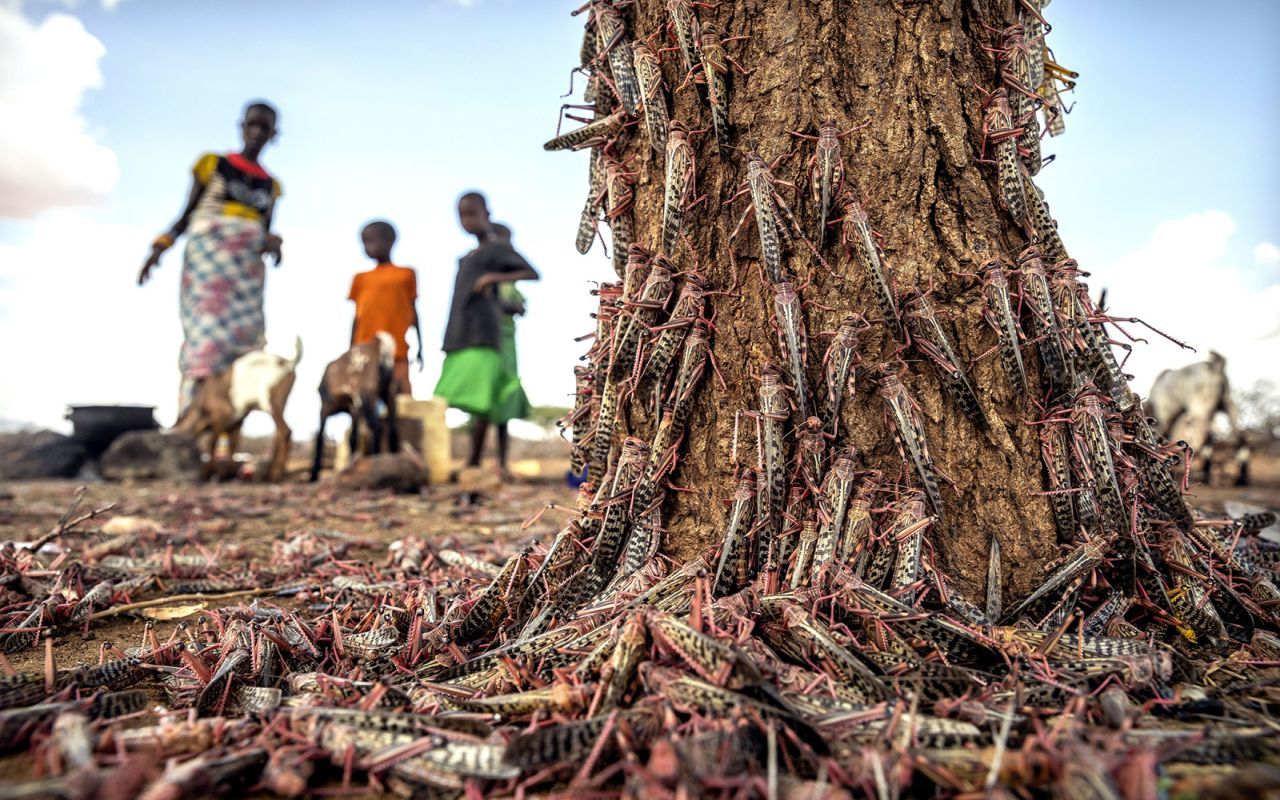
Read more Building Better Resilience to Transboundary Threats

Read more A dashboard as a key tool for global food security

Read more Governor's Day with Farmers – For more discussion with local actors

Read more The Key to Transforming Food Systems Lies in Inclusive Governance

Read more Can we democratize data in the age of digital extraction?

Read more „Young people tend to be on that curve of early adopter“

Read more Scaling Solutions: What It Takes to Create Lasting Impact

Read more The lessons learned from the last food crisis - A solution?

Read more What does it take to truly shift the paradigm on food systems?

Read more "Human capital will play a pivotal role in the transformation of African economies"

Read more When sustainability becomes part of the curriculum

Read more Organic certification as an opportunity for developing and emerging countries

Read more COVID-19 and Rising Food Prices: What’s Really Happening?

Read more Côte d’Ivoire: Sweet Temptation without a Bitter Taste

Read more COP27: Agri-food systems in the focus of the climate discussion

Read more BMZ releases video on the transformation of agricultural and food systems

Read more Partners for change - Network meeting on transforming agricultural and food systems

Read more The Agri-Food Map: An interactive map to explore sustainable agri-food systems

Read more Climate change mitigation and adaptation strategies for the African livestock sector

Read more Towards Climate Justice: Securing Women’s Land Rights for a Resilient Tomorrow

Read more The common thread is the importance of collaboration

Read more Reforming agricultural policies to sustainably transform food systems

Read more Let Me Tell You: How Zambia Uses Comics and Animation to Inspire Healthy Eating

Read more Financing Agrifood Systems for People, Planet and Prosperity


